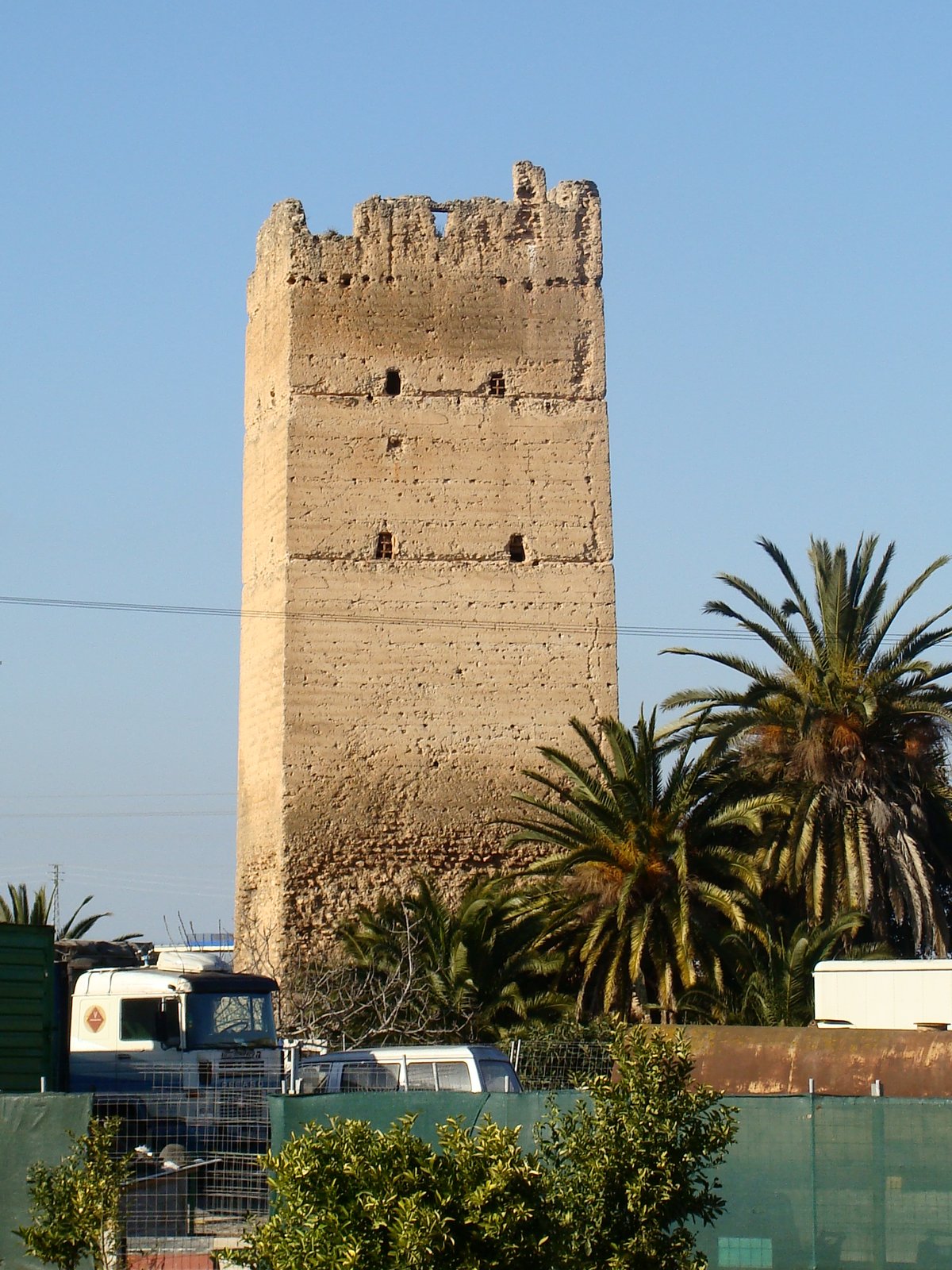

The prismatic tower of Mussa, located near Benifaió in the Ribera Alta (Valencia, Spain), presents a unique piece of the region's architectural heritage. Originally constructed in the 12th century and rebuilt in the 14th, it showcases a distinctive prismatic shape, measuring approximately 10.2 meters in side length. The structure, made from stone and lime mortar, features arches that correspond to the destroyed floors contained within. The presence of circular holes indicates it was initially a colomer tower during the Islamic era.
It could have served as a part of the defensive wall of the city of Valencia during the Christian era. The base stands around 3 meters high, with a wall thickness of 1.2 meters, built using the tapia technique. The entrance is protected by a window on the first floor. The tower has two floors, each with four windows, though it's unclear if each floor has four windows or if there are a total of eight windows distributed across the two floors. Some merlons are preserved in the roof.
An internal wall with three arches divides the tower into two parts, one per floor. The tower’s unique characteristics make it an intriguing addition to the landscape.
Sources: Wikipedia, OpenStreetMap, Wikidata, Wikimedia Commons
Written by Nicolo Ciampini
Discuss this with the author and others
No comments yet. Be the first to start the conversation.