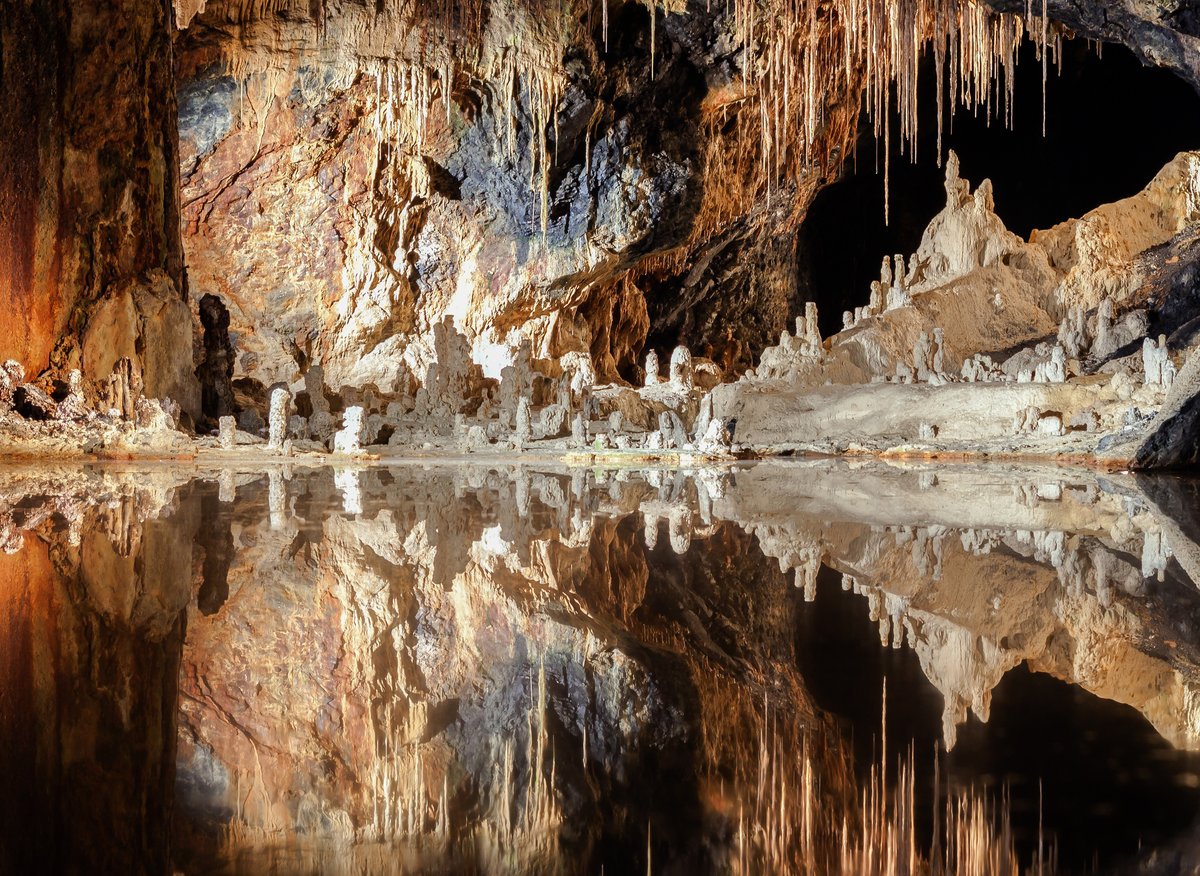
Water drips through soft rock, patient and persistent. It carves secrets from the stone and leaves behind the Feengrotten - a subterranean gallery of mineral formations so vivid that the Guinness Book of World Records named them the most colorful cave grottoes in the world. For centuries, these chambers were a workspace for industry, housing an alum shale mine from the 16th to the 19th centuries.
During this period, alum was used in a range of medicinal products, as a food preservative, to clarify water, and to finish cloth. By the 19th century, more effective chemical compounds were developed, and alum ceased to be a profitable mining product. The mine was closed in 1850, and by the 20th century, the Feengrotten had been largely forgotten. In 1910, explorers rediscovered the mine and noted mineral deposits that had accumulated over three centuries.
In 1913, explorers discovered a third chamber containing the Märchendom, or Fairy Kingdom. This area features a variegated grouping of deposits that, illuminated by theatrical lights and reflected in a perfectly still pool of water, are thought to resemble miniature castles and other buildings. The grottoes opened for sightseeing in 1914, at which time a pavilion and café opened at the entrance.
The site was later categorized as an official Sehenswürdigkeit by the GDR, which was open to foreign tourists. The first chamber contains information about the history of the mine and former radiation treatments offered until they were found to be hazardous. The second chamber contains the source of the mineral-laden water. Between 1914 and 2007, more than 20 million people visited the grottoes to see the colorful formations formed by centuries of dripping water.
Sources: Wikipedia, OpenStreetMap, Wikidata, Wikimedia Commons

Written by Aurora
Discuss this with the author and others
No comments yet. Be the first to start the conversation.