A shard of black pottery depicts a winged cat. It was crafted in Central Italy during the late 6th century BC, yet it spent centuries buried in the soil of a mountain near Jena. This fragment, a piece of Etruscan Bucchero, arrived here through a social elite who moved across vast distances, with trade reaching as far as Central Italy in the 1st millennium BC.
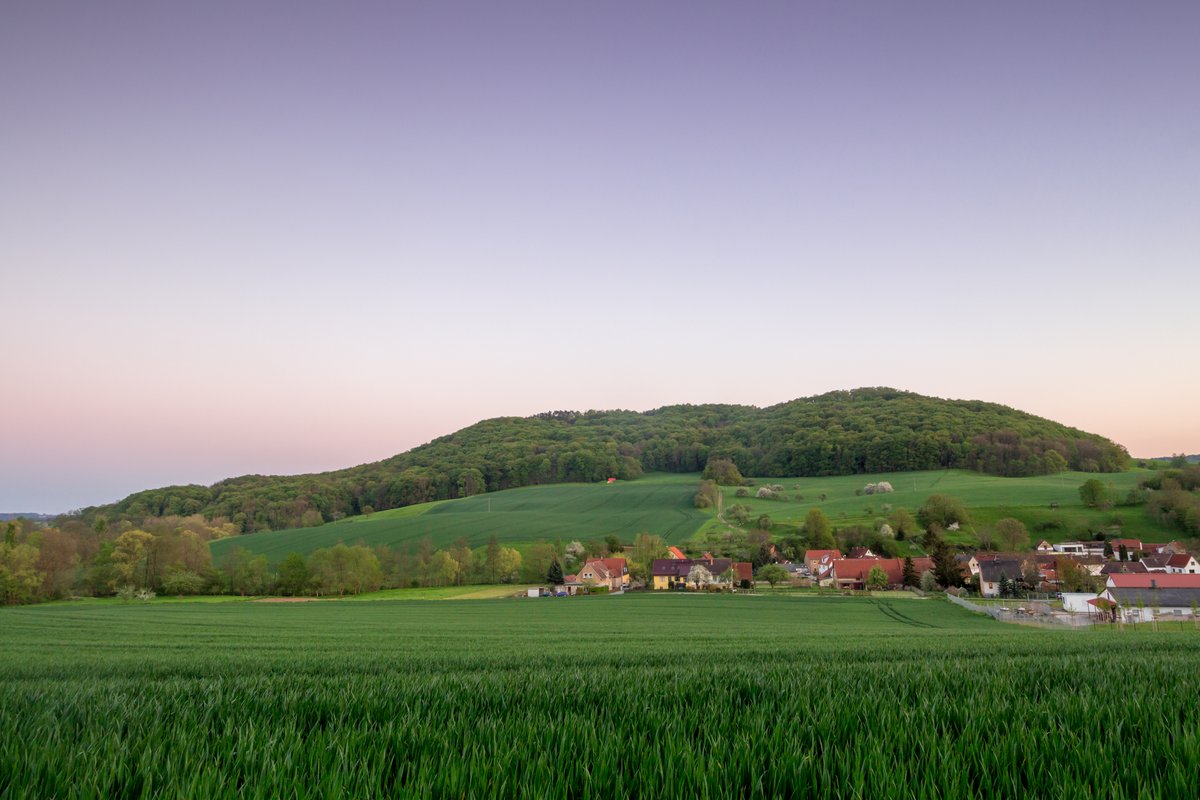
Standing at 338.2 meters, the Alter Gleisberg is an inselberg, a mountain composed of sedimentary rocks of the Upper Buntsandstein and Lower Muschelkalk that formed as the Saale cut into the Triassic sequence. Its irregular triangular base covers about 6.9 hectares, offering a commanding view of the valley to the northwest. For the people who settled the region as early as the Neolithic period, this sight was a strategically important factor. They occupied the area, which features loess deposits on the slopes formed during the Ice Ages.
By the Late Bronze Age, the site became a central settlement in Thuringia and Central Germany. During the transition from the Hallstatt to the Latène period, between the 6th and 5th centuries BC, the mountain served as a prominent upland settlement. Excavations revealed a complex world of daily life: a sealed clay furnace for baking, wattle-and-daub fragments from houses, and evidence of wool production and metalworking. The inhabitants used a fortified water source to sustain their presence on the site.
The excavations began in the 19th century, led by Friedrich Klopfleisch and later continued by scholars from the University of Jena. They uncovered a timeline that stretched from the New Stone Age into the early Middle Ages. One scholar, Gotthard Neumann, captured the site's importance by calling it the Thuringian Troy. He recognized the site as a significant settlement in the pre-Roman Iron Age.
Today, the Alter Gleisberg is a nature reserve. The prehistoric inhabitants are gone, but the land they shaped remains. It is part of the large-scale nature conservation project 'Orchideenregion Jena - Muschelkalkhänge im Mittleren Saaletal'. It is a place of deep layers, where the Triassic sequence, the loess of the Ice Ages, and the artifacts of the Iron Age sit stacked one on top of the other.
Sources: Wikipedia, OpenStreetMap, Wikidata, Wikimedia Commons

Written by Aurora
Discuss this with the author and others
No comments yet. Be the first to start the conversation.