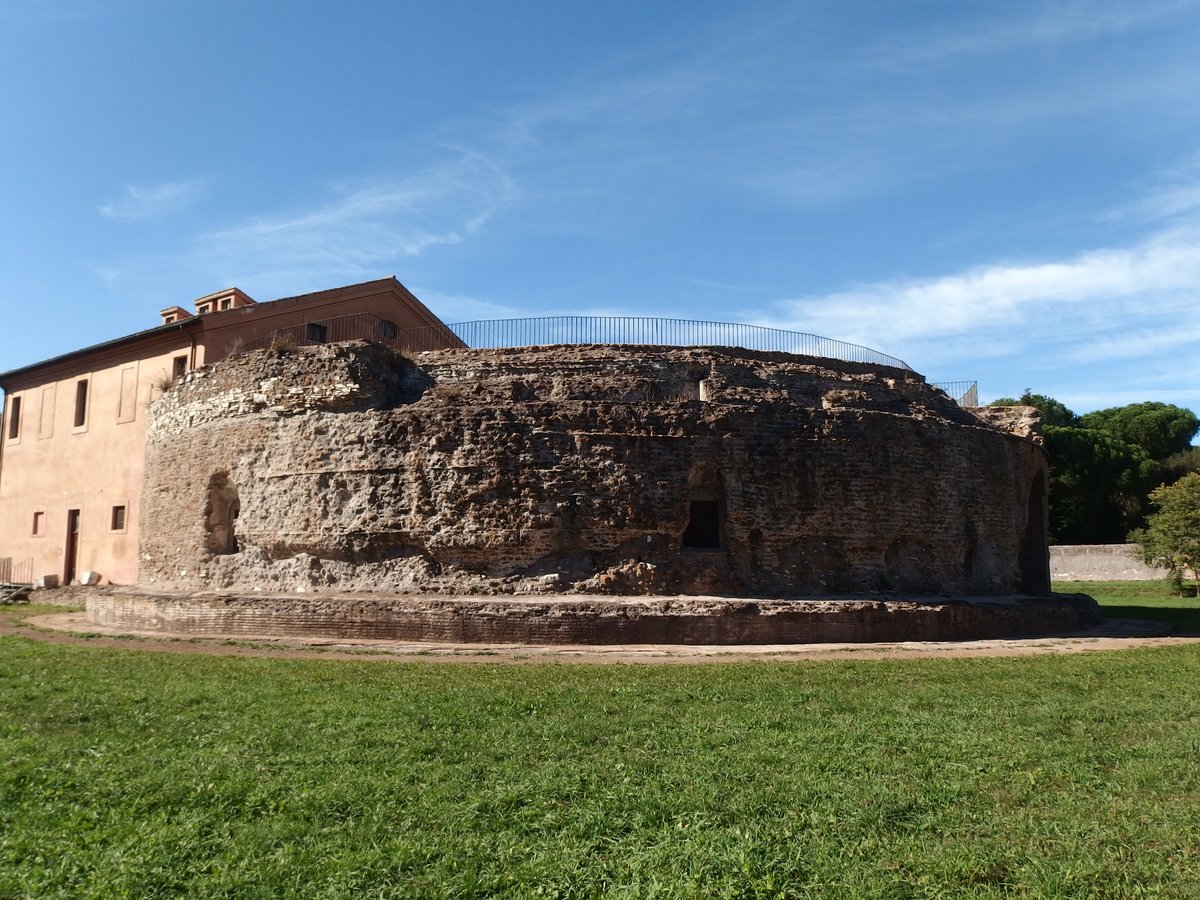

Tucked away among the catacombs as per Roman customs, the Mausoleum of Romulus found along the Appian Way is quite the peculiar discovery. Constructed around the 4th century by Emperor Maxentius, this tomb was intended to honor Maxentius and serve as a family mausoleum. Yet, the intriguing question lingers: who exactly was laid to rest within this cryptic chamber? Romulus, Maxentius' young heir, was rumored to be the one, but, alas, no concrete evidence of his burial has ever been found.
Only the half-concealed underground floor remains, a mute testament to its unfinished dreams. Originally built to be a two-story cylindrical tomb, the structure now only hints at its former grandeur. The 18th-century dwelling, blocking the Appian Way, shrouds this eerie edifice further. In the 19th century, it was converted into a home by the Torlonia family, and was later taken over by the Fascist government in 1943. Originally built as a farmhouse, it now houses an octagonal pillar of more than nine meters, encircled by a vaulted corridor, seven meters wide, with open niches for sarcophagi. The chilling atmosphere that permeates its empty chambers is palpable.
Sources: Wikipedia, OpenStreetMap, Wikidata, Wikimedia Commons
Written by Nicolo Ciampini
Discuss this with the author and others
No comments yet. Be the first to start the conversation.