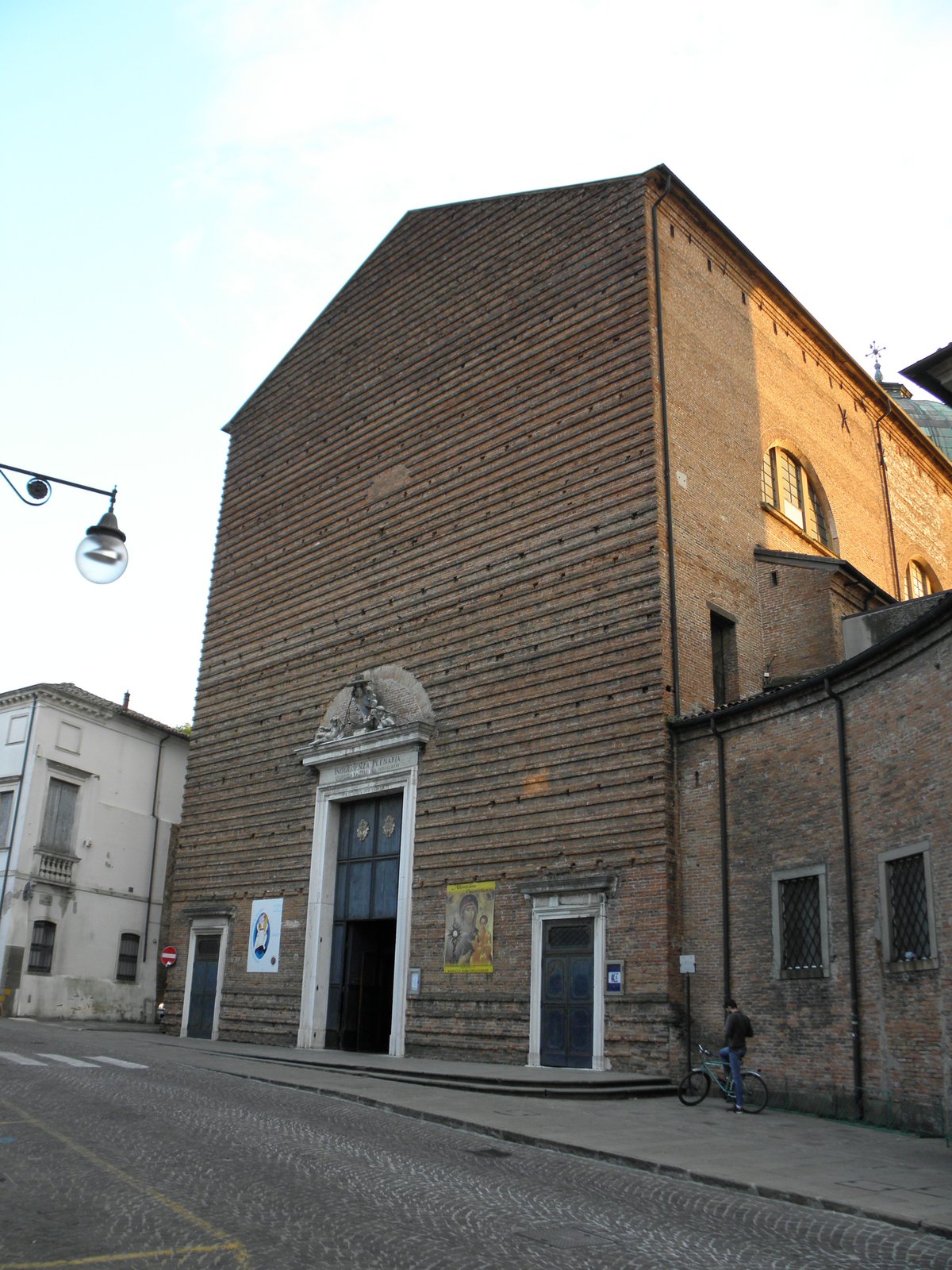

The church of Santa Maria delle Grazie, located in Este, Italy, is a remarkable testament to the rich and complex history of this province in the Veneto region. Constructed in the Baroque style, the basilica has been a site of veneration and worship since the 15th century. From the small church erected in 1478, a smaller church was constructed at the site, to the current church that was reconsecrated as a parish church for the frazione of San Martino by 1776, the church has seen significant changes over the centuries.
The most notable of these changes is the discovery and installation of the Madonna of the Graces, a Byzantine icon, ultimately crowned by Pope Pius VII in 1822, that was transferred from Venice. Today, the icon is housed in the apse of the church, a testament to the church's enduring connection to Venice’s historical legacy. The nave contains eight side altars and two chapels, each with its own unique altarpiece, including the works of Antonio Zanchi and Giovanni Battista Baldi.
Baldi’s masterpiece, a late-19th century fresco depicting the Coronation of the Virgin, adorns the center of the nave. The church also preserves the canonical hours with the Dominican choir, who reside within the monastery attached to the church. Santa Maria delle Grazie offers a profound journey through its rich history, inviting visitors to engage with the art, architecture, and religious significance of this remarkable church.
Sources: Wikipedia, OpenStreetMap, Wikidata, Wikimedia Commons
Written by Nicolo Ciampini
Discuss this with the author and others
No comments yet. Be the first to start the conversation.