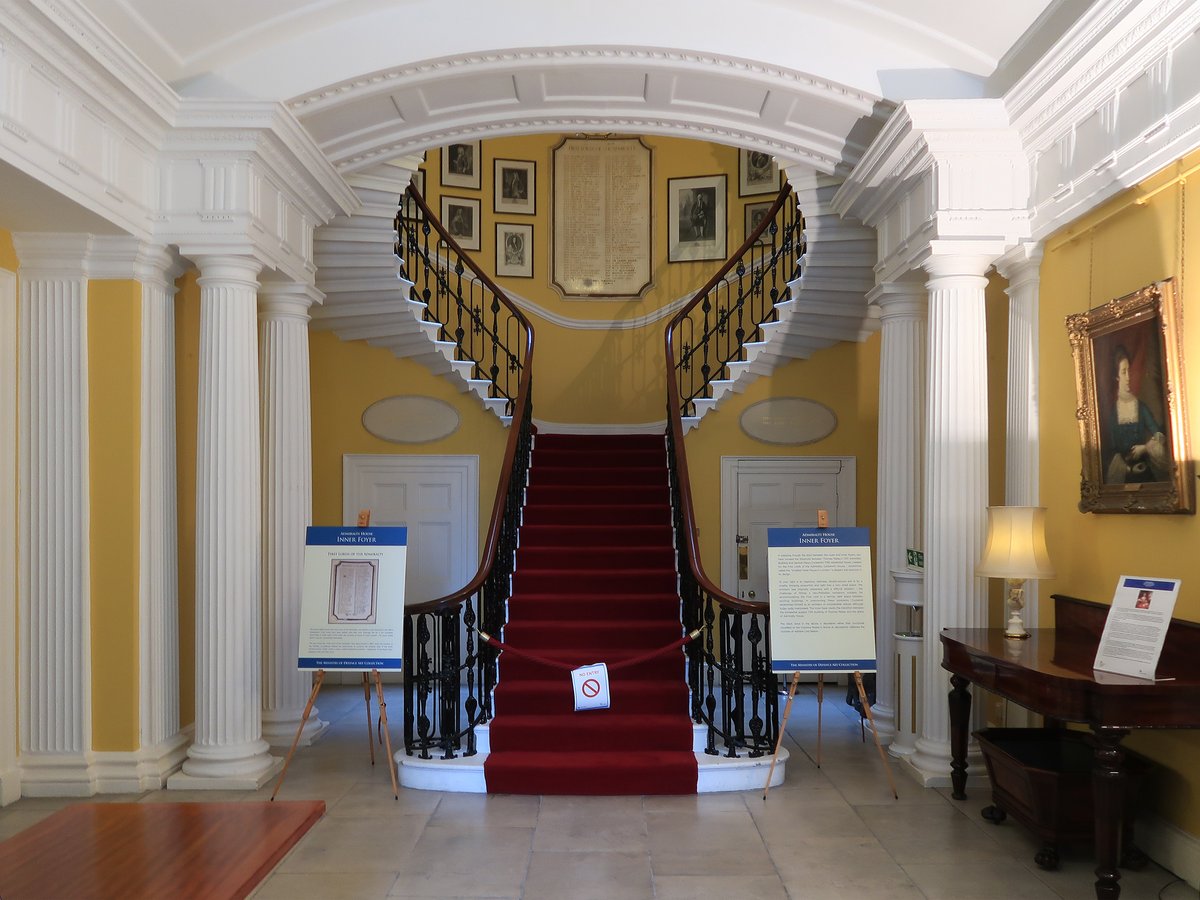
London's Admiralty House, a Grade I listed building, currently serves government functions and ministerial flats. Tracing its history back to 1788, the building bears witness to centuries of drama, intrigue, and power. Originally designed for Admiral of the Fleet Viscount Howe, it replaced two 17th-century buildings: Walsingham House and Pickering House.
Over the years, Admiralty House has been a backdrop to significant historical events. For instance, Prime Minister John Major temporarily moved there following the Downing Street mortar attack in 1991, and Winston Churchill resided there during his two terms as First Lord of the Admiralty.
More recently, the building has been a temporary office for future Prime Ministers, such as Boris Johnson and Liz Truss. Today, Admiralty House remains an essential hub for government activities and ministerial residences.
Characterized by four storeys and a symmetrical facade, the building faces Horse Guards Parade at its rear. Notably, it is connected to the Ripley Building, adding to its historical significance.
Sources: Wikipedia, OpenStreetMap, Wikidata, Wikimedia Commons
Written by Nicolo Ciampini
Discuss this with the author and others
No comments yet. Be the first to start the conversation.