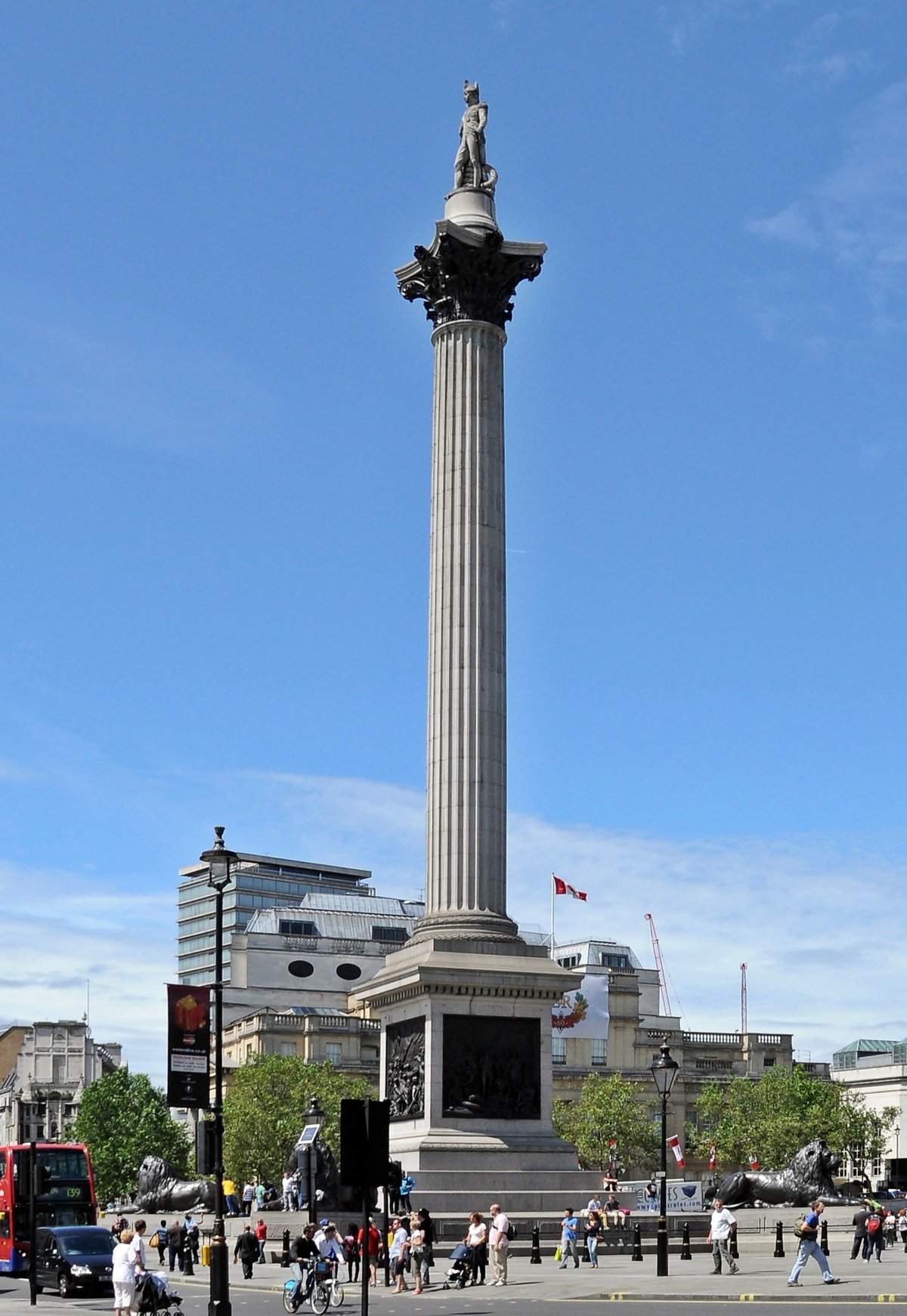
Nelson's Column, in the heart of London, stands tall, a gleaming statue of Lord Nelson perched on a monolith of Dartmoor granite. But there's more to this monument than meets the eye. It was built to commemorate Nelson's victory at the Battle of Trafalgar, a battle that significantly changed the course of history. But the story of Nelson's Column starts long before the battle and continues long after.
In February 1838, a committee was formed to raise a monument to Lord Nelson in Trafalgar Square. This committee, consisting of 121 lords, peers, MPs, and other gentry, aimed to fund the project by public subscription and had the support of the government for a site in the square. A competition was held for designs, with an estimated budget of between £20,000 and £30,000.
The winning design, by William Railton, called for a column in the Corinthian order, topped by a statue of Nelson and featuring four sculpted lions at its base. The design was chosen above others, including an obelisk design by Edward Hodges Baily.
Construction began in July 1840, with the first stone being laid by Charles Davison Scott. The project was slow, with the stonework not being completed until November 1843. The column was finally unveiled in 1844, complete with its statue of Nelson, sculpted by Edward Hodges Baily, and its four bronze lions, sculpted by Sir Edwin Landseer.
The base of the column features four relief panels, cast from captured French guns. These panels depict various battles and Nelson's death, with the Battle of Trafalgar being the most prominent.
In 2006, the monument was refurbished at a cost of £420,000, during which time it was found to be 14 feet 6 inches shorter than previously supposed. The monument stands at a height of 169 feet 3 inches, with Nelson himself standing 17 feet tall.
Sources: Wikipedia, OpenStreetMap, Wikidata, Wikimedia Commons
Written by Nicolo Ciampini
Discuss this with the author and others
No comments yet. Be the first to start the conversation.