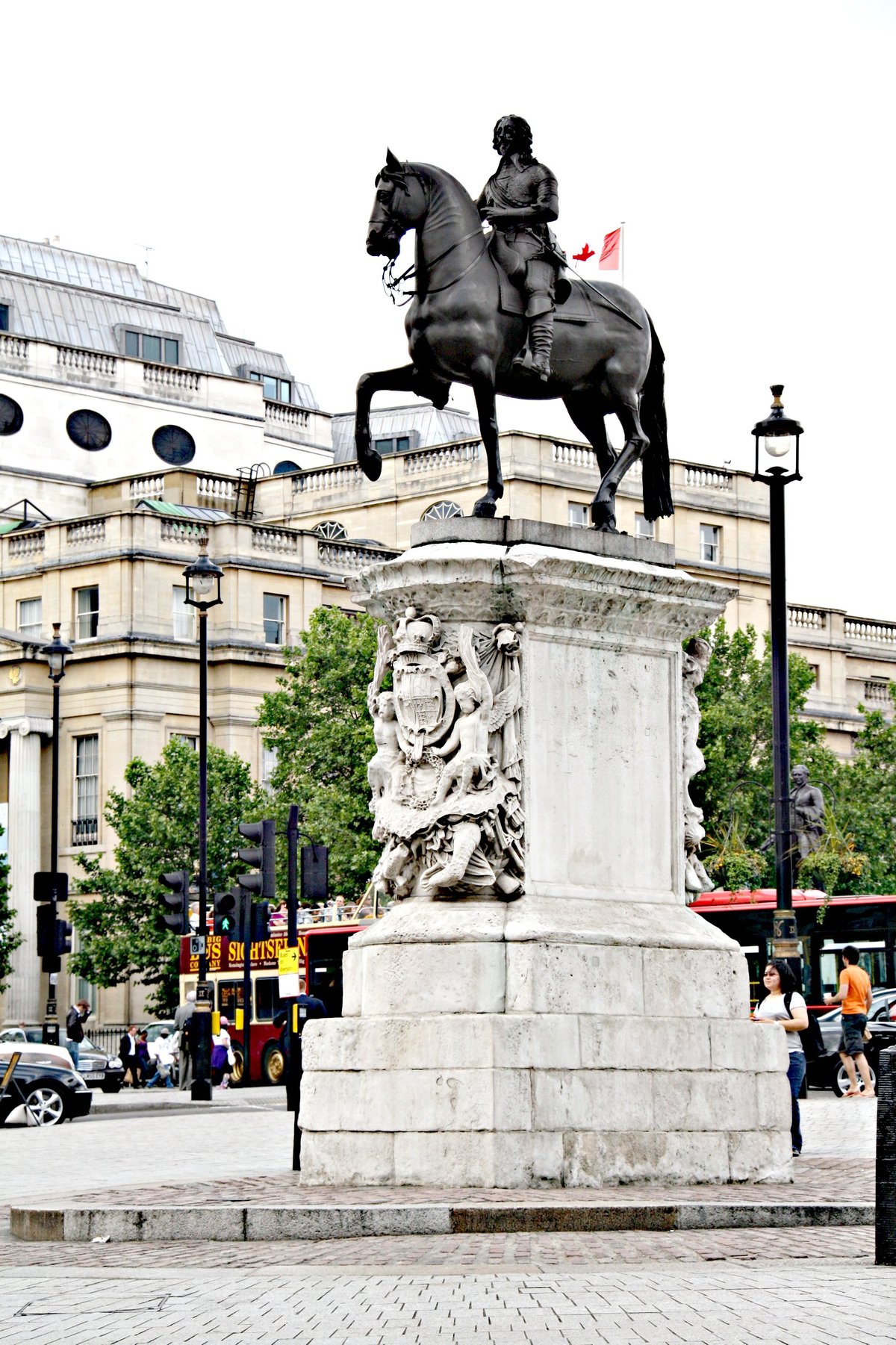
King Charles I commissioned the equestrian statue of himself on horseback in 1633, a work by French sculptor Hubert Le Sueur. Originally intended for Richard Weston’s country house in Roehampton, it was hidden during the English Civil War by a metalsmith named John Rivet. Discovered again during the Restoration, its current location at Charing Cross, London, is the city's central point.
However, its history doesn’t end there. In 1844 during Queen Victoria's visit, the sword and badge of the Order of the Garter were stolen. During the Second World War, the statue was removed for protection. It was stored at Mentmore Park, Leighton Buzzard, and the Ministry of Works carried out some repairs on the statue upon its return, including adding a replacement sword and the badge of the Order of the Garter. Additionally, a bronze tablet was added to the base of the plinth, explaining the addition of the replacement items.
Sources: Wikipedia, OpenStreetMap, Wikidata, Wikimedia Commons
Written by Nicolo Ciampini
Discuss this with the author and others
No comments yet. Be the first to start the conversation.