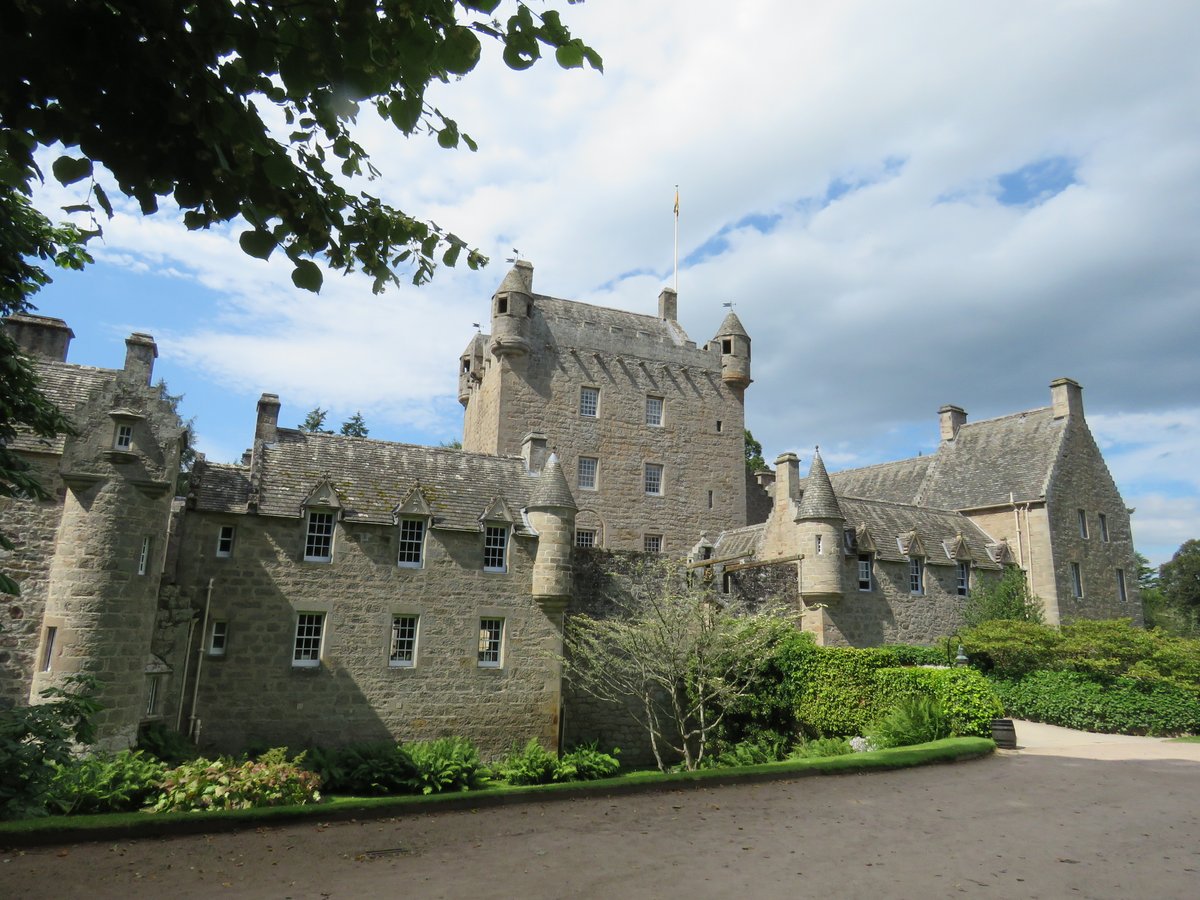
Cawdor Castle, a testament to its unique history, stands not only as a literary landmark, but as a site intriguing in its own right. Situated in the parish of Cawdor, Nairnshire, Scotland, the castle's story predates the tragic tale of Macbeth. In the following paragraphs, discover the captivating process of its construction, the extraordinary choice of the living holly tree as its foundation, and the subsequent improvements made by John Campbell of Muckairn and Sir Hugh Campbell of Cawdor in 1510 and 1635, respectively.
Cawdor Castle, while often synonymous with Macbeth, never Thane of Cawdor, owes its true story to its unique beginnings. Today, Cawdor Castle serves as a category A listed building and is a part of the Inventory of Gardens and Designed Landscapes in Scotland.
Legend states that a donkey, laden with gold, lay down under a small living holly tree, which was then selected as the site of the castle. It is worth noting that this tree was discovered to have died around 1372, according to modern scientific testing, shedding light on the earlier construction of the castle. Interestingly, the iron yett (gate) at Cawdor Castle was brought from Lochindorb Castle in 1455, under the orders of King James II, according to the source material, thus disproving the earlier statement about its year of origin.
Sources: Wikipedia, OpenStreetMap, Wikidata, Wikimedia Commons
Written by Nicolo Ciampini
Discuss this with the author and others
No comments yet. Be the first to start the conversation.