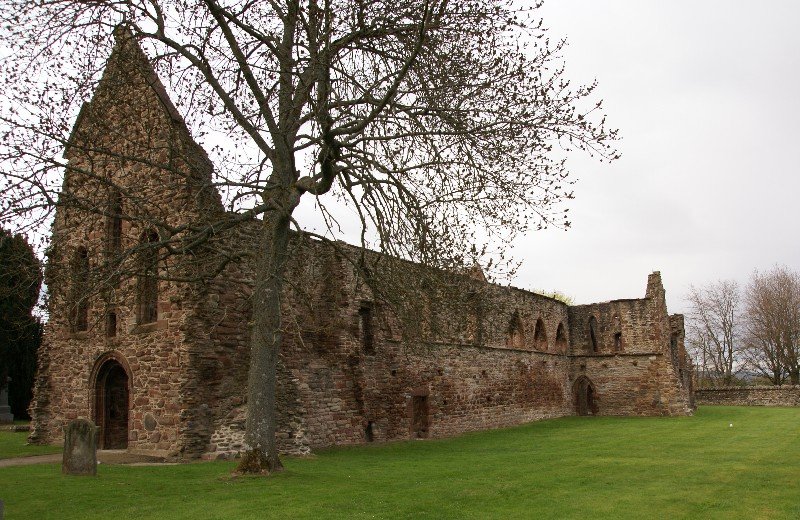
Beauly Priory, located in Inverness-shire since the 13th century, is a historical landmark that stands today. The precise founder of the priory is uncertain, with different sources attributing its establishment to Alexander II of Scotland, John Byset, or both. What is known is that the French monks, along with a nearby landowner, established a strong French-speaking presence in the area, leading to the name 'beau lieu' or 'beautiful place' that eventually passed into English.
However, the exact etymology is debated. The priory initially operated as a Valliscaulian monastic community before it became Cistercian in 1510. The priory was gradually secularized and ruled by a series of commendatory abbots. In 1634, the priory’s lands were given over to the bishop of Ross by royal charter. Today, the ruins of Beauly Priory stand as a scheduled monument and are one of the main tourist attractions in the area. John Keats and his friend Charles Brown made a stop at Beauly Priory in August 1818, resulting in a collaborative poem, 'On Some Skulls in Beauley Abbey, near Inverness.'
Sources: Wikipedia, OpenStreetMap, Wikidata, Wikimedia Commons
Written by Nicolo Ciampini
Discuss this with the author and others
No comments yet. Be the first to start the conversation.