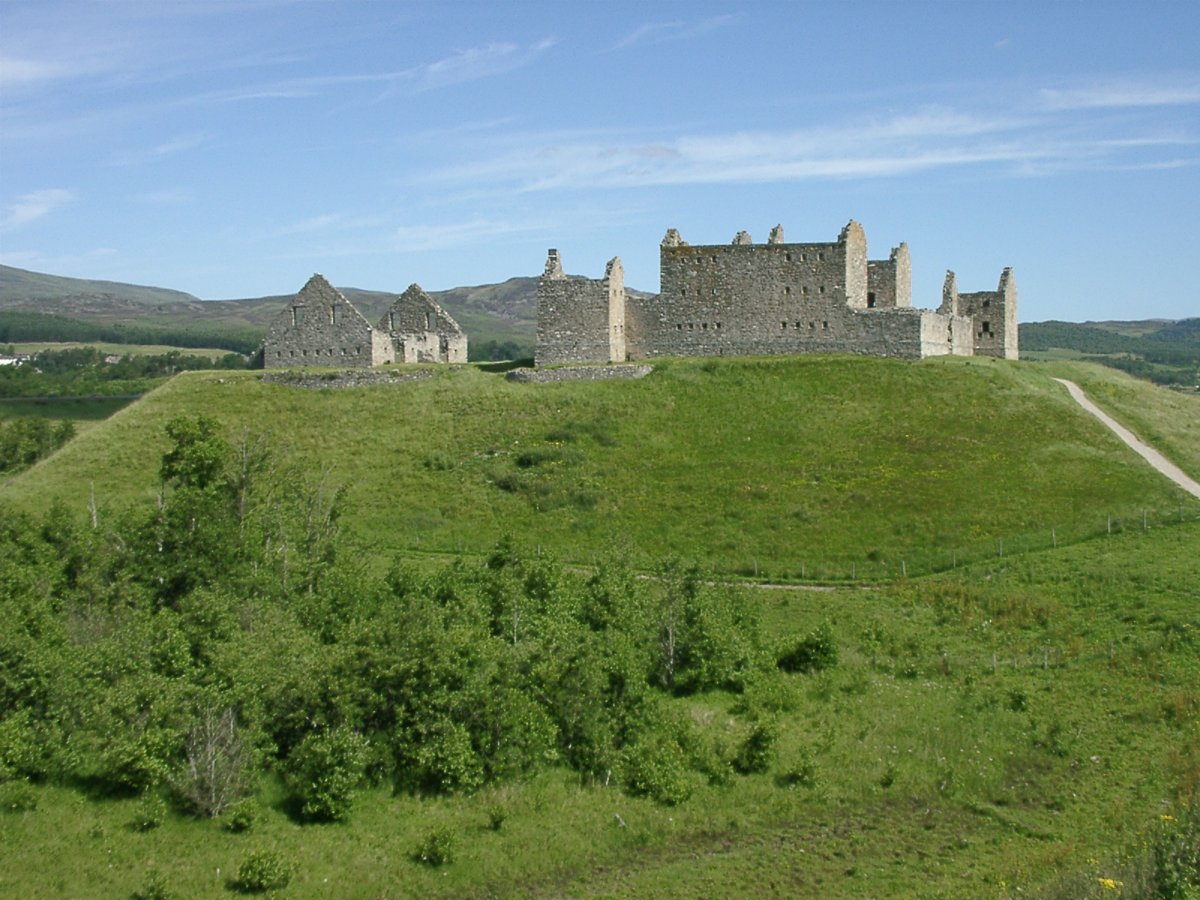

Nestled in the heart of Badenoch, Scotland, you'll find the Ruthven Barracks - a preserved relic from the 18th century. These barracks were completed in 1721 on a castle hilltop, following the 1715 Jacobite rising. The complex comprises two large three-storey blocks occupying two sides of the enclosure, with the barracks and enclosing walls built with loopholes for musket firing and bastion towers at opposite corners. The structures accommodated 120 troops and 28 horses for dragoons.
But the site's roots go much deeper, as the barracks were built upon the ruins of an ancient castle. The first castle on the hilltop was built in 1229, possibly by the Comyns, and was held by the Lords of Badenoch during the 13th century. It was later used as a base by Alexander Stewart, Earl of Buchan, who was known as the "Wolf of Badenoch". The first castle was demolished in 1451 and replaced with a second castle, completed in 1459.
During the 15th to 16th century, the castle was held by the Earls of Huntly, chiefs of Clan Gordon. Mary, Queen of Scots visited the site in August 1564, but the castle saw further contention during the Wars of the Three Kingdoms and the Jacobite rising of 1689.
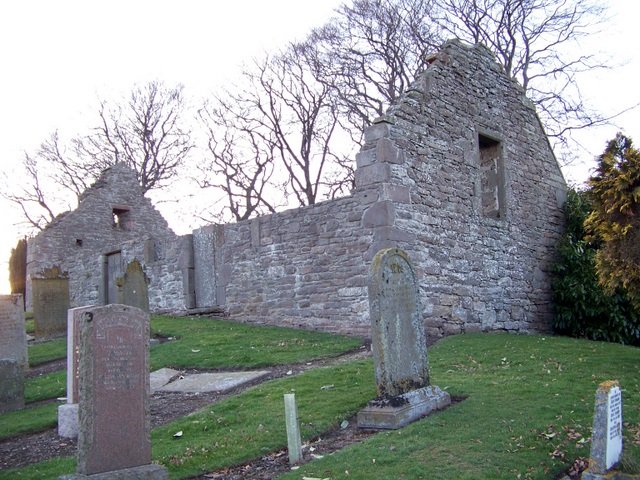
In 1746, after the Battle of Culloden, some 1,500 Jacobites retreated to the site. On 17 April 1746, the departing Jacobites destroyed the barracks. What remains now are the picturesque, ghostly ruins, meticulously maintained as a scheduled monument by Historic Environment Scotland. They're accessible for a free peek at all hours of the day.
Sources: Wikipedia, OpenStreetMap, Wikidata, Wikimedia Commons
Written by Nicolo Ciampini
Discuss this with the author and others
No comments yet. Be the first to start the conversation.