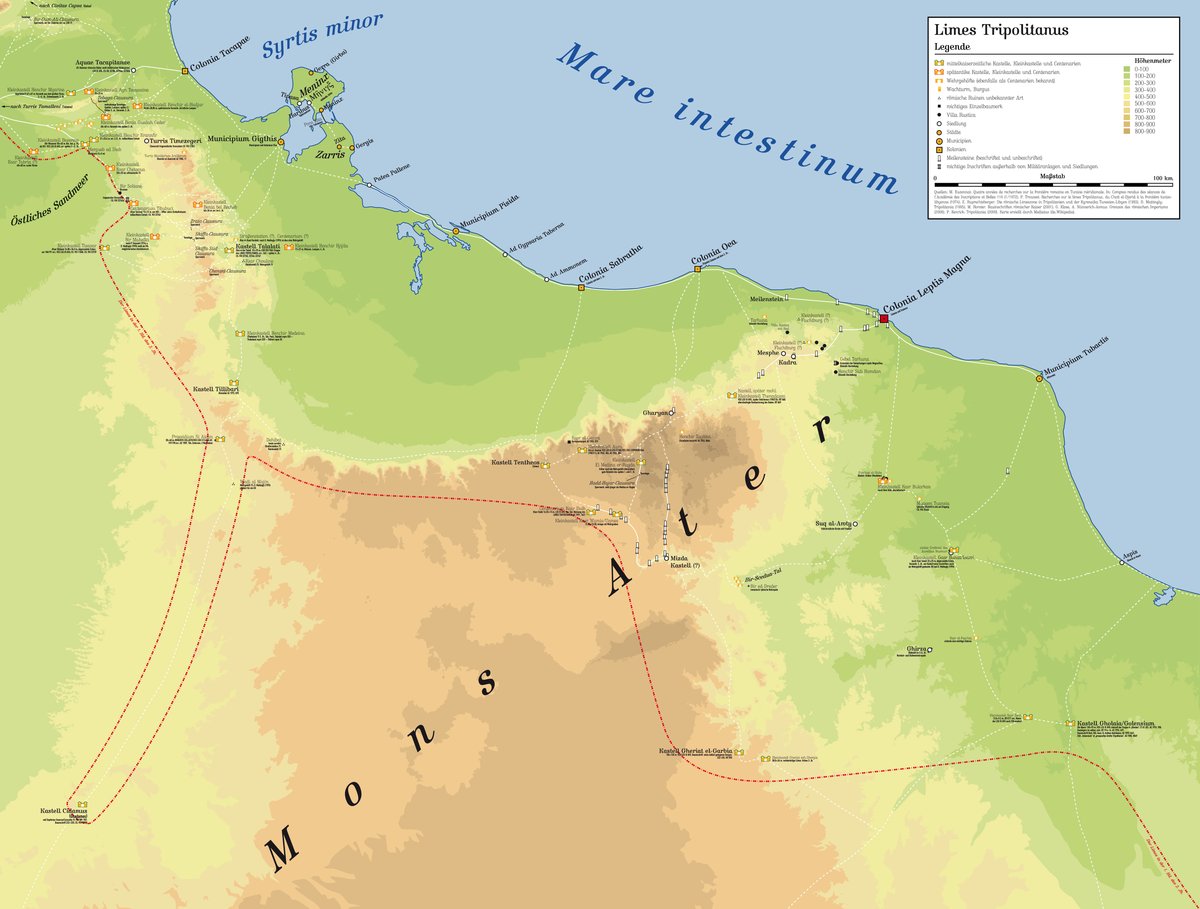

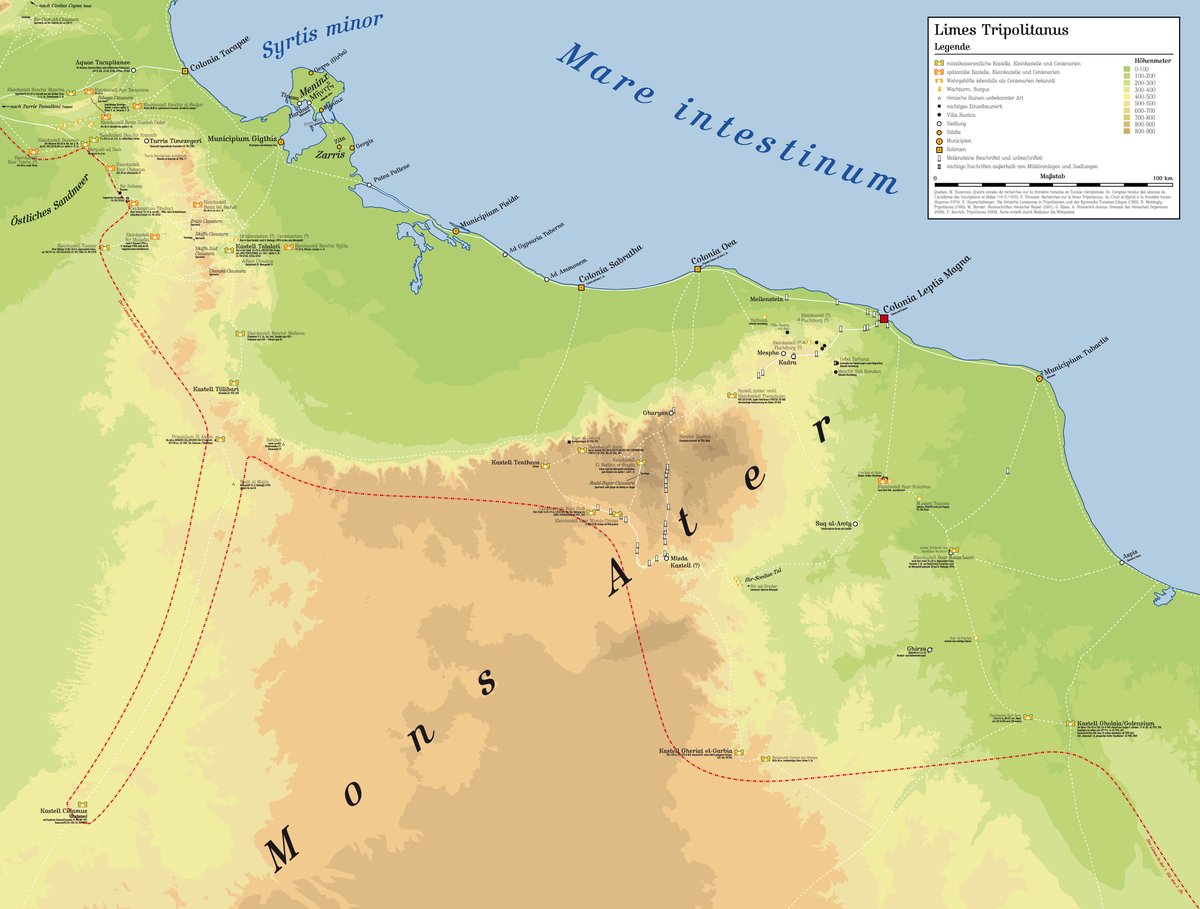
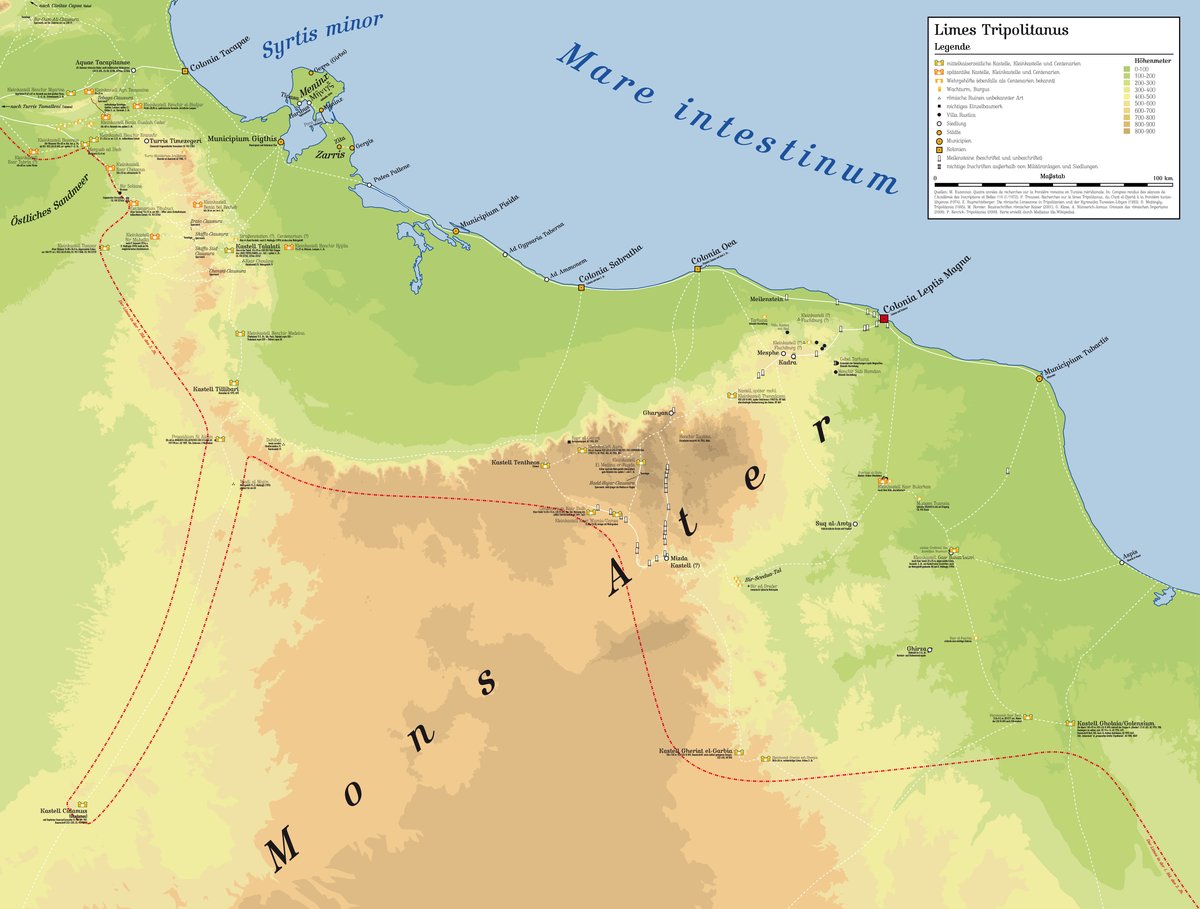
The Limes Tripolitanus, a frontier defence line, once protected the powerful cities of Leptis Magna, Sabratha, and Oea from attacks by Nomadic tribes. The wall stretched across modern-day Tunisia and Libya. The Limes Tripolitanus, built by the Romans, was primarily intended as a protection for the tripolitanian cities of Leptis Magna, Sabratha, and Oea. The earliest records of the Limes Tripolitanus date to after the reign of Emperor Augustus in the first century AD.
The fortifications enabled the growing state to exert greater control in its varied interactions with tribes such as the Garamantes. In 50 AD, a several-month-long military expedition was launched by Septimius Flaccus and Julius Maternus into the Fezzan and potentially further south. The Romans did not conquer the Garamantes so much as they seduced them with the benefits of trade and discouraged them with the threat of war. The last Garamantian foray to the coast was in AD 69, when they joined with the people of Oea (modern Tripoli) in battle against Leptis Magna.
The Romans, in order to defend the main Roman cities of Tripolitania (Oea, Sabratha and Leptis Magna), intervened and marched south. According to Edward Bovill, author of the book The Golden Trade of the Moors, this campaign marked the Romans’ first use of camels in the Sahara, which convinced the Garamantes that their advantage in desert warfare no longer held. After that the Garamantes started to become a client state of the Roman Empire, but nomads always endangered the fertile area of coastal Tripolitania.
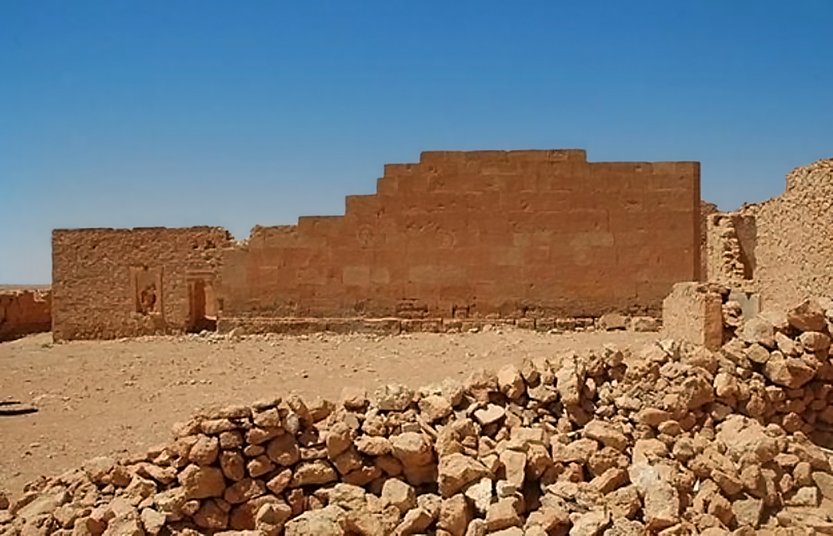
Because of this Romans created the Limes Tripolitanus. The first fort on the limes was built at Thiges, to protect from nomad attacks in 75 AD. The limes was expanded under emperors Hadrian and Septimius Severus, in particular under the legatus Quintus Anicius Faustus in 197-201 AD. Indeed, Anicius Faustus was appointed legatus of the Legio III Augusta and built several defensive forts of the Limes Tripolitanus in Tripolitania, among which Garbia and Golaia (actual Bu Njem) in order to protect the province from the raids of nomadic tribes. He fulfilled his task quickly and successfully.
Sources: Wikipedia, OpenStreetMap, Wikidata, Wikimedia Commons
Written by Mutabor
Discuss this with the author and others
No comments yet. Be the first to start the conversation.