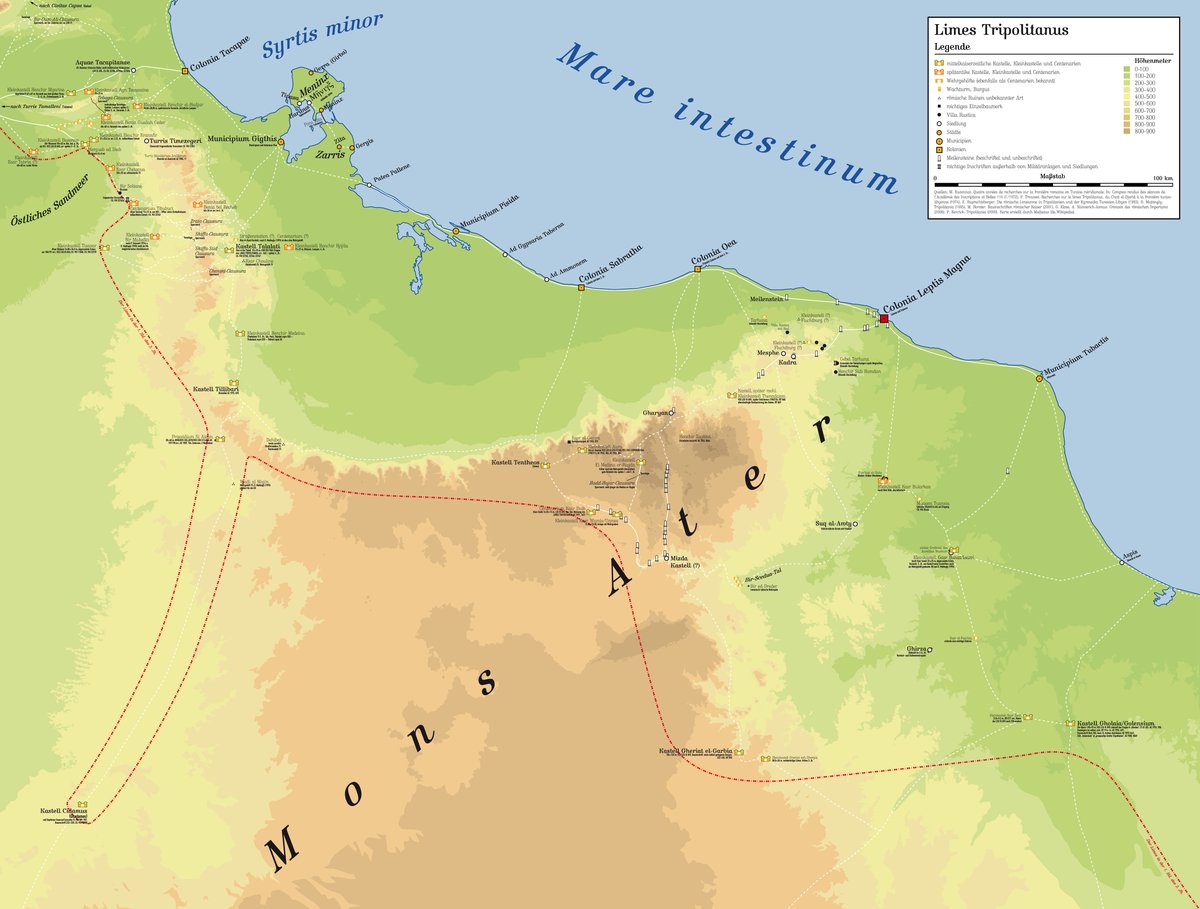

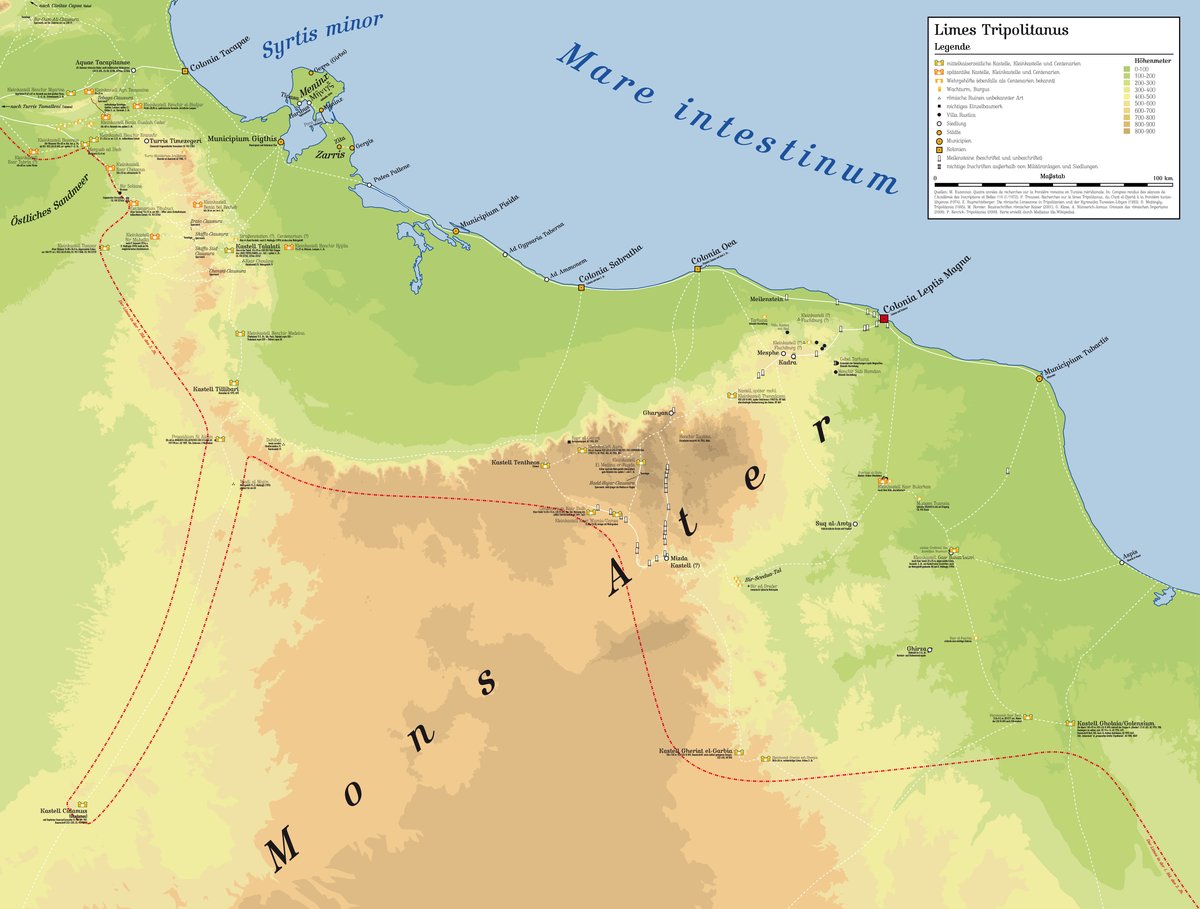
In the Bergland von Dahar, Si Aioun served as a small military post during the Severian Epoche. Situated on terrain rising to the northeast towards a pass, the post was part of a system of fortifications along the Limes Tripolitanus in the province of Africa proconsularis. This outpost was the last archaeologically identified Roman external station on the caravan road leading toward the interior stronghold of Cidamus.
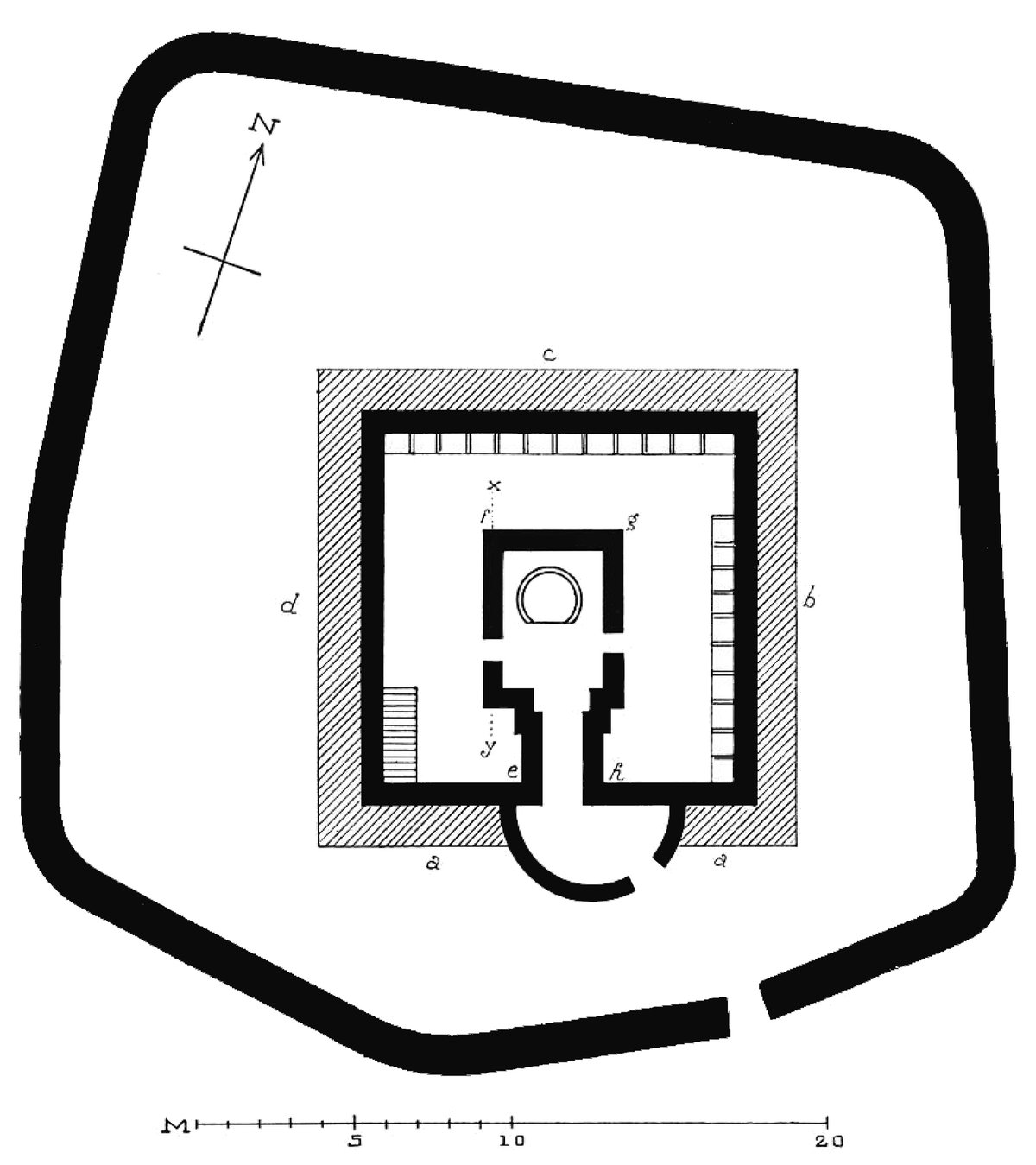
Across the mountains, the castellum Tillibari secured the route toward the inhabited plain to the Mediterranean. Quintus Anicius Faustus, the Legate of the Legio III Augusta, ordered the construction of the small fort at Si Aioun under the supervision of Aemilius Emeritus, a commander of the Cohors II Flavia Afrorum equitata and a Numerus collatus. The Praesidium of Si Aioun, verified by a building inscription discovered at the site, was a small fort built according to the standardized construction schemes of the Principate, similar in scale to the Kleinkastell Tisavar.
The only access to the site was at the eastern praetorian front. In 1895, the French officer Étienne de Larminat discovered the site and reported remains of a high-quality hexagonal mausoleum with richly decorated capitals. Nearby lay the remains of the military installation. Although an altar to Jupiter was erected by Aemilius Emeritus, no official plan of the excavated small fort has been published yet. The mausoleum was broken apart in 1908 with apparently destructive intent, leaving only scattered fragments behind.
Today, Si Aioun remains an archaeological site. It provides information on the military structure of the Tripolitanian Limes, where Decurions of auxiliary troops were occasionally appointed as commanders of small expeditionary corps under the authority of the Legate and the Emperor.
Sources: Wikipedia, OpenStreetMap, Wikidata, Wikimedia Commons

Written by Friendly Jane
Discuss this with the author and others
No comments yet. Be the first to start the conversation.