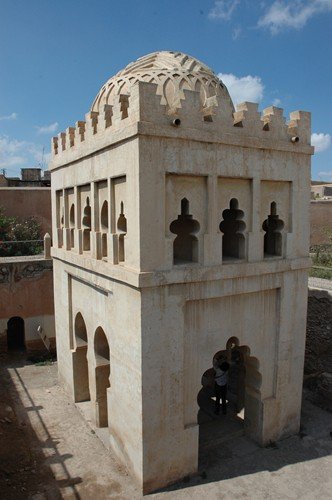

In Marrakesh, the Almoravid Qubba, also known as the Qubbat al-Ba'diyyin or Qubbat al-Barudiyyin, stands as a significant monument from the 12th century. Erected by the Almoravid ruler Ali ibn Yusuf, it remains one of the few surviving examples of Almoravid architecture in the city. While an inscription on the structure identifies the day and month of its construction, the exact year remains a subject of scholarly debate, with the most likely dates being 1 August 1117 or 6 May 1125.
The Qubba was a pavilion used for ritual ablutions, known as a mida'a, and was originally associated with the Ben Youssef Mosque. While the mosque itself has been completely rebuilt in more recent centuries, the Qubba was first documented by French scholars in 1947. Due to rising ground levels and surrounding construction, more than half of the structure was buried under 7 to 8 meters of debris before being studied and excavated in the 1950s.
Today, the monument stands as a historic site and tourist attraction. The interior of the domed pavilion is richly decorated with carved floral patterns, palm and acanthus leaves, and calligraphy. The architecture features a unique combination of motifs, including muqarnas decoration, which some scholars suggest was a deliberate choice to reflect a shared heritage with the Abbasid and Umayyad caliphates.
Sources: Wikipedia, OpenStreetMap, Wikidata, Wikimedia Commons

Written by Mutabor
Discuss this with the author and others
No comments yet. Be the first to start the conversation.