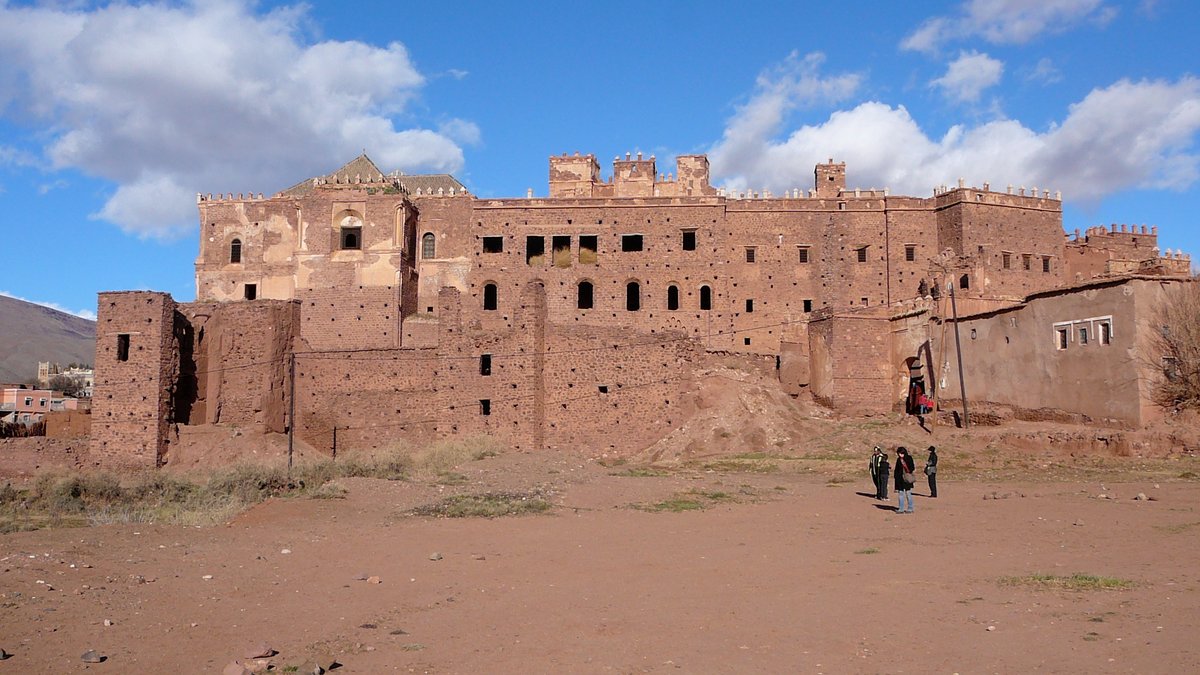

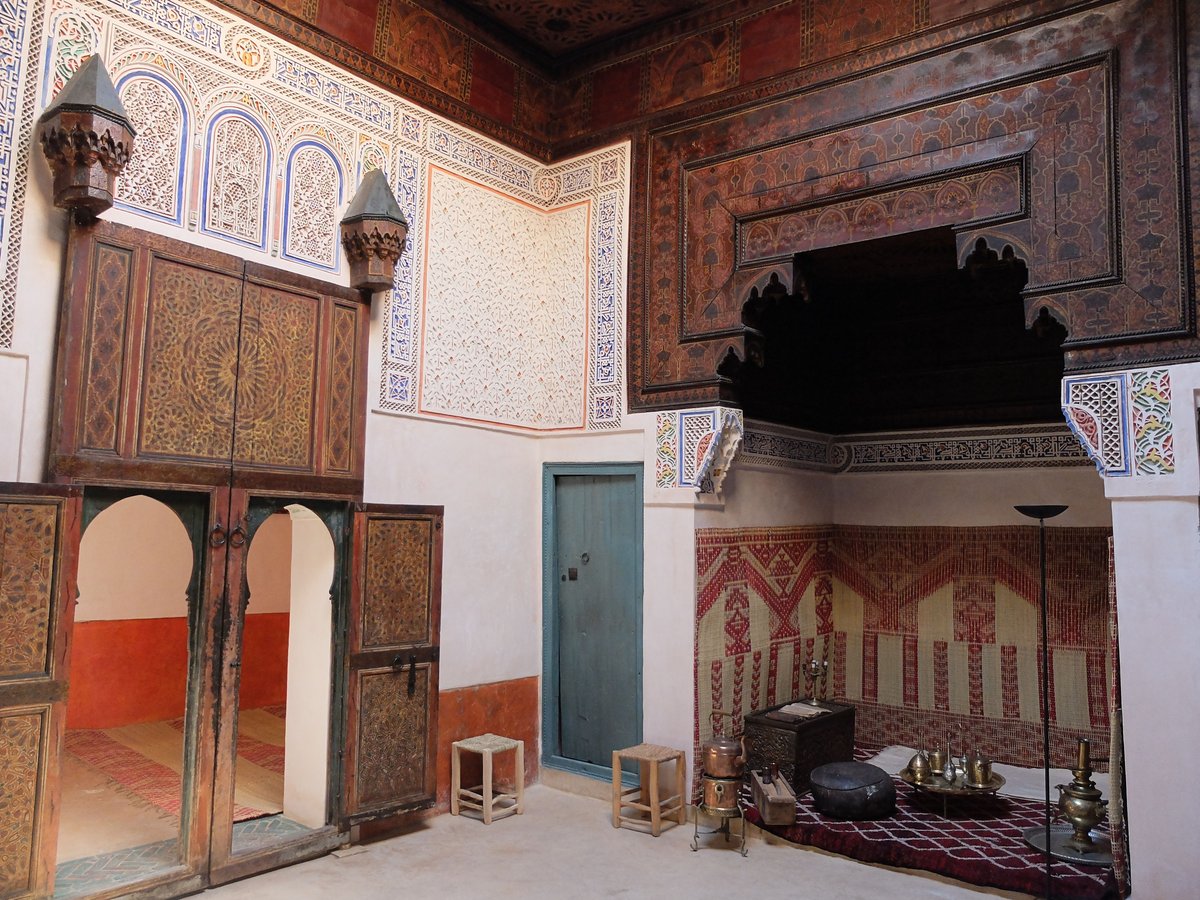
The Telouet Kasbah is a kasbah in the north of Ouarzazate Province in Morocco, located at an elevation of 1,800 metres in the High Atlas. It sits along the former route of merchant caravans traveling from the Sahara to Marrakesh and is near major salt mines. Construction on the current kasbah began in 1860 by Mohammed Ibiyet, the head of the Glaoui clan. The project took five years and involved around 300 craftsmen from many parts of Morocco, including Fes. These craftsmen decorated the walls with zellij and carved stucco while painting the cedar-wood ceilings with colorful motifs, blending local Amazigh styles with classical Andalusi-Moroccan architecture.
The palace was the seat of the El Glaoui family's power and was sometimes called the Palace of Glaoui. During the French colonial occupation of Morocco after 1912, the family allied with the French regime. Thami El Glaoui, who took over the family after Madani El Glaoui died in 1918, was recognized as the Pasha of Marrakesh. At the height of his power, he amassed considerable wealth. However, his political affiliation with the French and his role in pushing Mohammed V into exile eventually led to the family's downfall as the independence movement gained strength.
Thami died in Marrakesh in 1956, just as Mohammed V was returning in triumph. In 1957, after Morocco gained independence from France, the Glaoui family's wealth and palaces were confiscated. Today, the palace is owned by the village council and is steadily becoming more damaged and slowly collapsing. While most of the palace remains in ruins, a section of ornate reception rooms on one of the upper floors has been fully restored and made accessible to tourists. The palace also suffered damage during the 2023 Marrakesh-Safi earthquake.
Sources: Wikipedia, OpenStreetMap, Wikidata, Wikimedia Commons


Written by Mutabor
Discuss this with the author and others
No comments yet. Be the first to start the conversation.