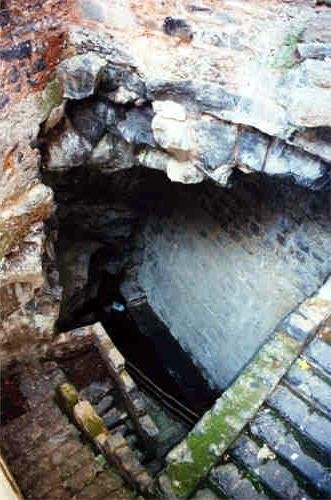

Nestled in Catania's historical heart beats the enigma of Pozzo di Gammazita, hewn within the lava scarp from a 17th-century Etna outbreak. This man-made well bore witness to an assortment of European luminaries who traversed the Grand Tour. Patrick Brydone, Richard de Saint-Non, Jean Houël, and Dominique Vivant Denon, to name a few, immortalized this peculiar well, one depiction even hinting at inhabitants occupying its depths - a prospect that leaves history buffs scratching their heads.
Chartier Didier once christened it one of the most peculiar landmarks in the city, comparing its water to Aretusa's freshens and softness. But what became of this well during the Angioan reign over Sicilia amidst the mystique and intrigue of the Guerra del Vespro? Many suppose that the legend of Gammazita, a heartbreaking Catania tale, recounts the well's shadowy past. The rust from the walls that cling to its façade are said to be the lingering signs of the tragic heroine's demise.
The district surrounding the well was a commercial hotspot for the Judeca Suttana, the southern Jewish quarter, teeming with tanneries and butcheries thriving on the many spring waters, possibly emanating from the Amenano river flowing beneath Catania's veiled streets, known as Judicello here. The remnants of ancient factories, the Muro rotto, hint at the area's role in Roman times, where grand public structures were the order of the day. Beneath the unremarkable exterior, though, lies a tale swathed in riddles, sorrow, and elusive mystery.
Sources: Wikipedia, OpenStreetMap, Wikidata, Wikimedia Commons
Written by Nicolo Ciampini
Discuss this with the author and others
No comments yet. Be the first to start the conversation.