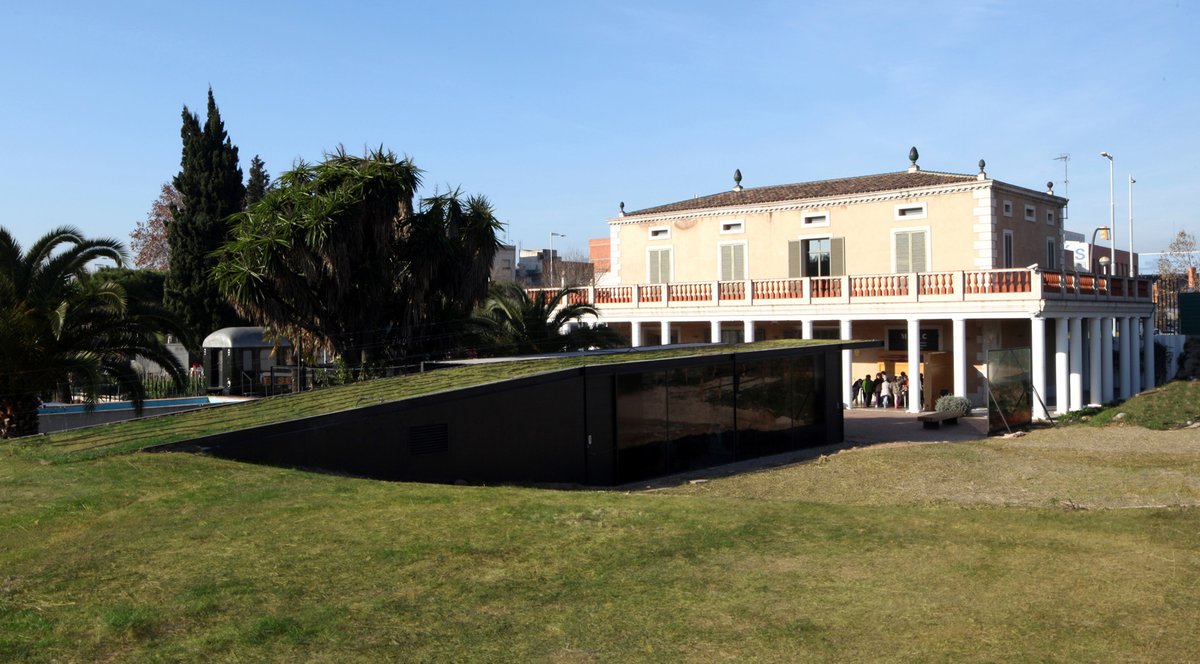

Can Serra is located on Carretera de Mataró 124 in Sant Adrià de Besòs and currently serves as the History of Immigration Museum of Catalonia. The property's history dates back to 1828, when the death of merchant Josep de Martí and Martí i Serra left his estate to his posthumous son, Josep de Martí i de Cardeñas. This sparked a conflict with his other five children. In 1845, to avoid the bankruptcy of his companies, Josep de Martí and his mother auctioned the land, which was purchased for 32,500 libres by the merchant Llogari Serra i Vilarmau.
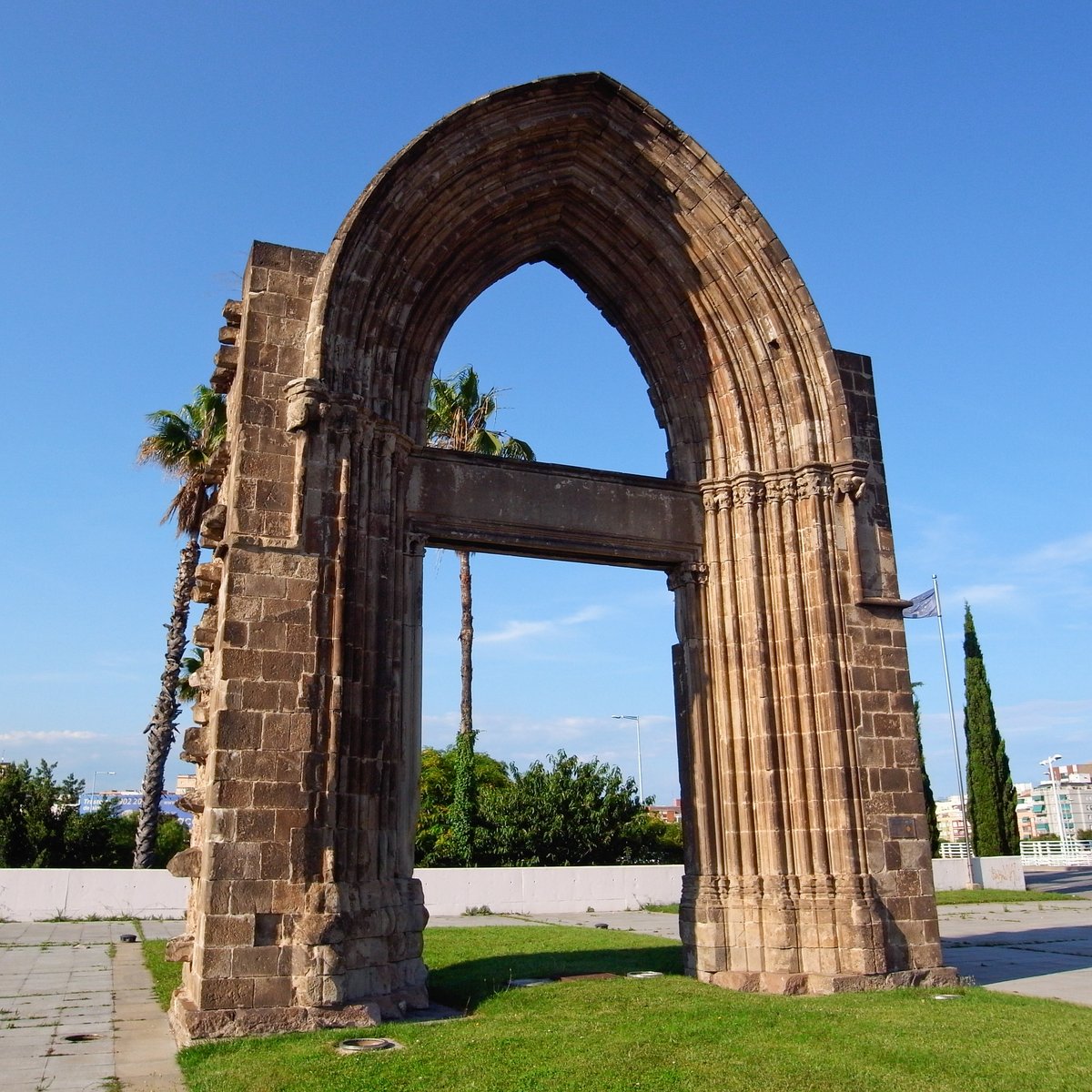
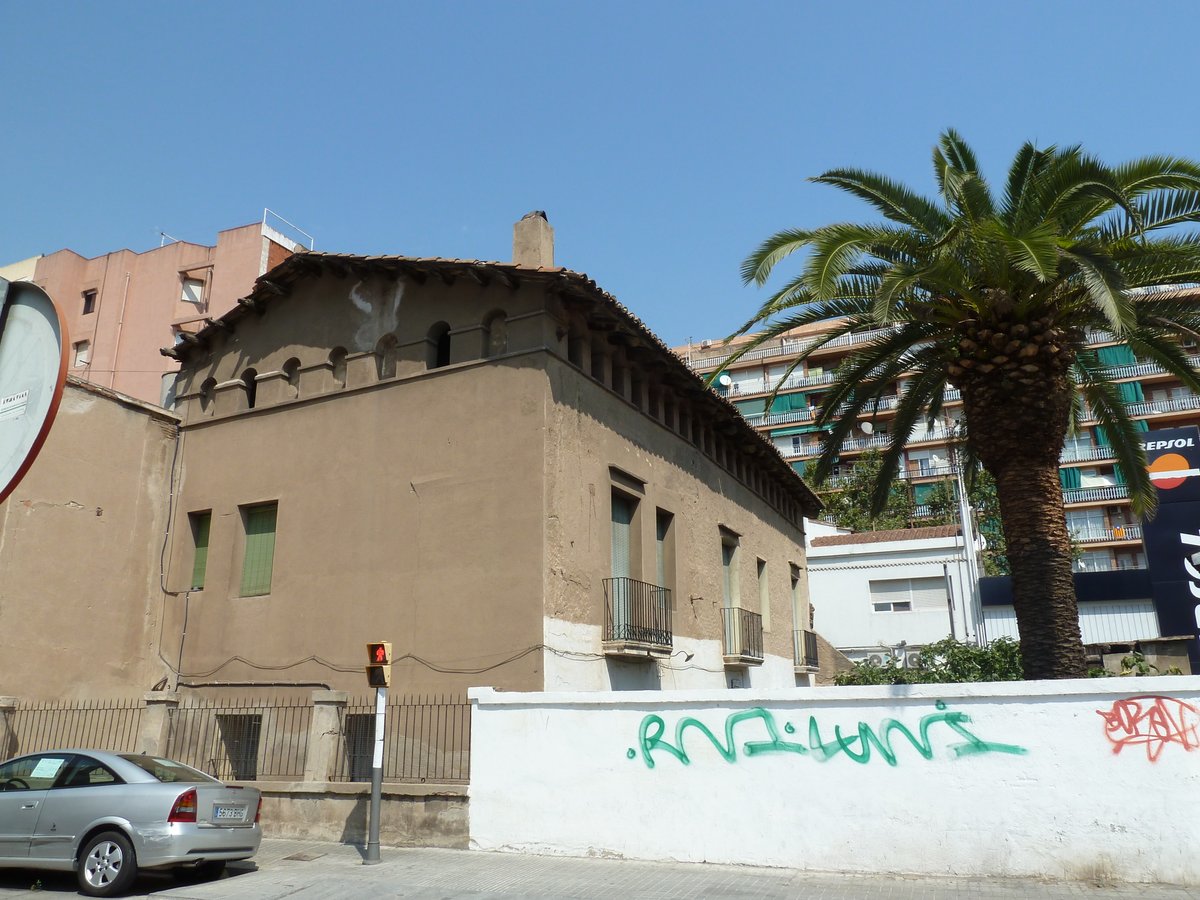
Llogari Serra died in the same year, and the property passed to his cousins Josep Serra i Farreras and Vicenç Serra i Quingles. By 1865, they sold their shares to Josep Serra, who expanded the property through various acquisitions and built a house. After his death in 1877, the property passed to the sisters Consol de Moragas i de Quintana and Pilar de Moragas i de Quintana. Later, Juli Maria Parellada i de Moragas acquired the property and moved the gothic portalada from the destroyed Convent del Carme of Barcelona to the site, adjacent to the neighboring farmhouse of Cal Tondo. The property was later purchased by the industrialist Antoni Rocamora i Pujolà, who renamed it Casa Rocamora.
In the 1960s, part of the western facade was sacrificed for bridge expansion works, and by the 1970s, the house was converted into two independent residences with a portion of the porch used for furniture and ceramics commerce. In the 1980s, the Barcelonès County Council expropriated part of the property for the Ronda del Litoral works. In 1997, the RCD Espanyol board purchased 6 hectares of the property to build their Sports City. After a period of abandonment and vandalism, the building was rehabilitated in 2004 by architect David Ferrer to house the History of Immigration Museum of Catalonia.
Sources: Wikipedia, OpenStreetMap, Wikidata, Wikimedia Commons
Written by Nicolo Ciampini
Discuss this with the author and others
No comments yet. Be the first to start the conversation.