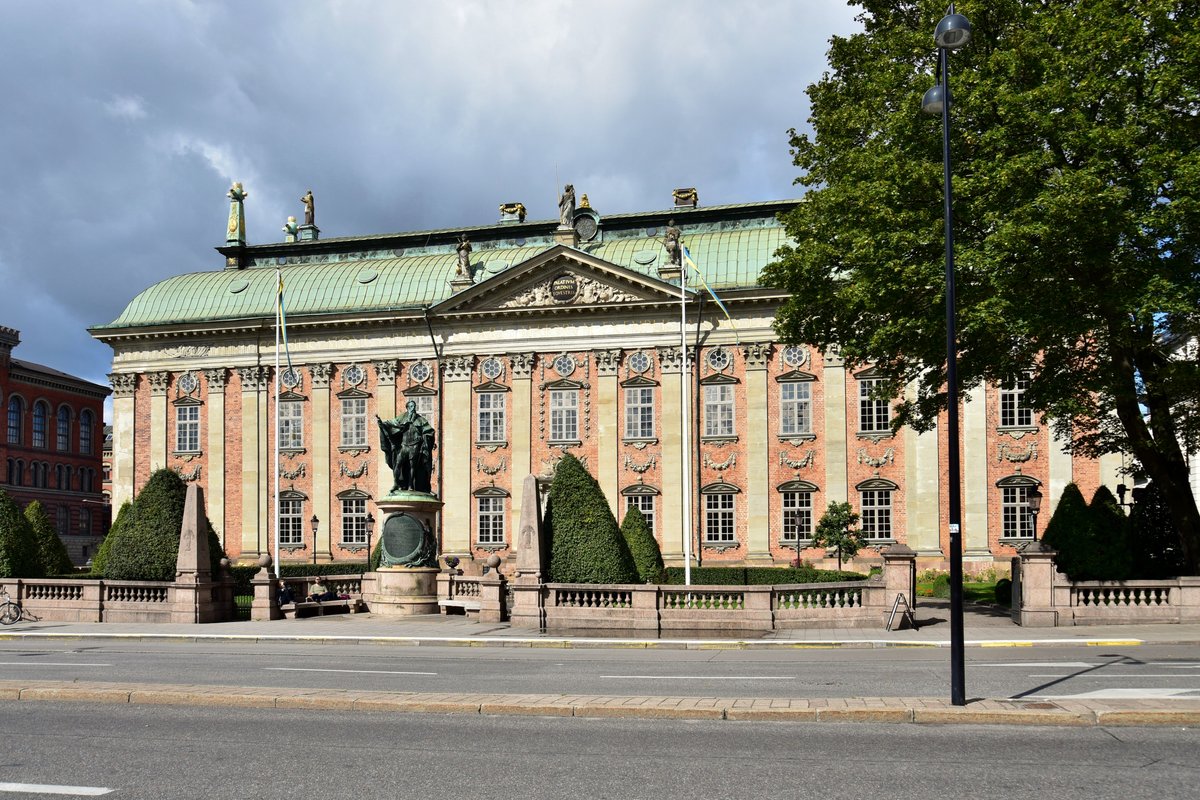

Built between 1641 and 1674, the House of Nobility, or Riddarhuset in Swedish, stands as a testament to history and architectural brilliance in the heart of Stockholm. The architecture was a collaborative effort led by Simon de la Vallée, Heinrich Wilhelm, Justus Vingboons, and Jean de la Vallée. Contrary to popular belief, Gustav I Vasa did not perform at the Riddarhuset. However, Elisabetta Almerighi did perform here in the 18th century. Since 2018, the Stockholm Culture Awards have found a new home in this historic hall. A statue of Gustav I Vasa was erected on the street-facing side of the building in 1773. The south end of the building features a Latin inscription, CLARIS MAIORUM EXEMPLIS. Later additions were made by Adolf W. Edelsvärd in 1870, and a statue of Axel Oxenstierna can be found in the park north of the Riddarhuset.
Sources: Wikipedia, OpenStreetMap, Wikidata, Wikimedia Commons
Written by Nik Frost
Discuss this with the author and others
No comments yet. Be the first to start the conversation.