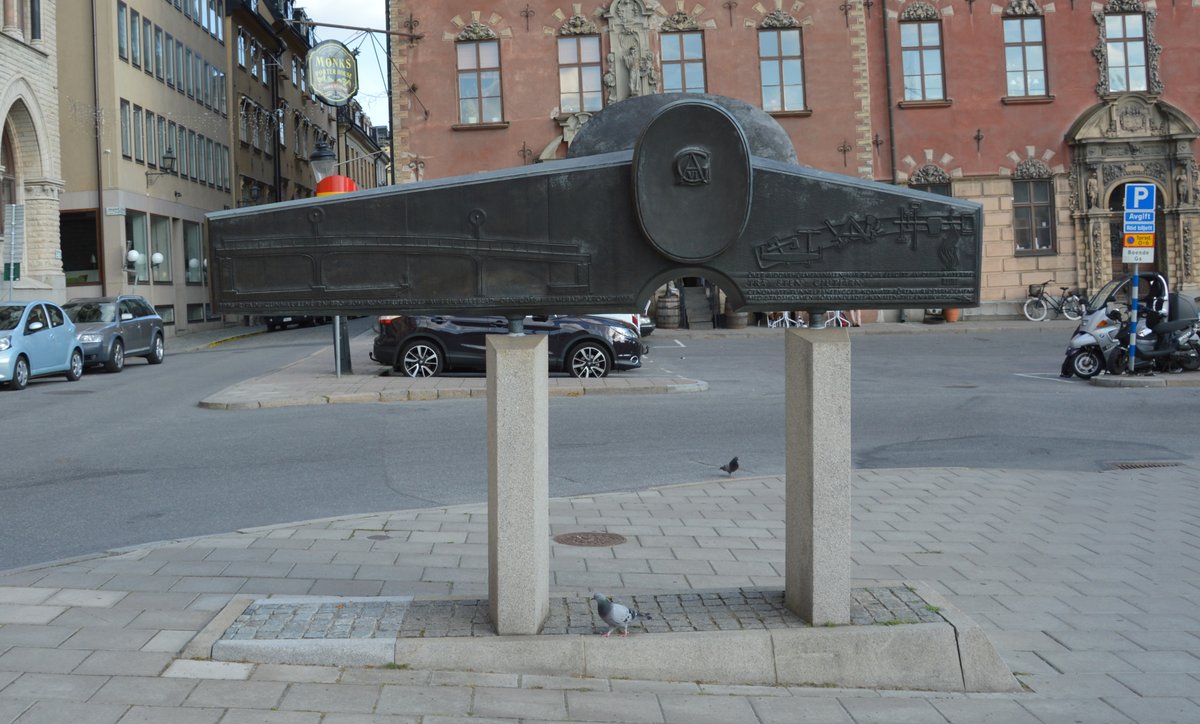

Stand before the bronze sculpture Riddarholmsbroarna at Munkbron 7 in Gamla stan. This monument serves as a timeline of the links between the old town and Riddarholmen. It invites you to observe how these crossings have been redesigned over the centuries through various materials and eras.
The relief on the south side documents the first wooden bridges built in 1738 and 1751. These were replaced in 1789 by a stone bridge designed by architect Erik Palmstedt. By 1867, that stone structure gave way to a cast-iron viaduct designed by engineer Erik Unge to facilitate passage for the connecting railway. The sculpture also features the monograms of the contemporary kings - Adolf Fredrik, Gustav III, Karl XV, and Gustaf VI Adolf.
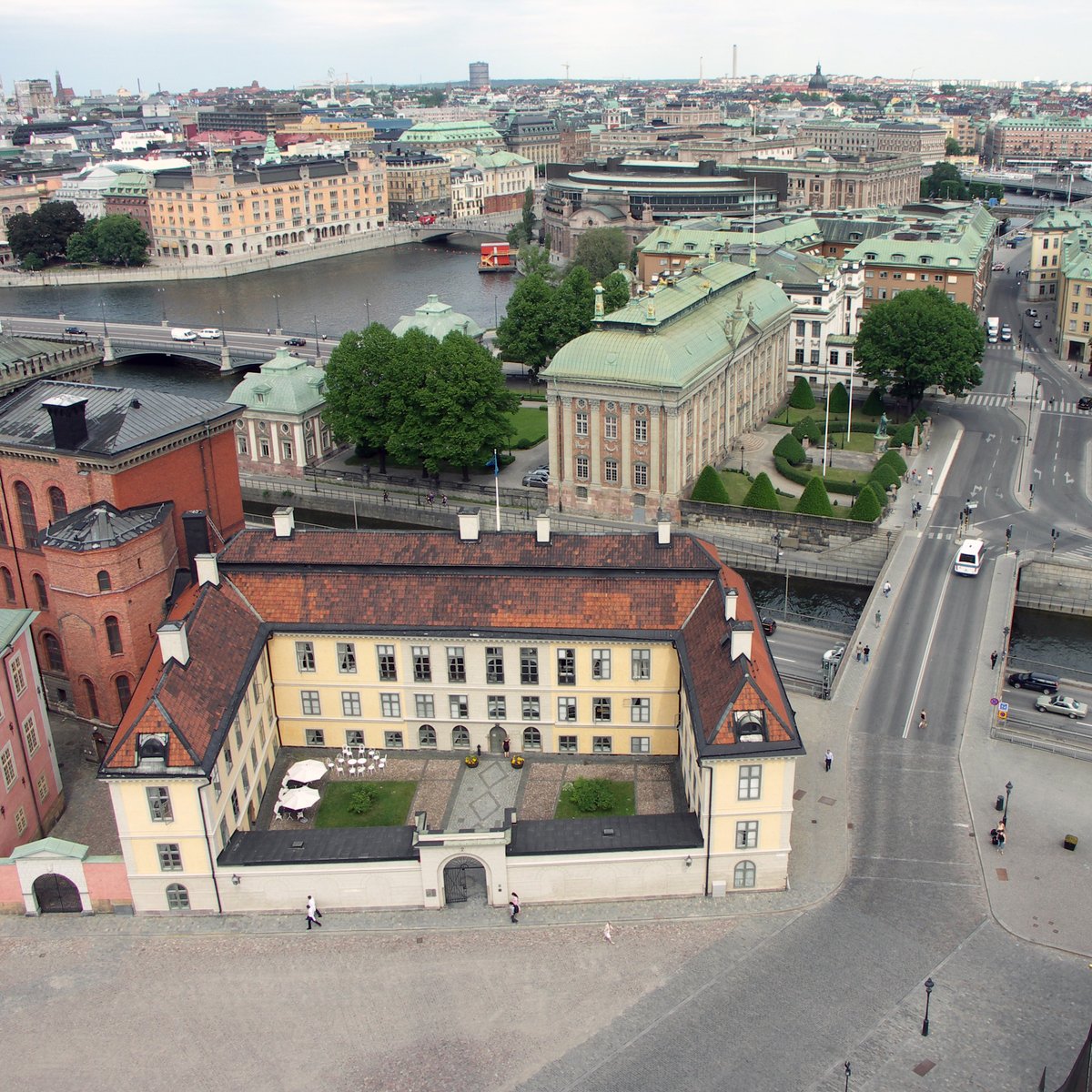
On the north side, the sculpture records the modern reinforced concrete bridge designed by Gunnar Lené and constructed by Erik Vretblad in 1958. This shift occurred alongside the construction of the subway, which transformed the old Riddarholmskanal into a bay.
Created by Bengt Inge Lundkvist between 1970 and 1975, this work remains a permanent part of the streetscape. It provides a summary of the materials used over time - wood, stone, cast iron, and concrete - and the history of the bridges that have crossed the water.
Sources: Wikipedia, OpenStreetMap, Wikidata, Wikimedia Commons

Written by Nik Frost
Discuss this with the author and others
No comments yet. Be the first to start the conversation.