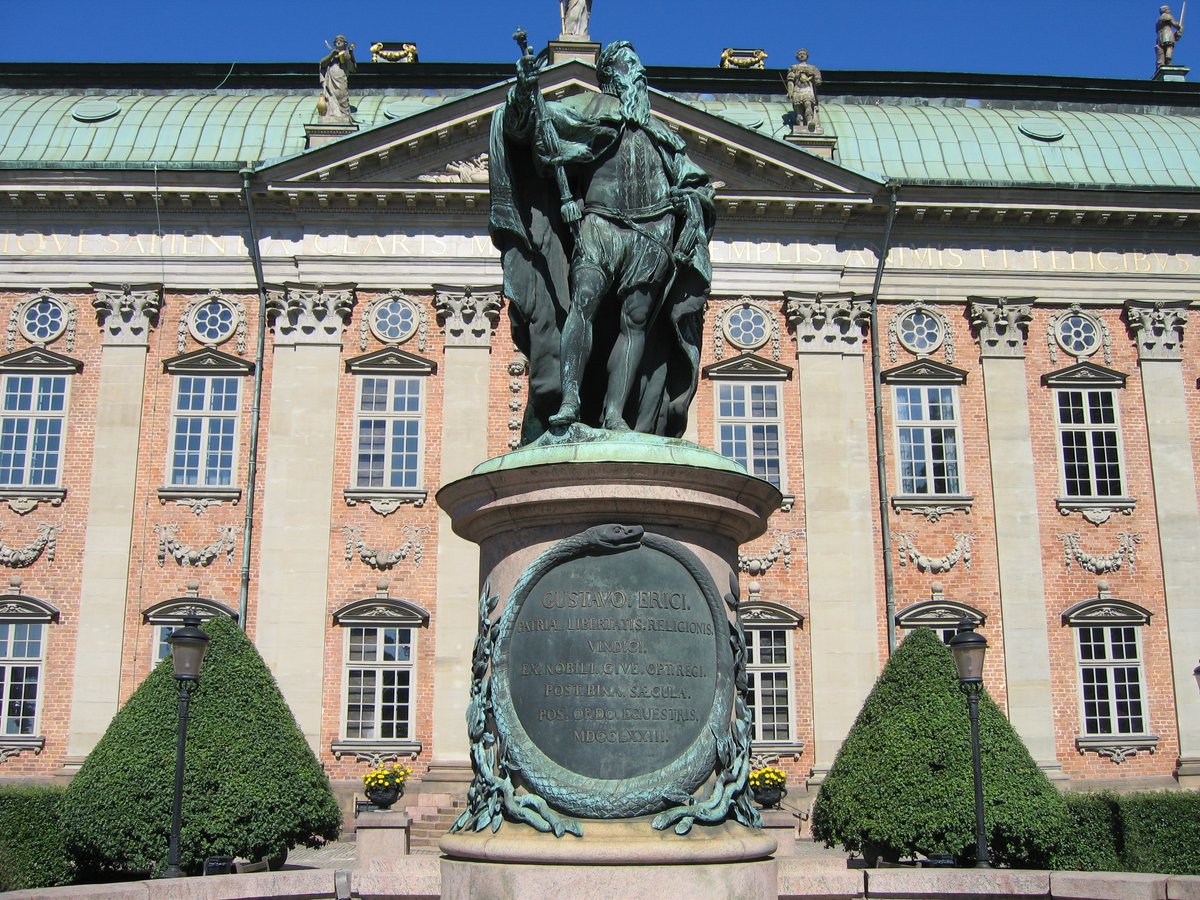

The Gustav Vasa Sculpture is a 12-foot bronze statue erected in 1774 by Pierre Hubert L'Archevêque, supported by the Riddarhus and nobility. Situated in front of Riddarhuset, the statue is fashioned with a sword, a laurel wreath, and a shield, indicative of the victories and powers associated with Gustav Vasa. The statue's original position was Riddarhus Square, but it was relocated to the peaceful Serafimerstorg at an unknown date in the early 1900s. The statue's materials were purloined from trophy cannon taken from the kingdom's vanquished foes.
The statue exhibits Gustav Vasa wearing a Burgundian costume, adorned with a laurel wreath and wielding a spear. While the laurel wreath conveys victory, the spear embodies power. The statue holds significant historical value due to the associated symbolism in the heart of 18th-century Stockholm.
Sources: Wikipedia, OpenStreetMap, Wikidata, Wikimedia Commons
Written by Nik Frost
Discuss this with the author and others
No comments yet. Be the first to start the conversation.