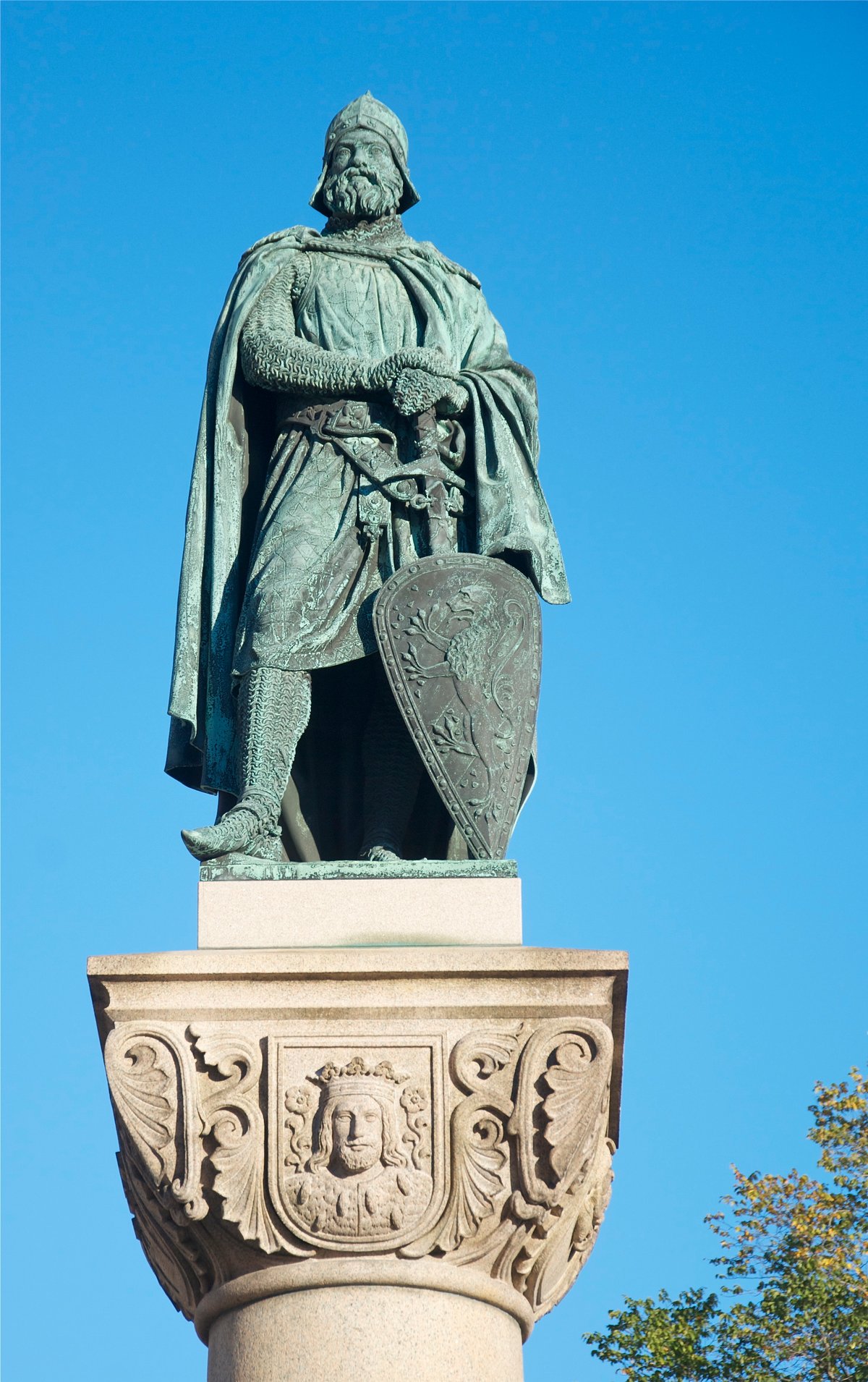

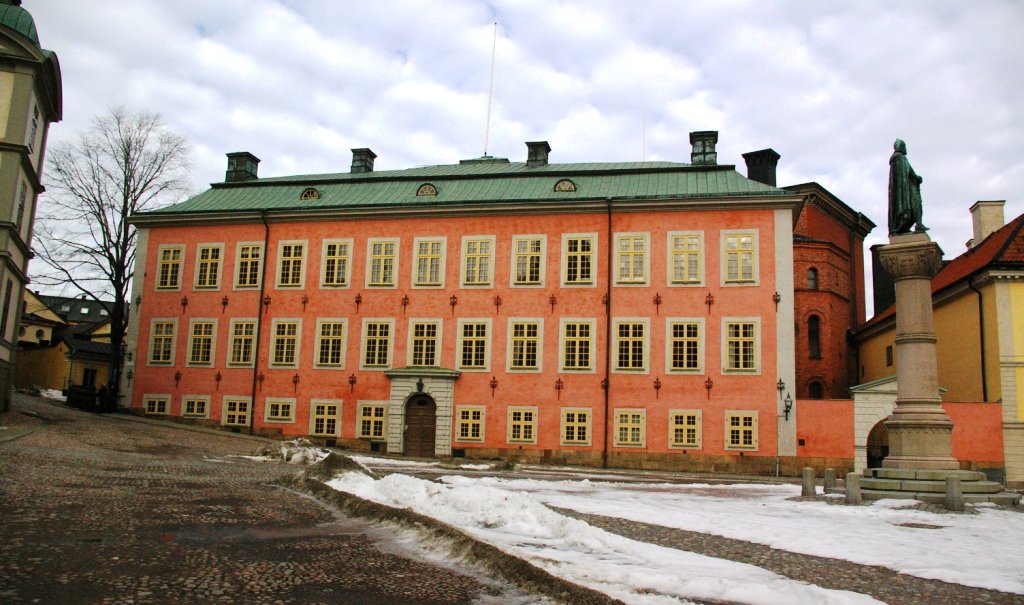
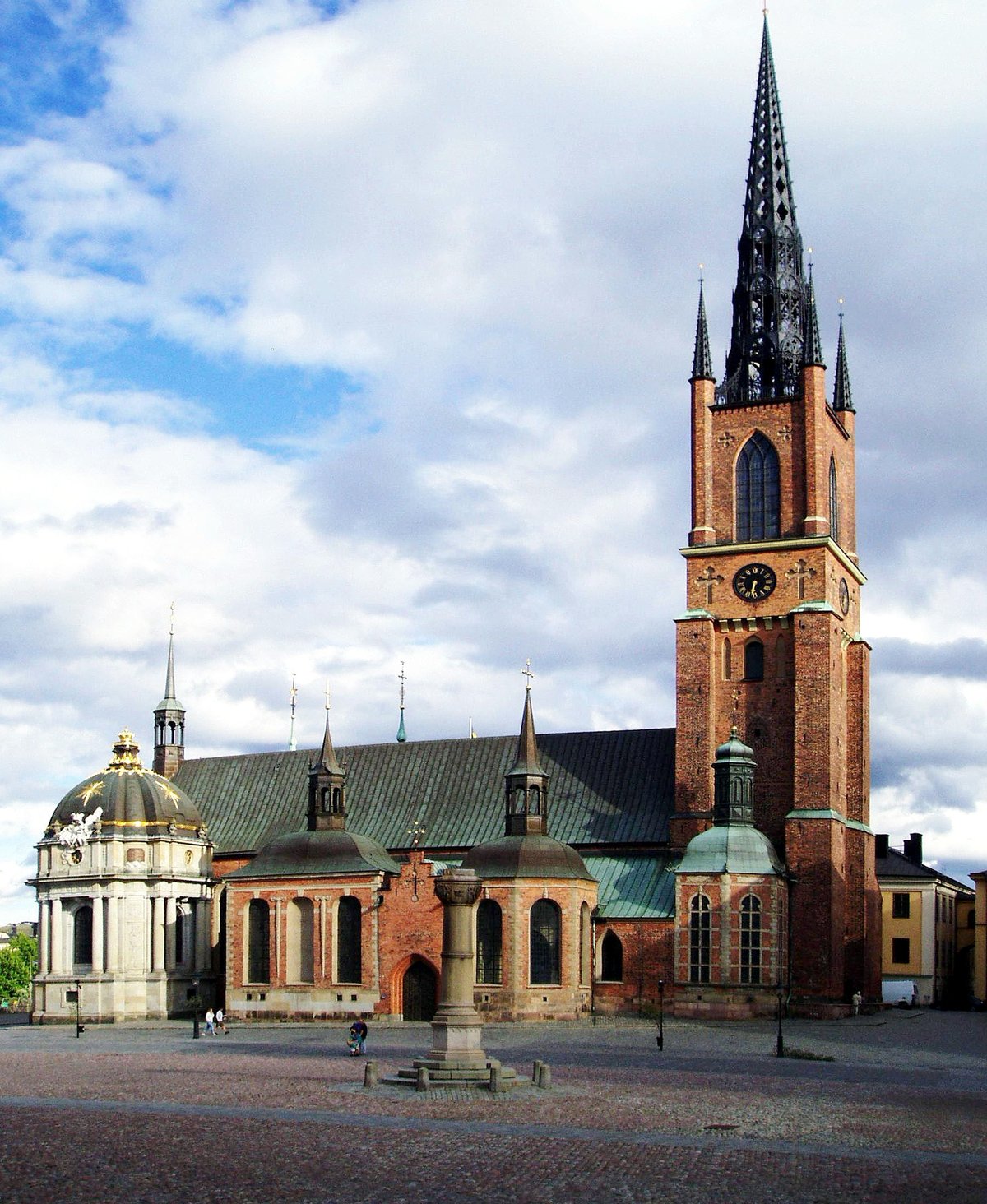
The statue of Birger Jarl stands on a pedestal and column on Riddarholmen in Stockholm. We can look back to 1854, when it was first unveiled with a column carved from carraramarmor. While this stone was chosen because it was cheaper and simpler than granite - which would have cost more than double - it did not withstand the climate. In 1911, the column was replaced with an exact copy in gray granite. The pedestal and column are almost 6.5 m high in total.
Let us trace the journey of the 1,700 kg bronze figure created by sculptor Bengt Erland Fogelberg. The first model was created and then sent to a foundry where Ferdinand von Müller cast it in bronze. From there, the statue was sent by land to Amsterdam and then shipped to Stockholm. Even the small details invite closer inspection. In 1880, the shield Birger Jarl holds was replaced because the first version was not historically correct - it was too long, narrow, and pointed. It had been modeled on the wrong coat of arms based on a historical record by Erik Dahlbergh, and the new bronze version was cast at Otto Meyers Konst-Metall- & Zinkgjuteri.
Visitors can observe the details of the column, which was designed in a style common in Europe during Birger Jarl's time. On the capital, one can see four different city coats of arms that Stockholm had, along with the current one, Erik the Holy's head. In the text on the column stands a word that is claimed to be an Italian misspelling, which is strange given that it was carved by the sculptor Jakob Lundberg. At the base of the column are the Roman numerals MDCCCLIV, meaning 1854.
Sources: Wikipedia, OpenStreetMap, Wikidata, Wikimedia Commons
Written by Nik Frost
Discuss this with the author and others
No comments yet. Be the first to start the conversation.