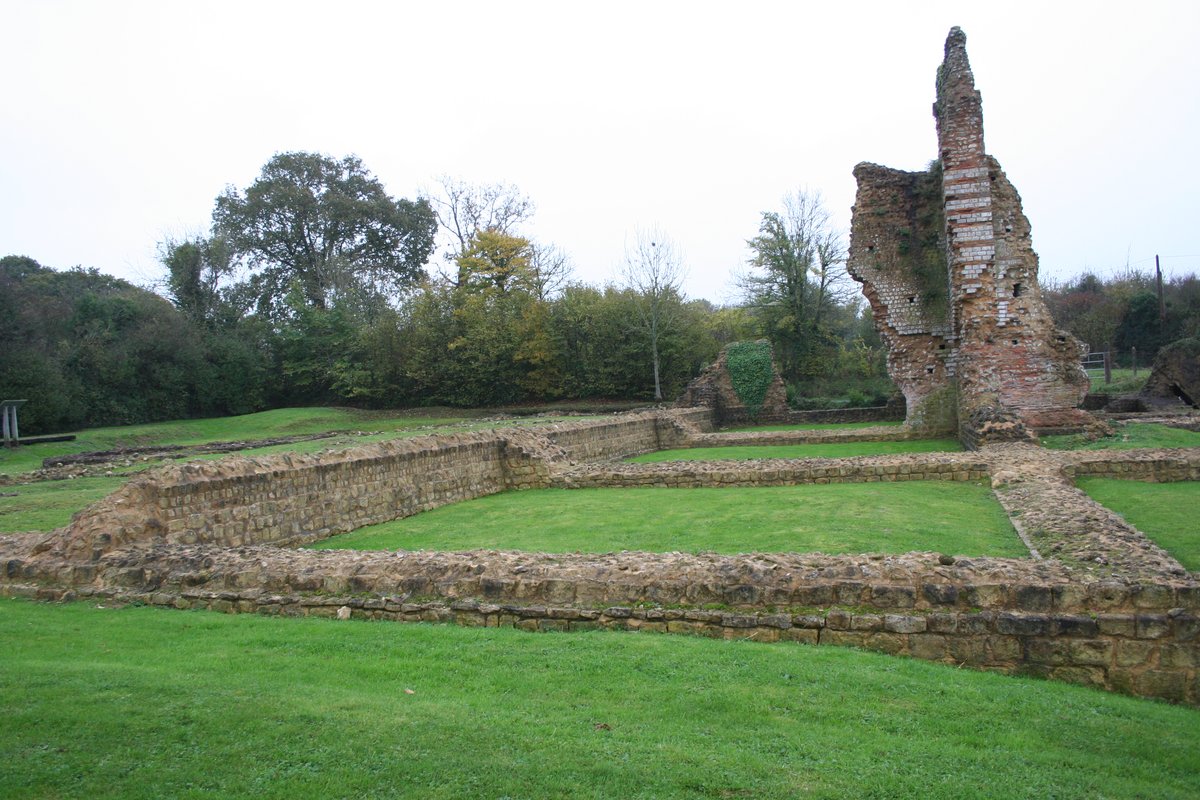

The ancient baths of Alauna are a Gallo-Roman thermal complex located in the French commune of Valognes in the north of Manche. Built in the latter part of the first century, the baths feature a symmetrical architecture with identical rooms on both sides of an axis, a plan similar to the Baths of Nero but on a smaller scale of 1,225 square meters. Situated at the lowest point of the ancient city, the complex sat near the cardo maximus, the main road running south to north.
By the end of the 3rd century, the baths fell into disuse. Over the following centuries, the masonry was gradually dismantled and repurposed for new constructions, reflecting the decline of the city. During the end of the Middle Ages, a hamlet was built on the site, and some of its buildings were supported by the westernmost walls of the baths. This phase of differentiated reuse explains the distribution of the preserved remains in elevation in modern times, as they were protected from destruction by their inclusion in other buildings that were later destroyed.
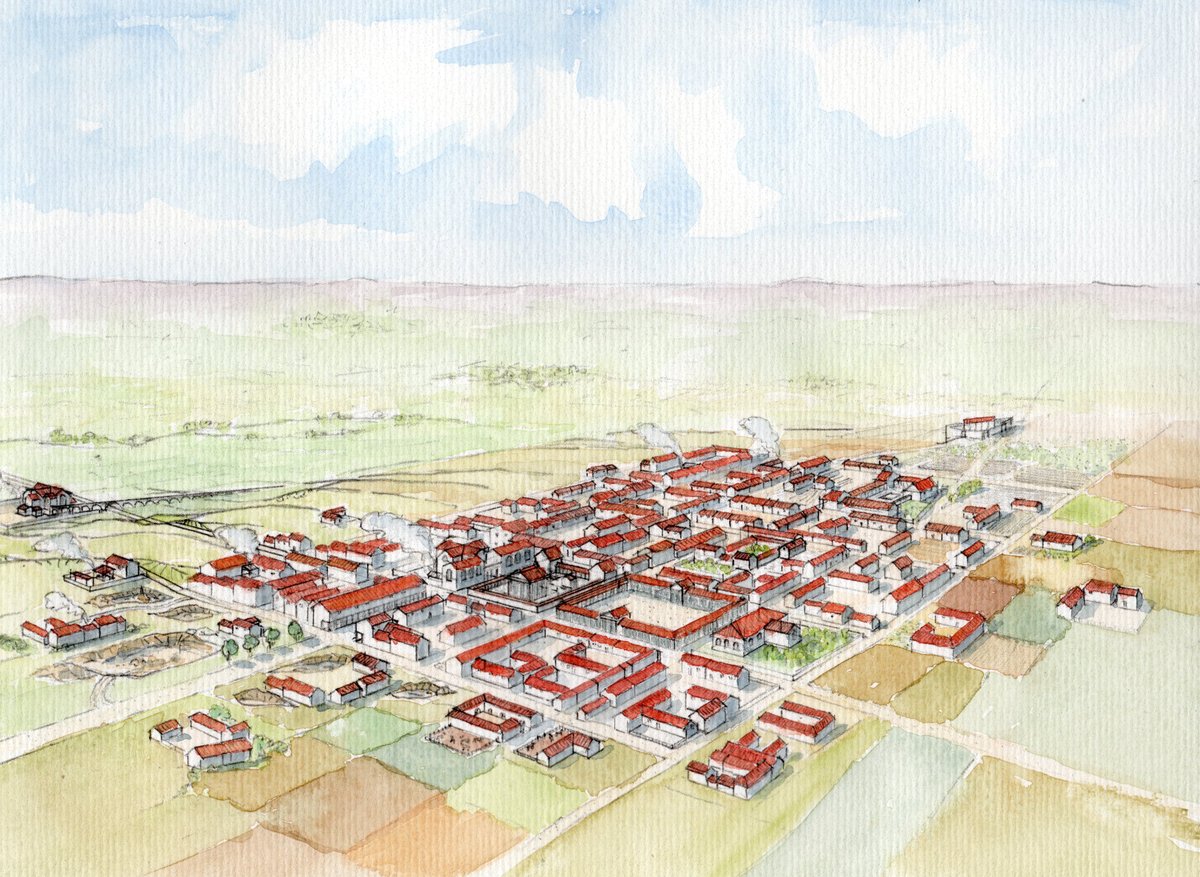
Today, the site is a protected historical monument and an archaeological garden. The remains stand at about twelve meters high and are part of the landscape of the Norman bocage. While the baths are the known monumental structures discovered through excavations, recent studies indicate that Alauna was a larger city than previously believed, potentially housing a population of 3,000 to 4,000 residents.
Further exploration of the site is ongoing. Excavations in 1695 and 1981 revealed evidence of tubuli and a tiled floor in an area to the north, suggesting the presence of a balneum that may have been private or public. These findings raise questions about the existence of a larger complex north of the main city, which remains a subject of ongoing study.
Sources: Wikipedia, OpenStreetMap, Wikidata, Wikimedia Commons
Written by Nicolo Ciampini
Discuss this with the author and others
No comments yet. Be the first to start the conversation.