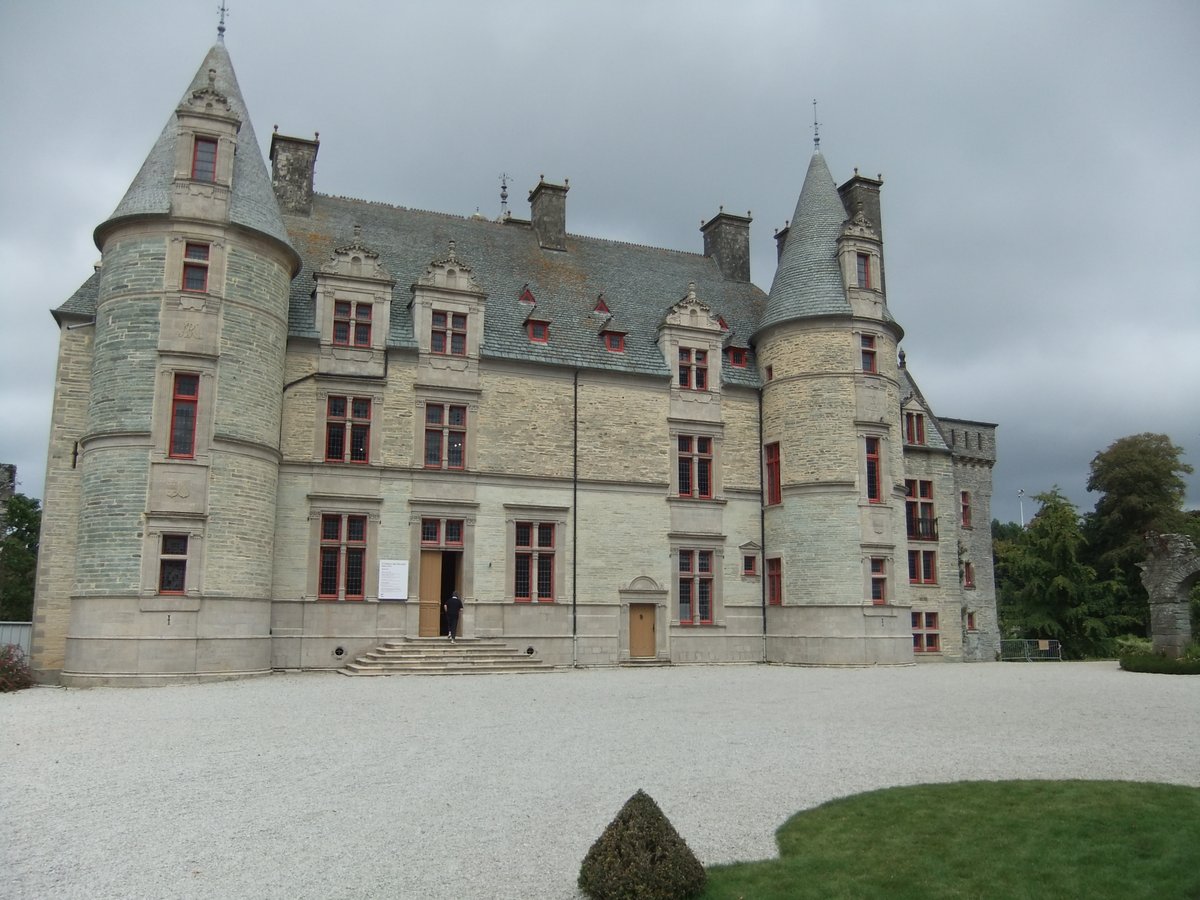

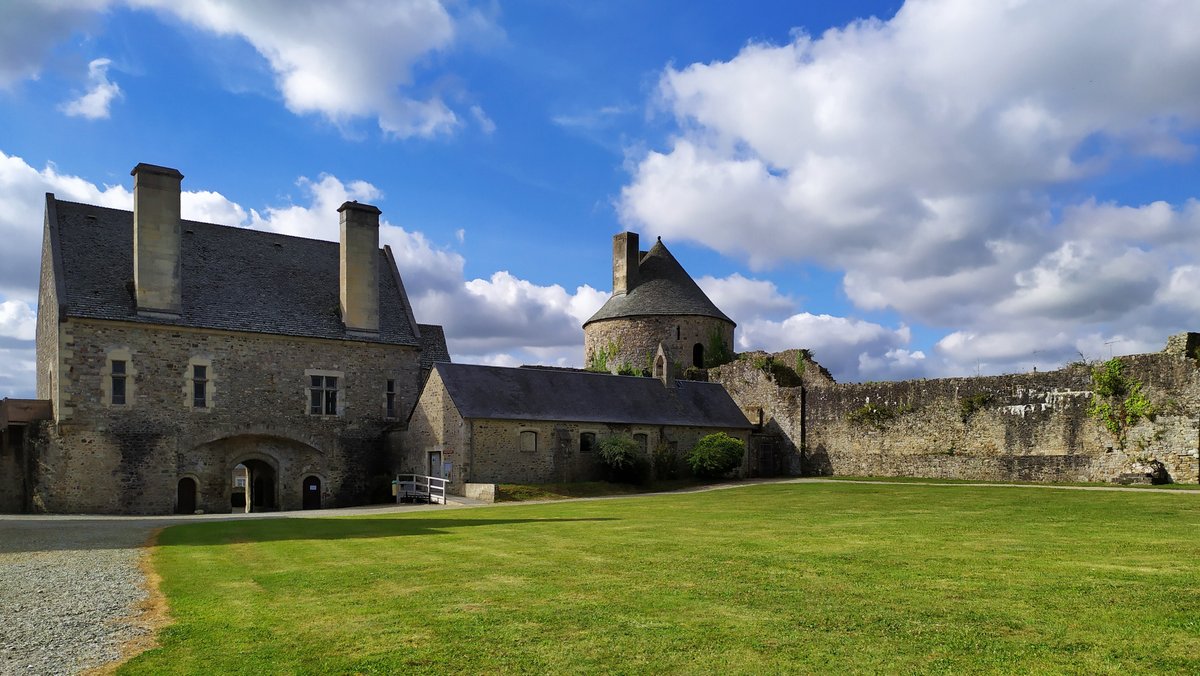
The Château des Ravalet, also known as the château de Tourlaville, stands as a structure of blue schist. Between 1562 and 1575, the brothers Jean and Jacques de Ravalet built the Renaissance castle on the site of a ruined medieval manor, preserving only the keep, the cellar of the guards' room, and the prisons. It remains a significant monument in the department of the Manche.
Things turned tragic in the 1600s. The children Julien and Marguerite de Ravalet had a forbidden romance that ended in a public execution in Paris in 1603. They were beheaded at the Place de Grève and buried in the church of Saint-Jean de Grève. Following their deaths, the Abbot of Hambye returned to Tourlaville and had the top of the tower that housed Julien's chamber removed, erecting a chapel of expiation in its place.
Violence continued at the estate in 1661, when Charles de Franquetot was murdered in his salon by five people seeking gold and diamonds. One valet was mortally wounded in the throat and arm during the attack. Today, the castle is owned by the city of Cherbourg-en-Cotentin, standing as a witness to centuries of local history.
Sources: Wikipedia, OpenStreetMap, Wikidata, Wikimedia Commons
Written by Nicolo Ciampini
Discuss this with the author and others
No comments yet. Be the first to start the conversation.