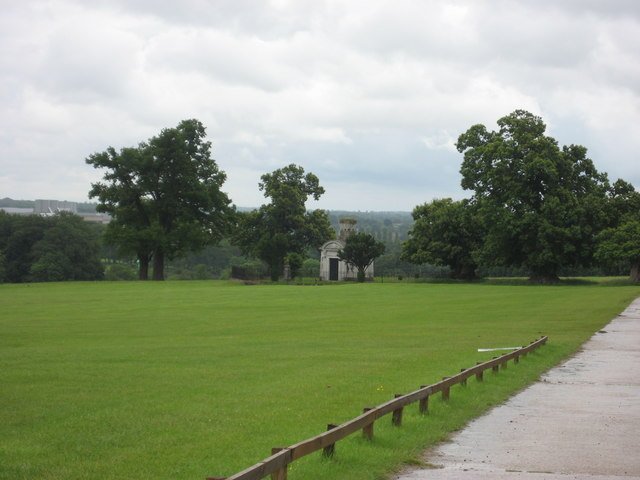
Constructed in 1817, the Lytton Mausoleum, found in Knebworth Park, Hertfordshire, England, was commissioned by Elizabeth Bulwer-Lytton (née Warburton-Lytton) to honor her parents. Previously, the Lytton family interred their deceased members in the Lytton Chapel, attached to St Mary's church. Inside the mausoleum, several coffins can be found, including that of Elizabeth Bulwer-Lytton (1770-1843). A casket holds the ashes of Lady Constance Bulwer-Lytton (1869-1923). She joined the suffragette movement and, according to her epitaph, 'sacrificed her health and talents in helping to bring victory to this cause'. The architect of the building, John Buonarotti Papworth, designed the mausoleum in a Neoclassical style. The roof of the mausoleum supports a sarcophagus with shell acroteria. The building and the enclosing railings were Grade II listed in 1968.
Sources: Wikipedia, OpenStreetMap, Wikidata, Wikimedia Commons
Written by Nicolo Ciampini
Discuss this with the author and others
No comments yet. Be the first to start the conversation.