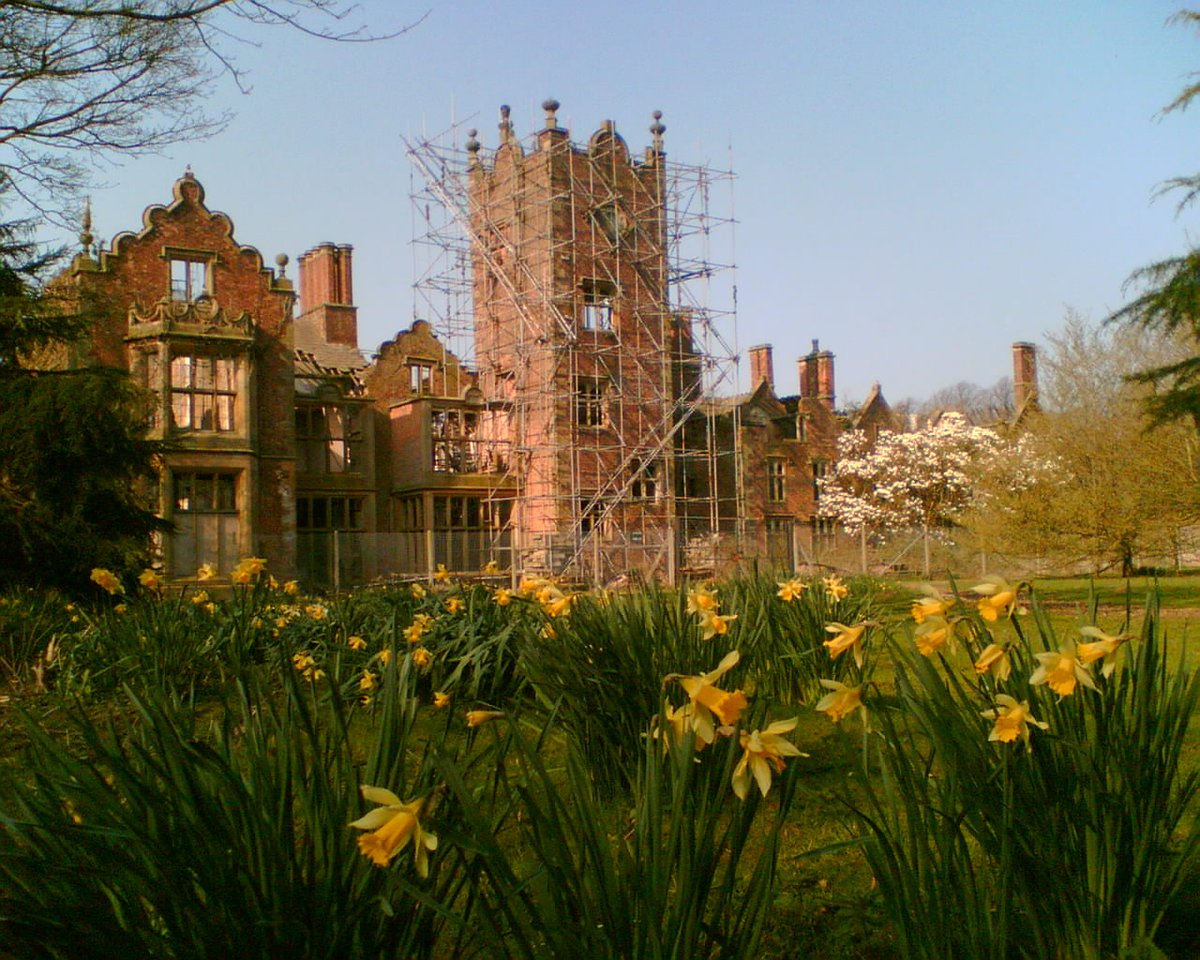
For over 400 years, Bank Hall in Lancashire, England, has been home to a branch of the Banastre family. Built in 1608, the manor house underwent several extensions during the 18th and 19th centuries by George Anthony Legh Keck, who inherited the estate in 1860. Legh Keck, along with architect George Webster, extended Bank Hall by adding a wing to the west elevations, a porch on the north side, and remodeled windows on the 1608 north elevation. Webster also covered the roofs with blue Cumbrian slates and finished the walls with stone details.
However, Bank Hall's story doesn't conclude there. In 1861, the estate was auctioned off, and the manor was used as a holiday home before being leased to tenants after Legh Keck's death in 1860. During the Second World War, the Royal Engineers were billetted at Bank Hall, and Nissen huts were constructed in the gardens and parkland. After the war, the estate was returned to the Lilfords, who moved their estate offices to the east wing until 1972.
Sources: Wikipedia, OpenStreetMap, Wikidata, Wikimedia Commons
Written by Nicolo Ciampini
Discuss this with the author and others
No comments yet. Be the first to start the conversation.