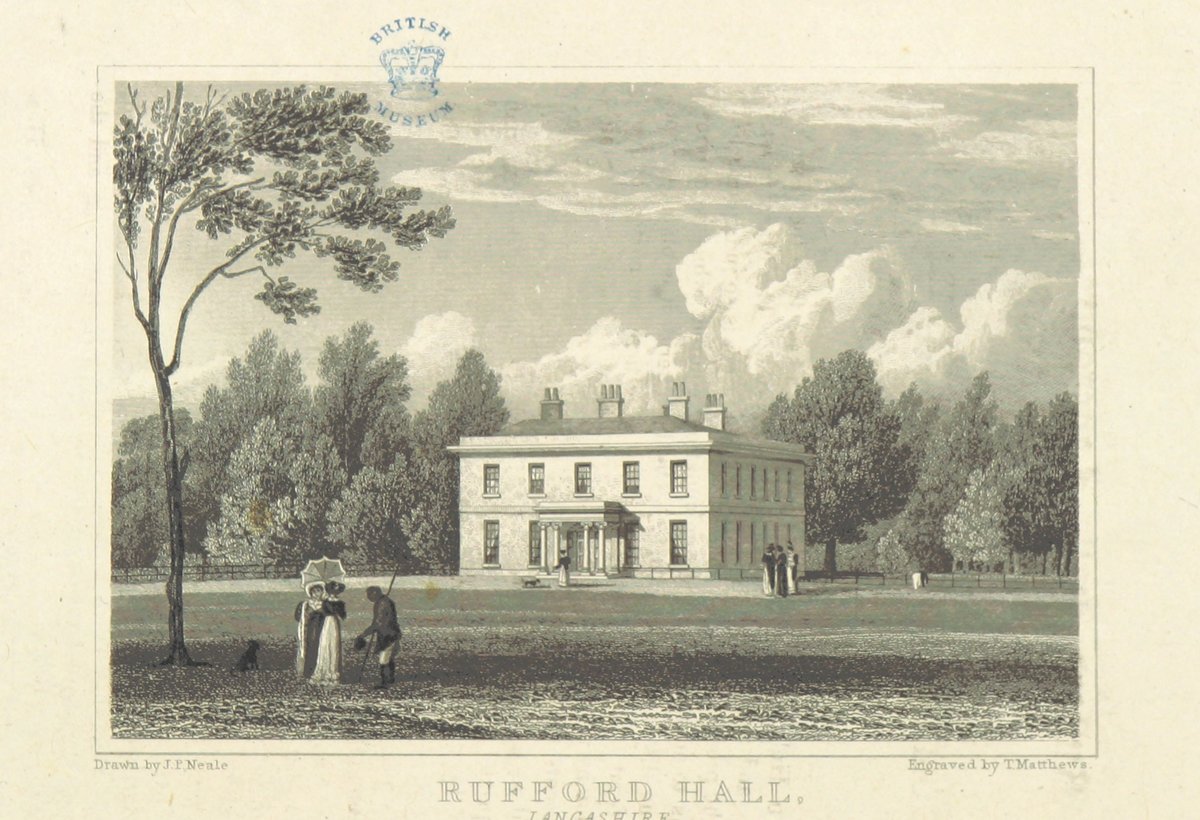

Rufford New Hall is a former country house in Lancashire, England, built in 1760 by Sir Robert Hesketh. It replaced Rufford Old Hall as the residence for the Heskeths, who remained until 1919. The hall is built in brick, formerly stuccoed, and features a two-storey symmetrical frontage with an Ionic portico. Inside, the entrance hall contains a cantilevered stone staircase and a domed oval skylight, while the main hall features columns and pilasters made from Scagliola marble.
In 1920, the hall was purchased by Lancashire County Council and converted into a hospital. Rufford Pulmonary Hospital opened on 6 August 1926 with 50 beds to treat patients with tuberculosis. It was subsequently used by the NHS as a pre-convalescent hospital, administered by Ormskirk District General Hospital, until its closure in 1987. Today, the hall and its north wing have been restored and converted into apartments and mews houses, retaining features like the stone cantilevered staircase with the Hesketh family crest and the Georgian belvedere tower.
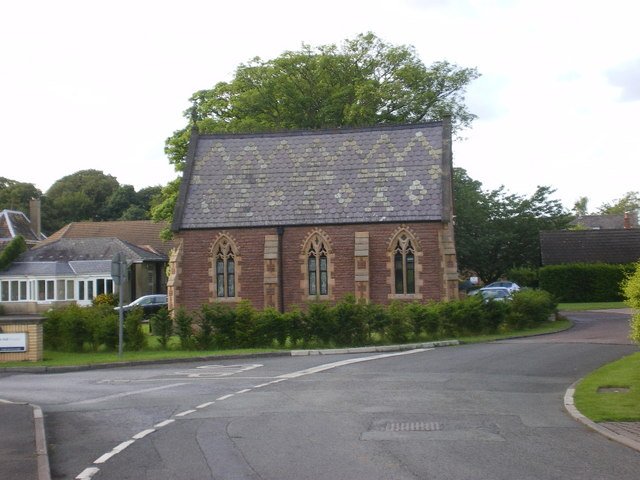
The estate includes Rufford Park, which contains an ice house, a rose garden, and a restored ornamental garden. The ice house is a Grade II listed circular building made of sandstone, brick, and earth, featuring a domed roof above an underground chamber. The southern part of the park is designated a Biological Heritage Site, home to bats, red squirrels, and rare fungi. The grounds also feature three lodges: Hesketh Lodge, the main entrance lodge built in the early 19th century; Croston Lodge, the north entrance on the A59 built in 1798; and Springwood Lodge, the former gamekeeper or gardener's cottage.
Sources: Wikipedia, OpenStreetMap, Wikidata, Wikimedia Commons
Written by Nicolo Ciampini
Discuss this with the author and others
No comments yet. Be the first to start the conversation.