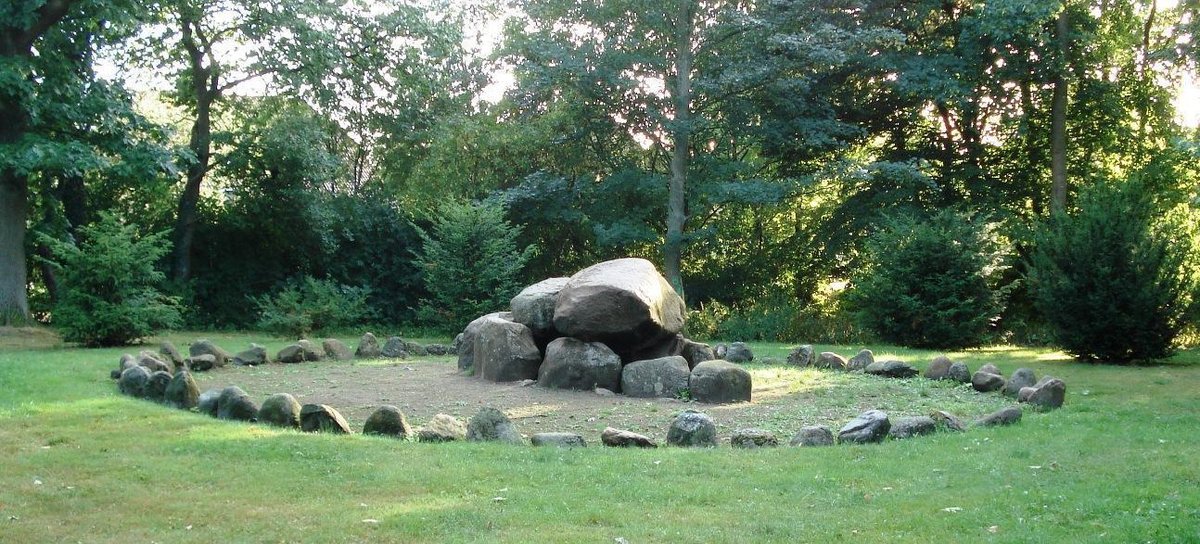
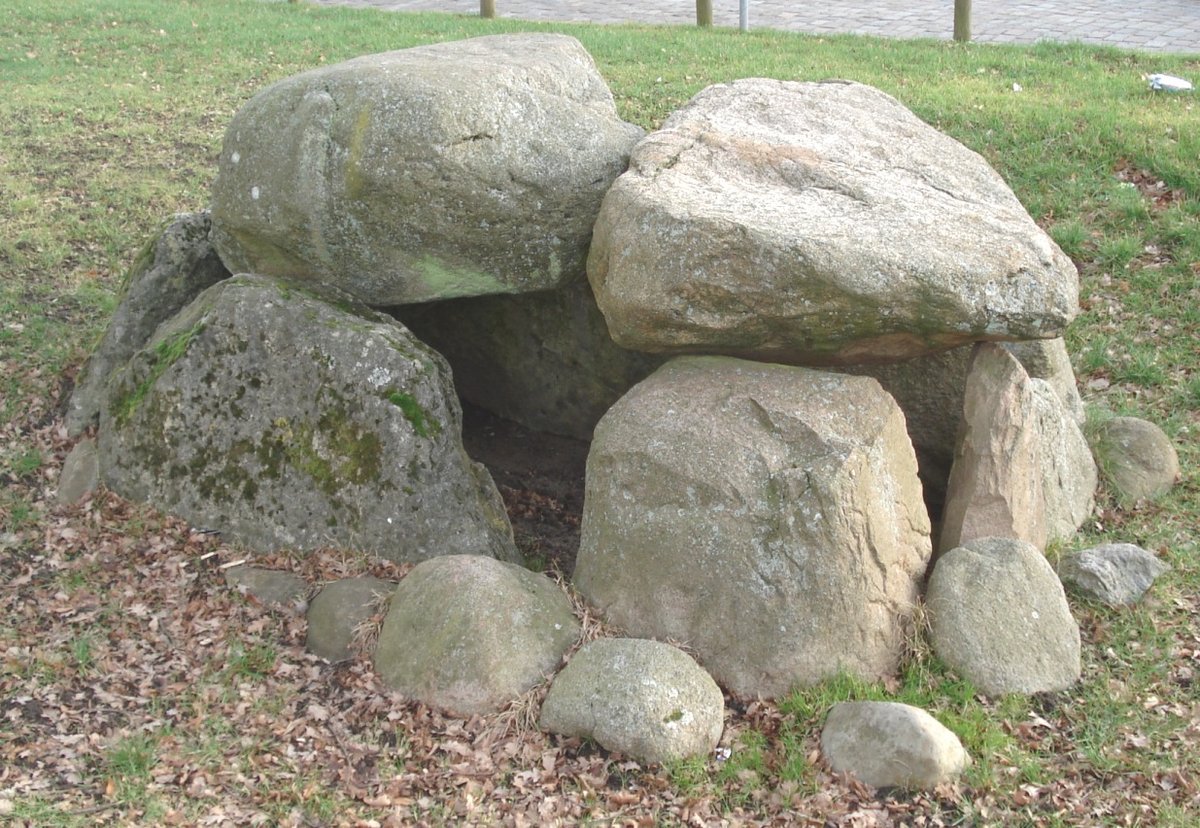
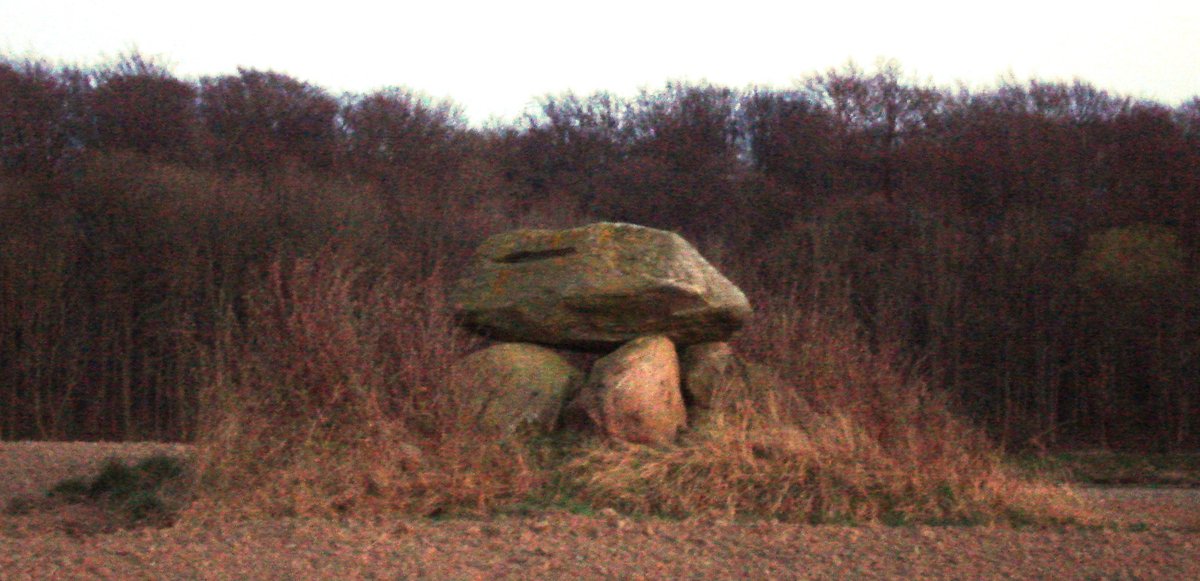
A circle of small erratic boulders is located about four meters around a large stone tomb. These stones represent the perimeter of an earthen mound that usually covers a megalithic structure. Today, the tomb stands as a reconstruction, built by the Funnelbeaker culture between 3500 and 2800 BC.
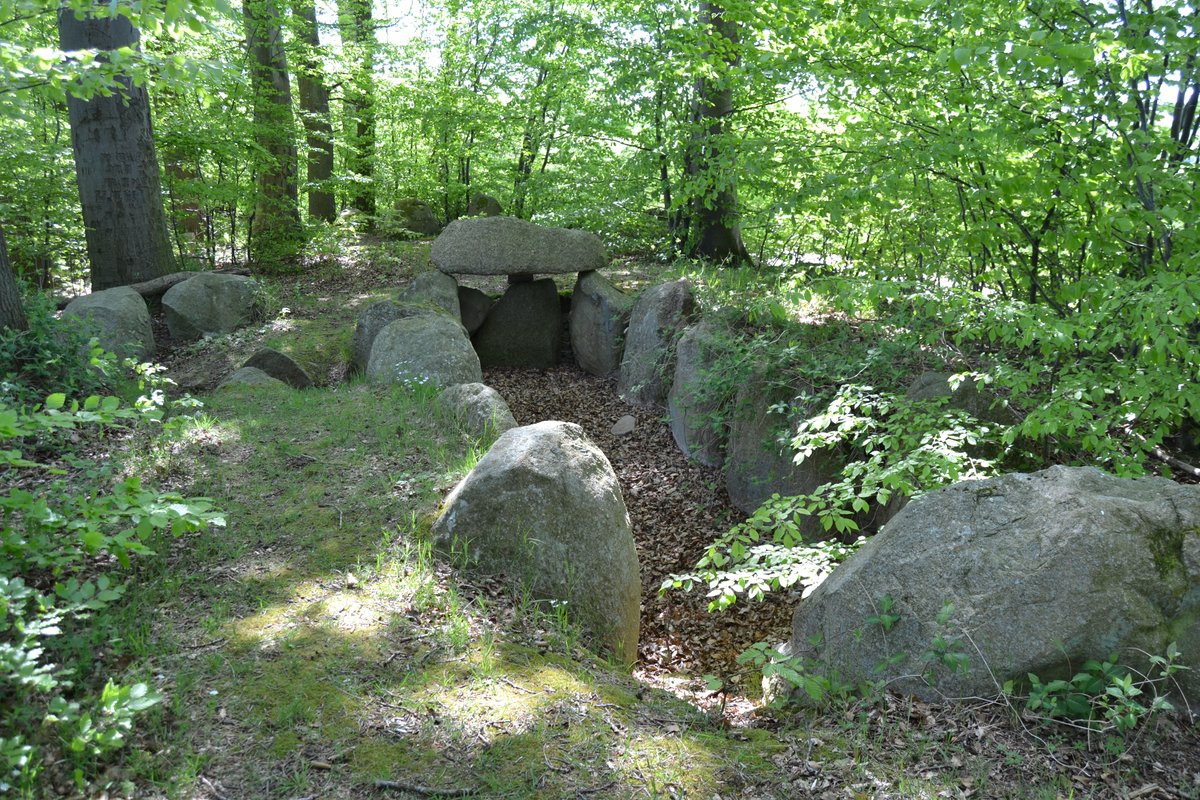
The gallery grave consists of ten large erratic boulders, including eight support stones and two capstones. It measures about five meters long and two and a half meters wide, oriented toward the north and south. Two of the three support stones on each long side bear the weight of the two capstones, while two support stones have no capstone lying on them, leaving lateral access to the grave chamber. One end stone closes each of the narrow sides to the south and north.
In the 1920s, archaeologists working on the Pennebusch plot near the Holsteinische Schweiz hotel noticed scorched pieces of flint during their survey. This led them to a rectangular clay area containing the remains of a stone pavement, yet the great megalithic blocks were nowhere to be seen on the surface. They were found deep in the ground away from the clay area.
Archaeologists concluded that ditches were dug to remove the grave, and the stones were submerged in them. Excavators recovered these stones, identifying them as support stones, none of which were capstones. The recovered stones were moved to their current location for the reconstruction of the large stone tomb.
Sources: Wikipedia, OpenStreetMap, Wikidata, Wikimedia Commons

Written by Aurora
Discuss this with the author and others
No comments yet. Be the first to start the conversation.