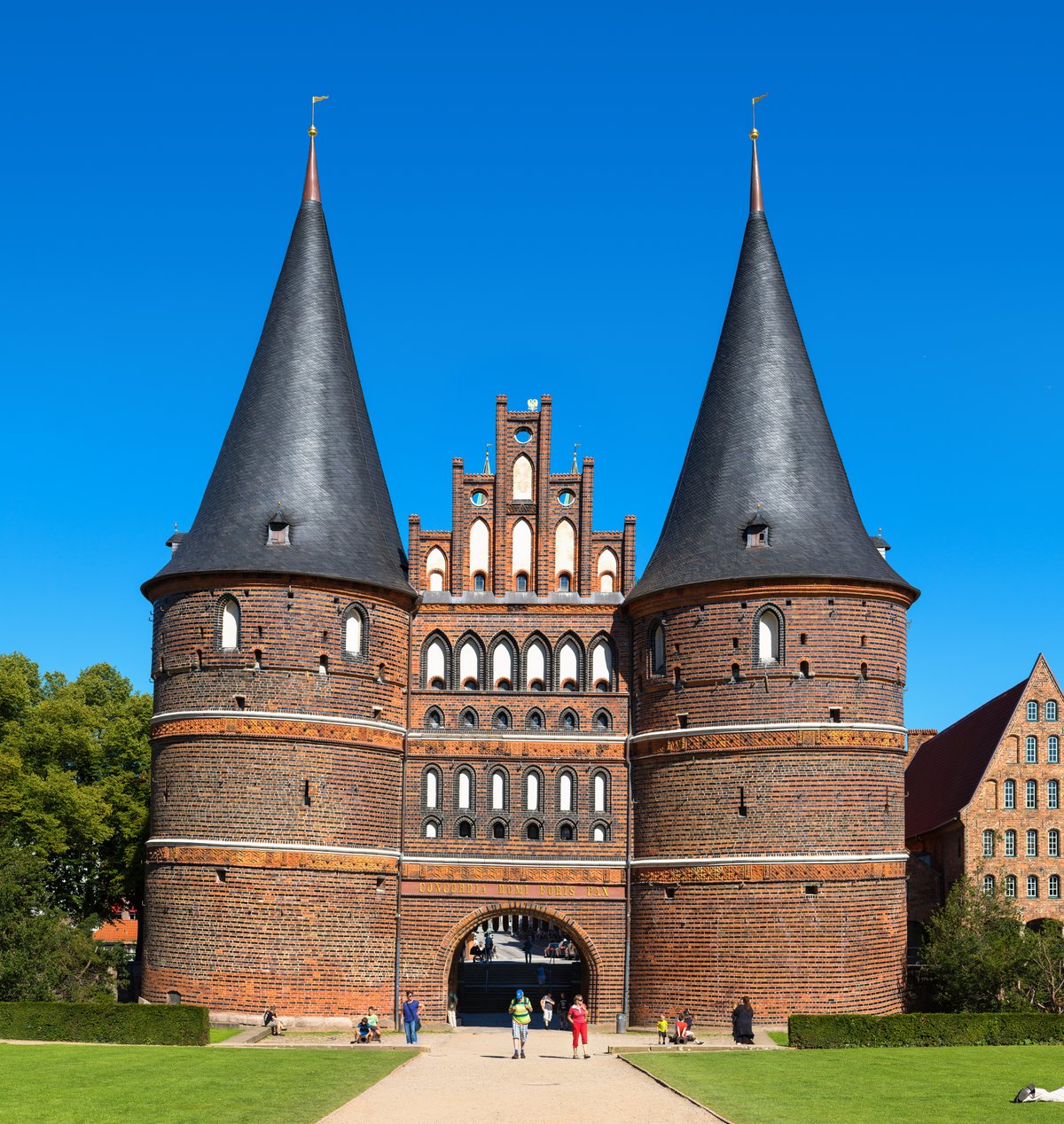
Lübeck holds a record that makes its skyline unique. It possesses more church towers over 100 metres tall than any other city in the world. These towers define a city that became the de facto capital and most important city of the Hanseatic League.
Long before the bricks were laid, the site at the mouth of the Trave river saw the movement of people. Polabian Slavs established a settlement called Liubice before 819. By the 10th century, this place was the second-most important settlement of the Obotrites. After a fire destroyed a nearby town on the island of Bucu in 1157, Henry the Lion rebuilt it, eventually moving the bishopric here in 1160.
In 1260, the city gained the status of an immediate city within the Holy Roman Empire, a privilege that allowed it to flourish as a free entity. It became the cradle of the Hanseatic League in the middle of the 12th century. From this location, the Lübeck law radiated outward, adopted by around 100 cities in the Baltic region.
St Mary's Church, built between 1265 and 1351, became the model for most other Brick Gothic churches in the Hanseatic League's sphere of influence. It has the tallest brick vault. Nearby, the Lübeck Cathedral stands as the first large brickwork church in the Baltic, constructed in various stages between 1173 and 1335.
Today, the old town is Germany's most extensive UNESCO World Heritage Site. Visitors see the five main churches - St Mary's, the Cathedral, St James', St Peter's, and St Giles's - still dominating the view. The port remains the second-largest German port on the Baltic Sea after the port of Rostock, while the Niederegger Marzipan Museum preserves the city's best-known culinary specialty.
Sources: Wikipedia, OpenStreetMap, Wikidata, Wikimedia Commons
Written by Aurora
Discuss this with the author and others
No comments yet. Be the first to start the conversation.