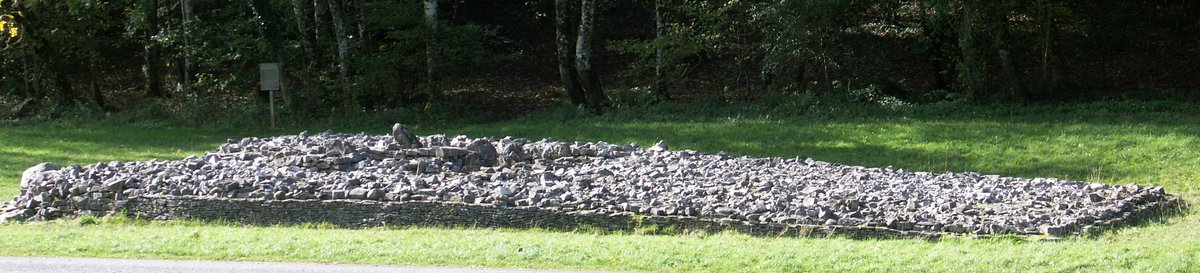
Parc le Breos Chambered Tomb is no ordinary burial site. Constructed around 5,850 years before present (BP), this tomb predates Stonehenge by a millennium. The tomb, which lies on the floor of a dry narrow limestone gorge, is a part of the Severn-Cotswold or Cotswold-Severn group, of which there are only 120–30 sites identified. Here are some secrets it has been keeping for millennia: The tomb has a cairn and a revetment of dry-stone walling, and is revetted by a low dry-stone wall, forming a bell-shaped, south-facing forecourt.
It was built around 1,500 to 1,300 years before Stonehenge was completed. A cromlech, a megalithic burial chamber, was built within the tomb. The cairn of the cromlech is about 72 feet (22 m) long by 43 feet (13 m) wide. Human remains had been placed in two pairs of stone chambers that lead from the passageway. In 1869, human bones (belonging to at least 40 people), animal remains, and Neolithic pottery were found during an excavation. The tomb was in use for between 300 and 800 years.
North-West European lifestyles changed around 6000 BP, from the nomadic lives of the hunter-gatherer, to a settled life of agricultural farming: the Neolithic Revolution. However, analysis of the human remains found at Parc Cwm long cairn show that the people interred in the cromlech continued to be either hunter-gatherers or herders, rather than agricultural farmers, even though agricultural farming had become widespread in the Neolithic.
Sources: Wikipedia, OpenStreetMap, Wikidata, Wikimedia Commons
Written by Nicolo Ciampini
Discuss this with the author and others
No comments yet. Be the first to start the conversation.