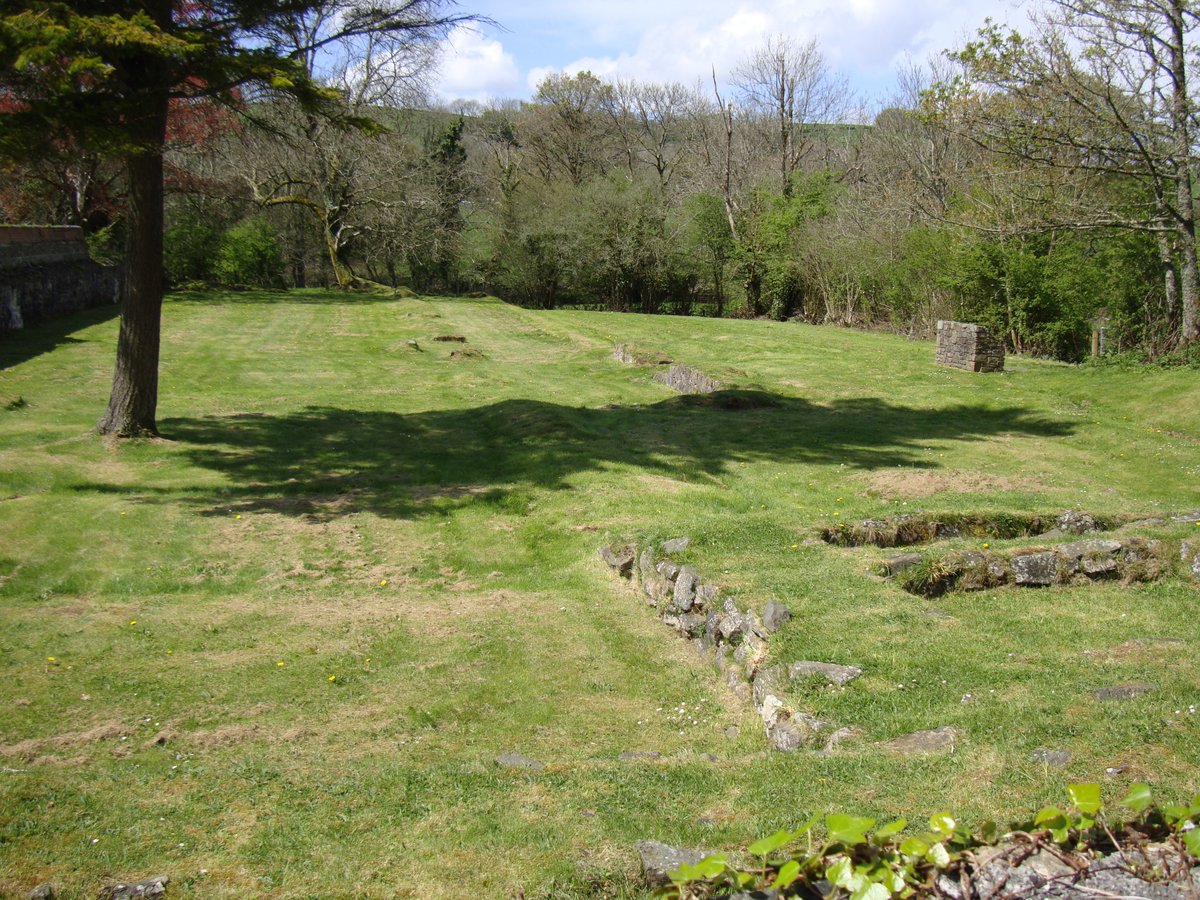

In 940, King Hywel Dda held a grand national council at the house of Ty Gwyn ar Daf to compile and enact a code of laws. To give greater solemnity to this convocation and to implore divine wisdom, the king remained at the site with his whole court during Lent in a constant exercise of prayer and other acts of devotion. These laws, still known as the Laws of Hywel Dda, were later deposited at Dinefwr Castle. Today, no vestiges of the small building designed primarily as a hunting seat remain, only the grass-covered foundations of the walls.
Whitland Abbey was founded in 1140 by monks from the mother house of Clairvaux Abbey and moved to the site in about 1155. It soon came under the patronage of Rhys ap Gruffudd, Prince of Deheubarth, and became an important cultural centre for south-west Wales. The monastery was a strong supporter of the Welsh struggle to remain free of English domination. It was also a place of significant monastic activity - even housing Maredudd, the son of Rhys, who ended his days as a monk there after being blinded by order of King Henry II.
The monastery flourished until the 16th century, at which time its revenue was estimated at £153 17. 2. and its site was granted in the 36th of Henry VIII to Henry Audley and John Cordel. A forge, reputed to be the oldest in Carmarthenshire, was later established on the site. The area eventually passed through the hands of the Yelverton and Blake families before being sold piecemeal to local farmers.
Sources: Wikipedia, OpenStreetMap, Wikidata, Wikimedia Commons
Written by Nicolo Ciampini
Discuss this with the author and others
No comments yet. Be the first to start the conversation.