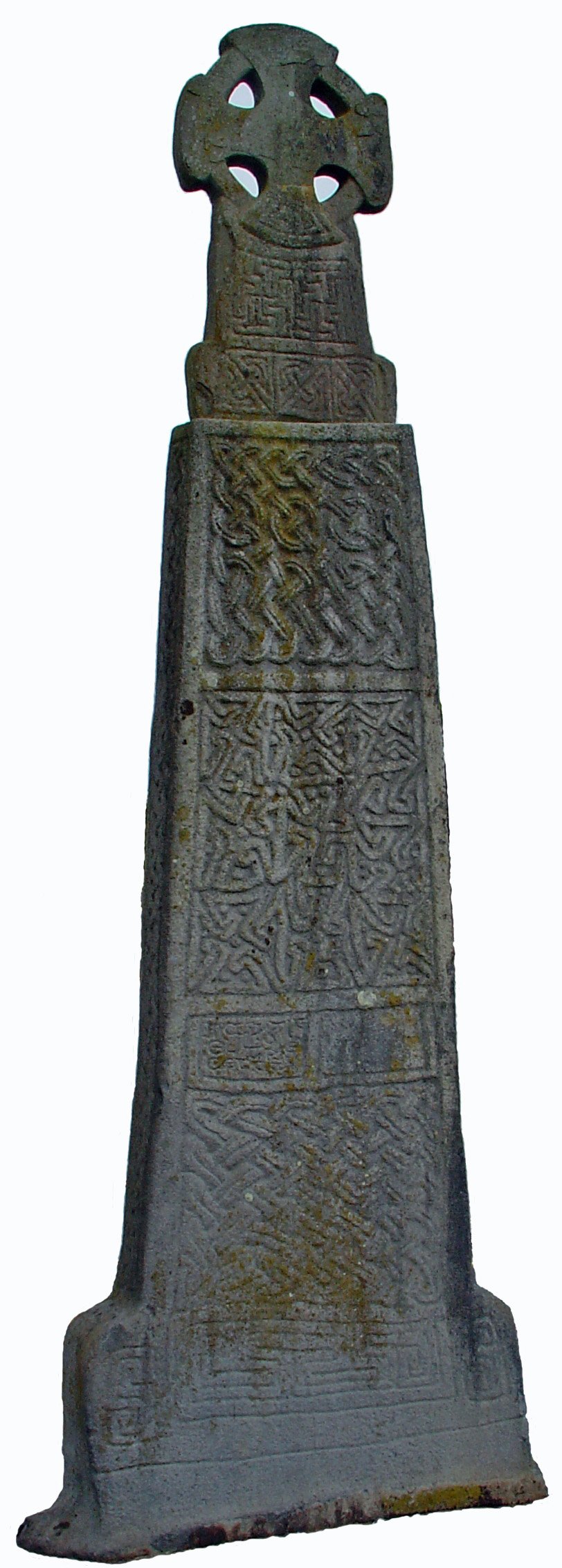

The origin of the Carew Cross is uncertain, but it is believed to date back to the 11th century. It was likely moved to Carew Castle prior to 1690. The cross underwent several displacements. In 1811, it stood on a low plinth, which was altered around 15 years later to align with the newly lowered road. In 1844, the top stone became dislodged and was reset in the slot with lead. The cross was moved away from the road in 1925 and again during the Second World War, when it was relocated to the nearby castle for protection.
Following the war, it was placed back by the roadside, but at a new position. The Carew Cross was Grade I listed on 14 May 1970, with the reason description given as "Listed grade I as a characteristically Welsh composite cross and one of the finest early Christian monuments in Wales." It was the Carew Cross that inspired the symbol of Cadw. The cross has been damaged over time, with parts of the stone flaking away before 1690.
Sources: Wikipedia, OpenStreetMap, Wikidata, Wikimedia Commons
Written by Nicolo Ciampini
Discuss this with the author and others
No comments yet. Be the first to start the conversation.