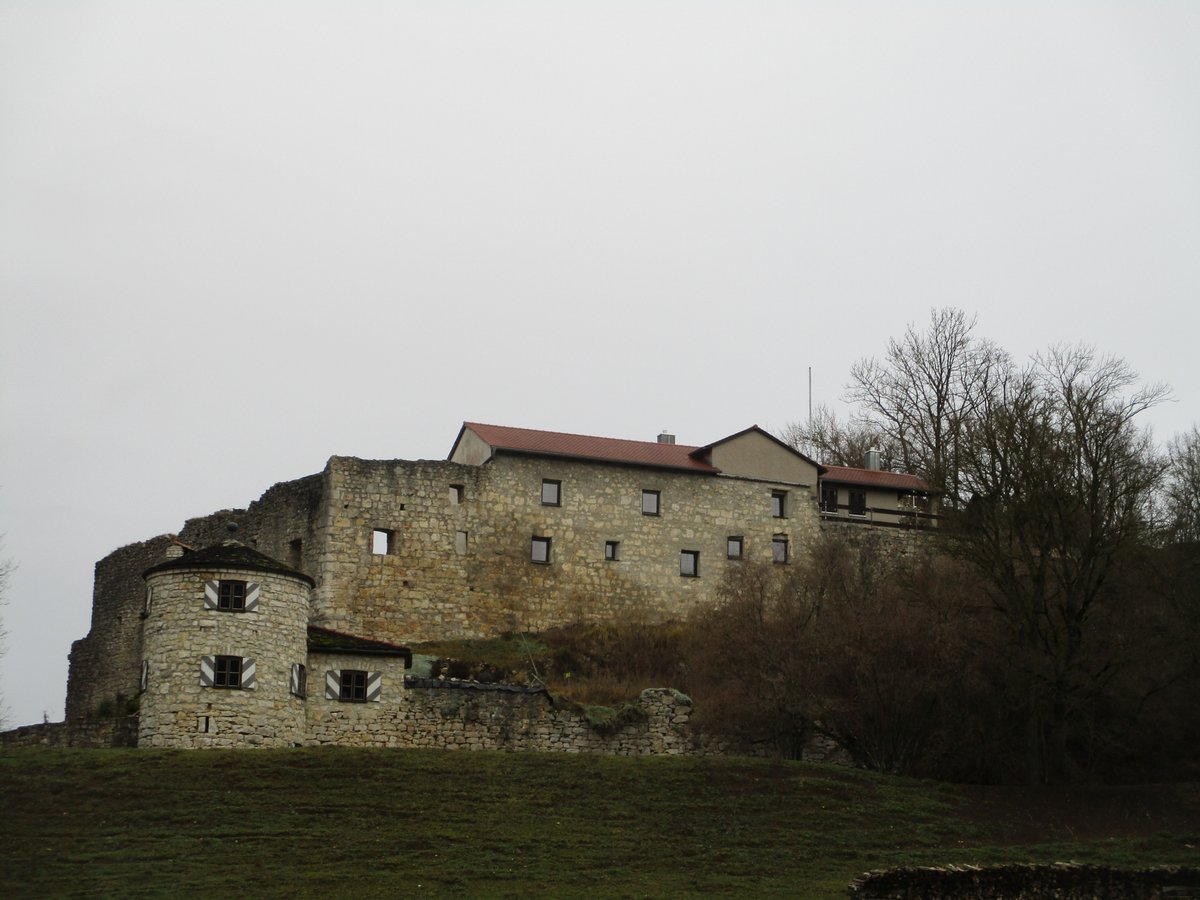
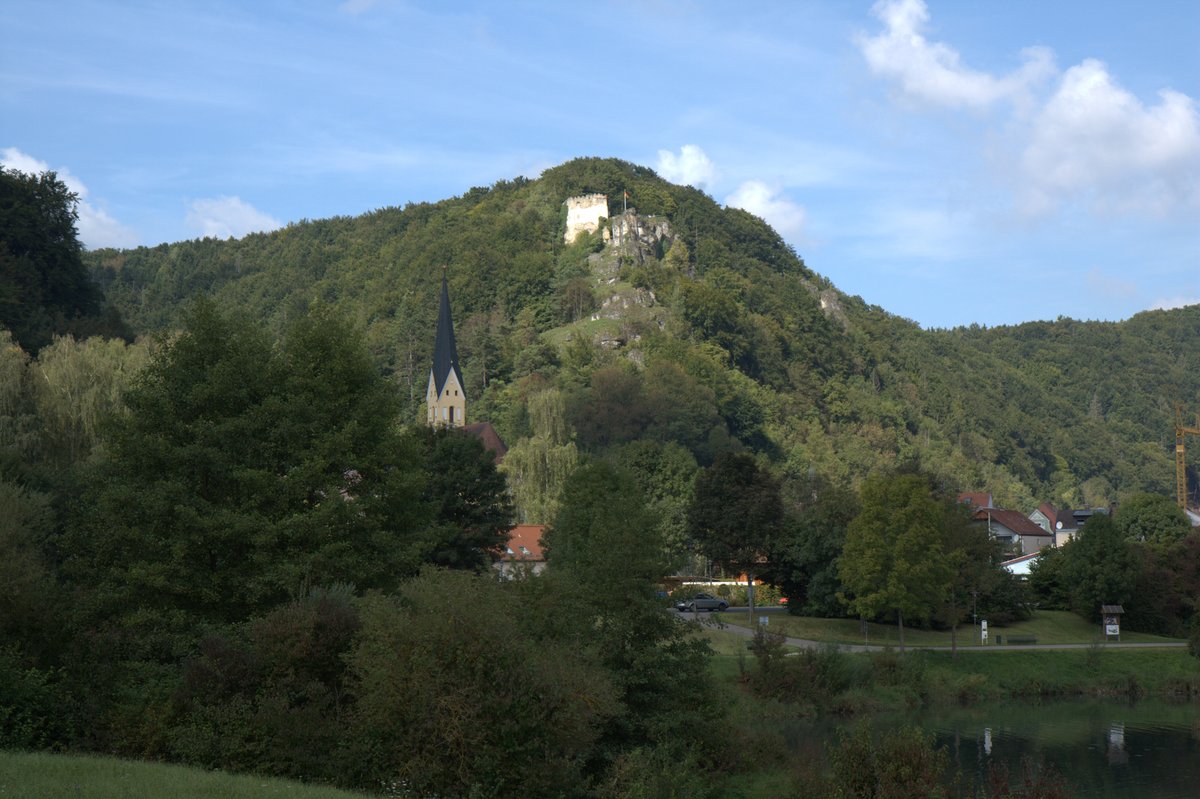
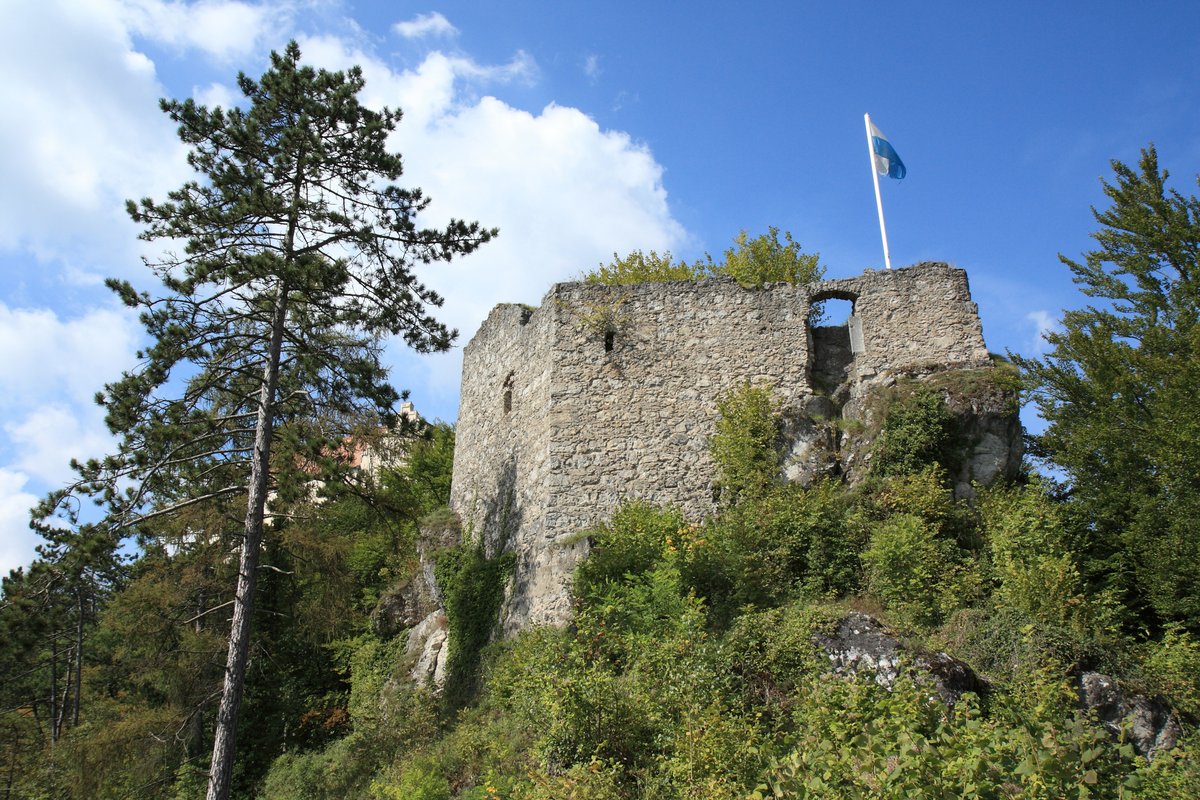
Bishop Heinrich I. von Zipplingen anchored his ambition atop the highest Schloßberg peak. From 1225 to 1228, he raised a formidable keep using boss stones built to endure siege and time. This impregnable core established a stronghold dominating the valley below.
While the Lords of Mörnsheim held ground here in the 13th century, records officially named the site castrum Mornsheim by 1281. The castle is situated within sight of Krugsburg, an outpost first mentioned in 1024.
Konrad II. von Pfeffenhausen walled the site, while Friedrich IV, Count of Oettingen, reinforced various buildings and walls. He founded the Vorburg and expanded the castle by adding a Zwinger.
Albrecht II. von Hohenrechberg dug a wide and deep moat on the southeast side. He constructed a curtain wall with towers, wall walks, and a massive outer rampart. Later, Johann III. von Eych added a large residential building in the southern corner of the main castle.
Growth slowed during the 17th century. After 1634, the castle began to decay. In 1760, parts of the castle were demolished.
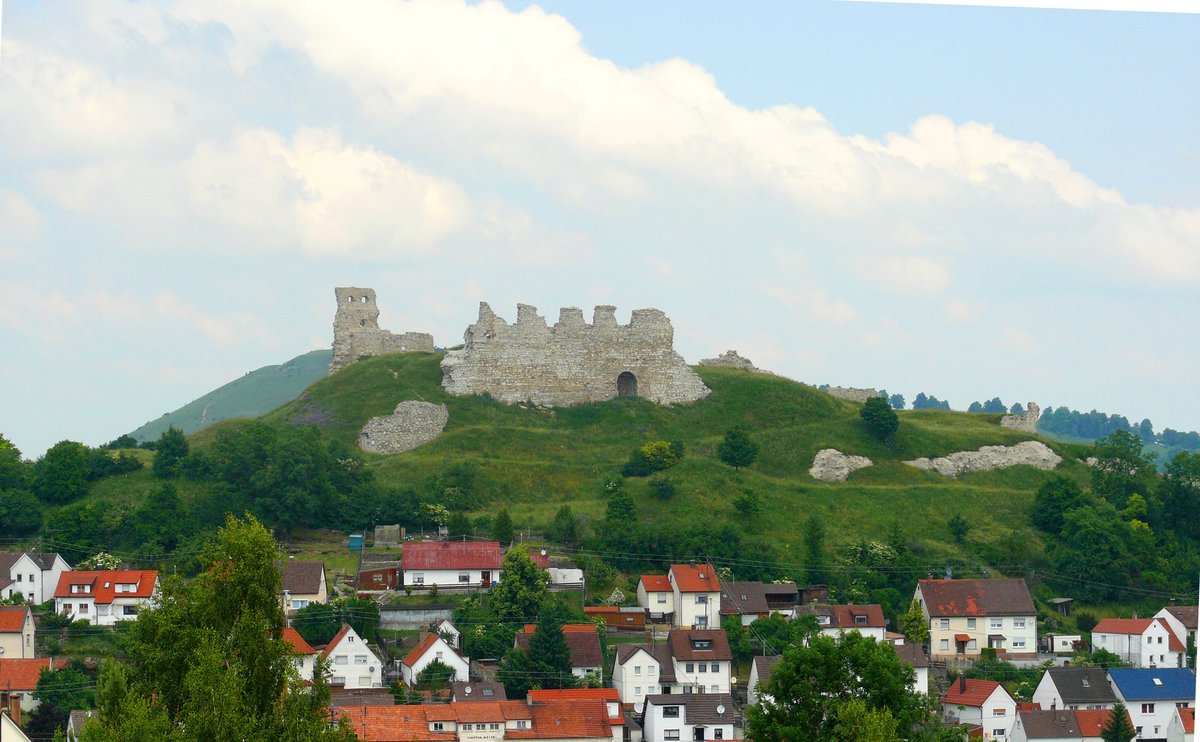
Traces of the curtain wall and Zwinger wall still exist today. Inside the chapel of St. Afra, a barrel-vaulted room is still preserved.
Sources: Wikipedia, OpenStreetMap, Wikidata, Wikimedia Commons
Written by Aurora
Discuss this with the author and others
No comments yet. Be the first to start the conversation.