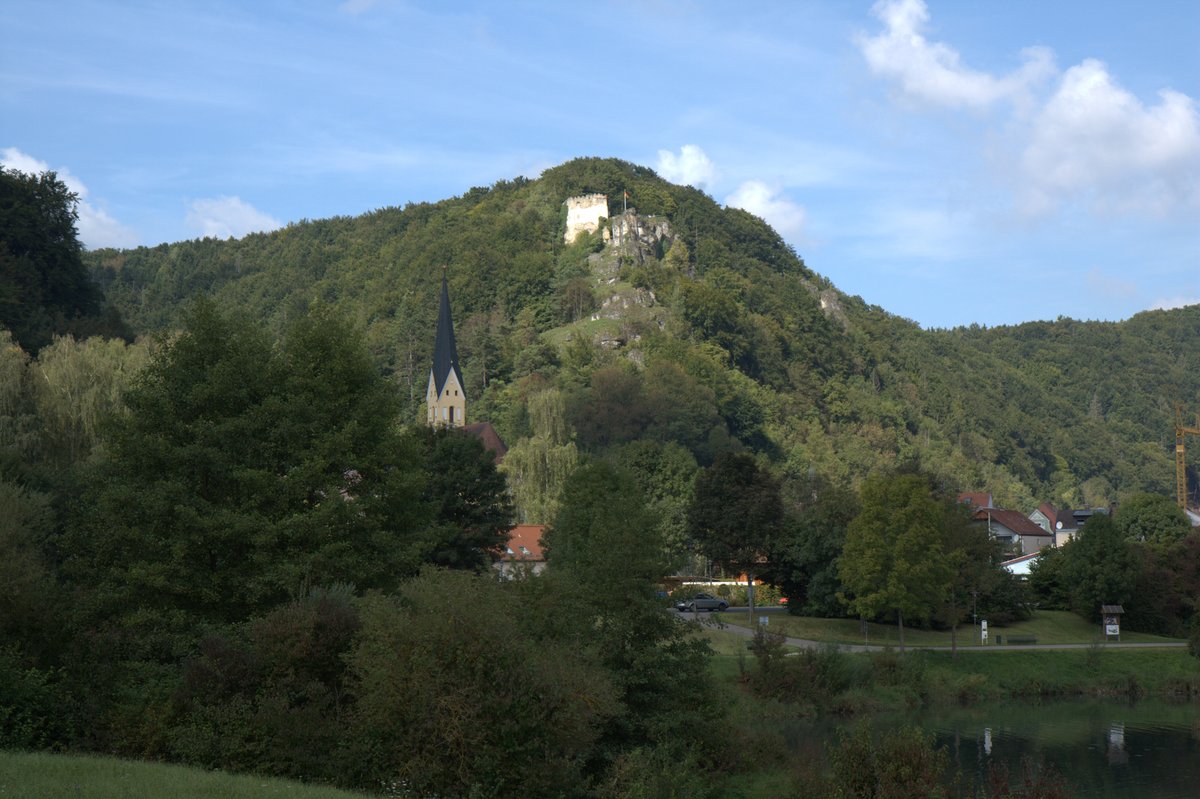
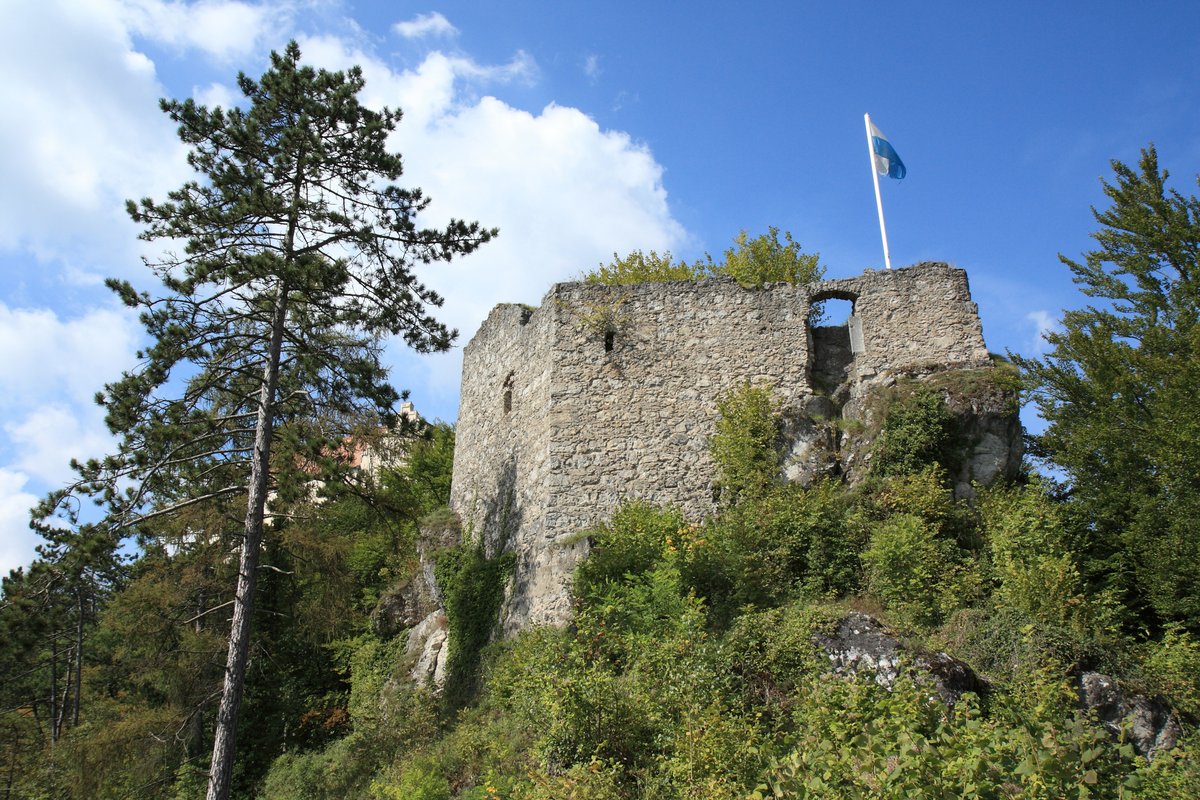
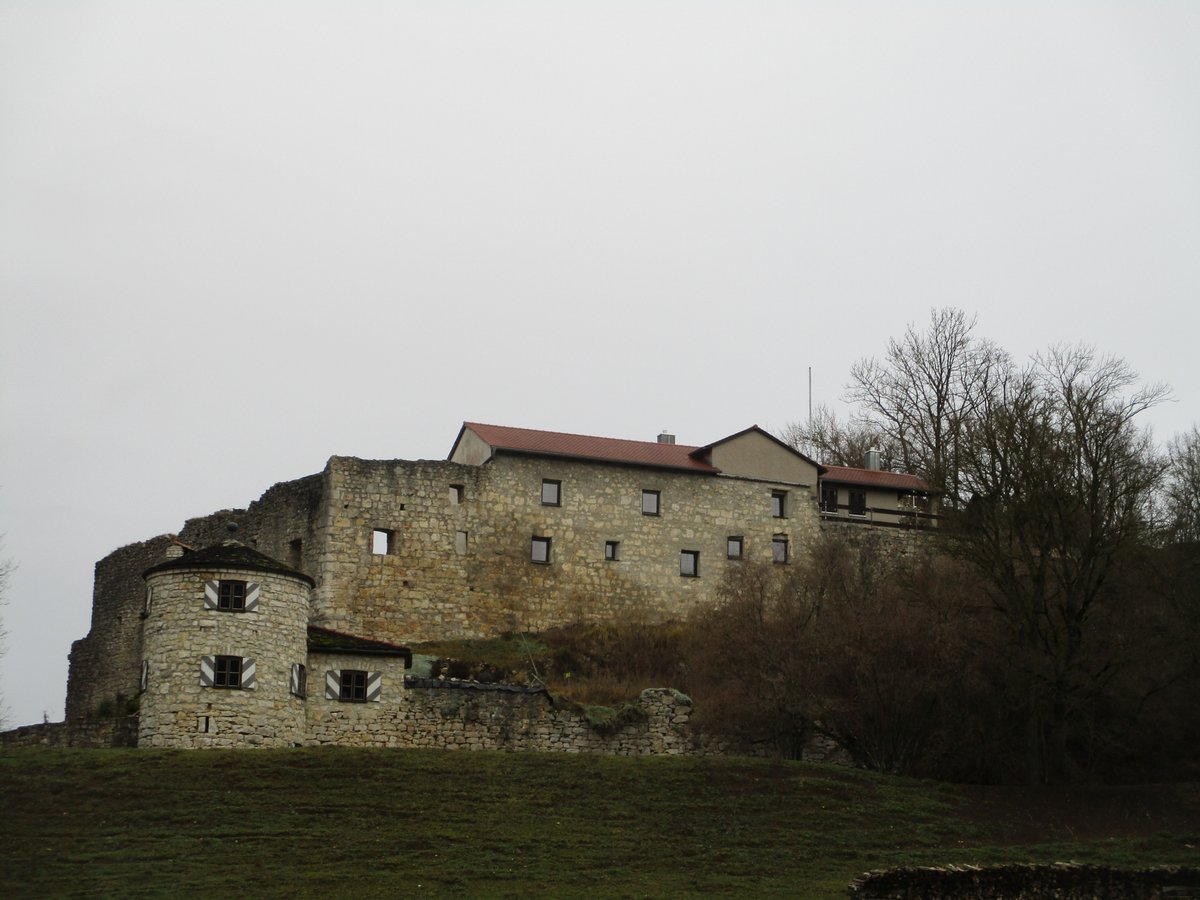
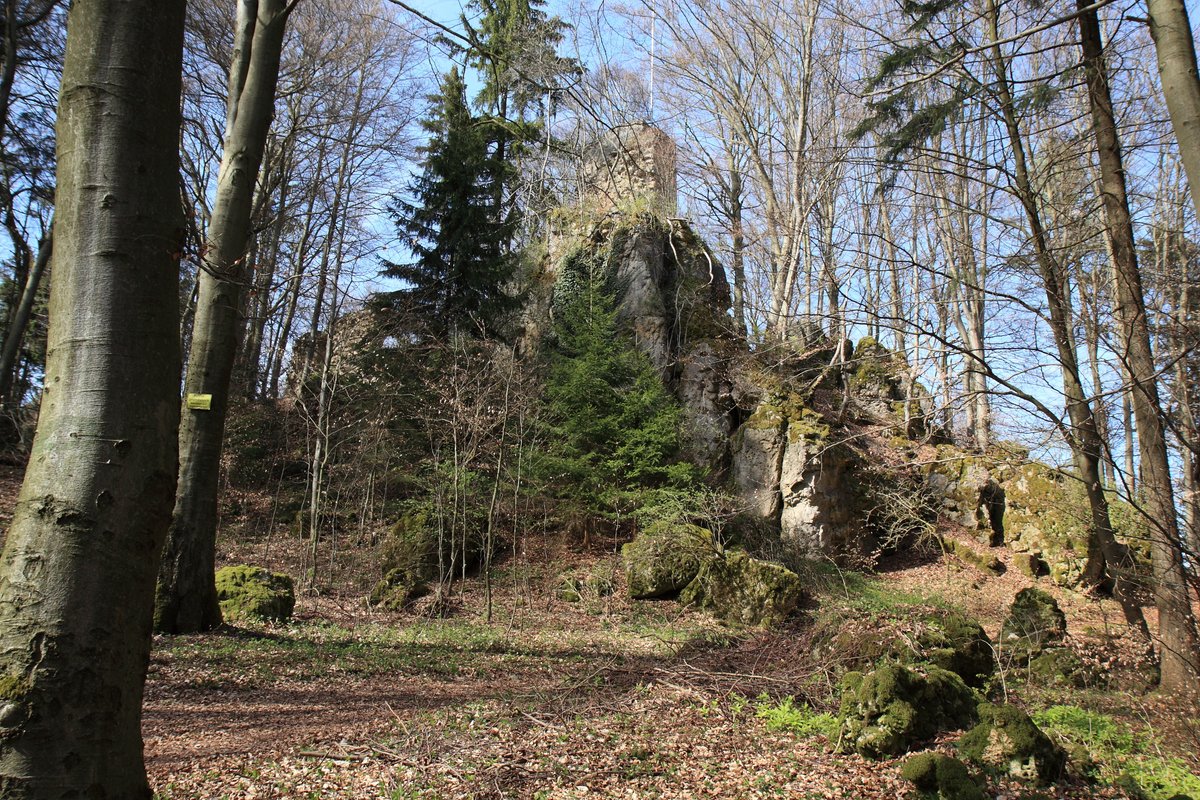
A ten-meter fragment of a keep rises from the Jägerberg, its rusticated ashlar masonry holding the weight of centuries. It is a spur castle in the eastern Altmühltal Nature Park, overlooking the Altmühl river which flows ninety meters below the forested ridge. This is the Burgruine Tachenstein, situated at an elevation of approximately 440 to 450 m above sea level.
In 1189, the name Tachenstein first appeared in a document, a record of a man named Friedrich I. He was a member of the family of Prunn, Laber and Breitenegg, a lineage that moved through marriages to acquire the Lordships of Laber and Wolfertshofen. Between 1170 and 1180, he built this castle on land inherited from the Babonen. By 1189, the walls were finished, and the records show officials like Friedrich Hartlieb and Heinrich von Tachenstein already serving the site.
The castle belonged to the Dukes of Bavaria as early as 1329, when it was granted to Emperor Louis the Bavarian via the Partition of Pavia. By 1392, Herzog Johann of Bavaria-Munich held the title. The records show Friedrich der Hiltprant von Tachenstein as the first named castle tenant, a man who signed a peace treaty with the city of Regensburg in 1358.
The castle lived through a cycle of release and pledge. It passed to Hilpold the Elder of Stein and later Hilpolt the Younger of Stein, only to be released by Herzog Stefan III. in 1367 or 1368. By 1384, Albrecht von Abensberg received pledge rights over Tachenstein, a temporary stewardship that lasted until 1424, when the Dukes of Ernst and Wilhelm redeemed the property. It was handed to Erharten dem Mugentaler just two days later.
By the 15th century, the castle was a site of investment. Leonhard Seetaler was willed the fortress and committed 200 fl to its fortifications. In 1613, Herzog Maximilian sold the castle to Wilhelm Jocher. In 1683, Kurfürst Max Emanuel II. ratified the purchase of the castle for 13,000 fl by Johann Dominikus Bassus.
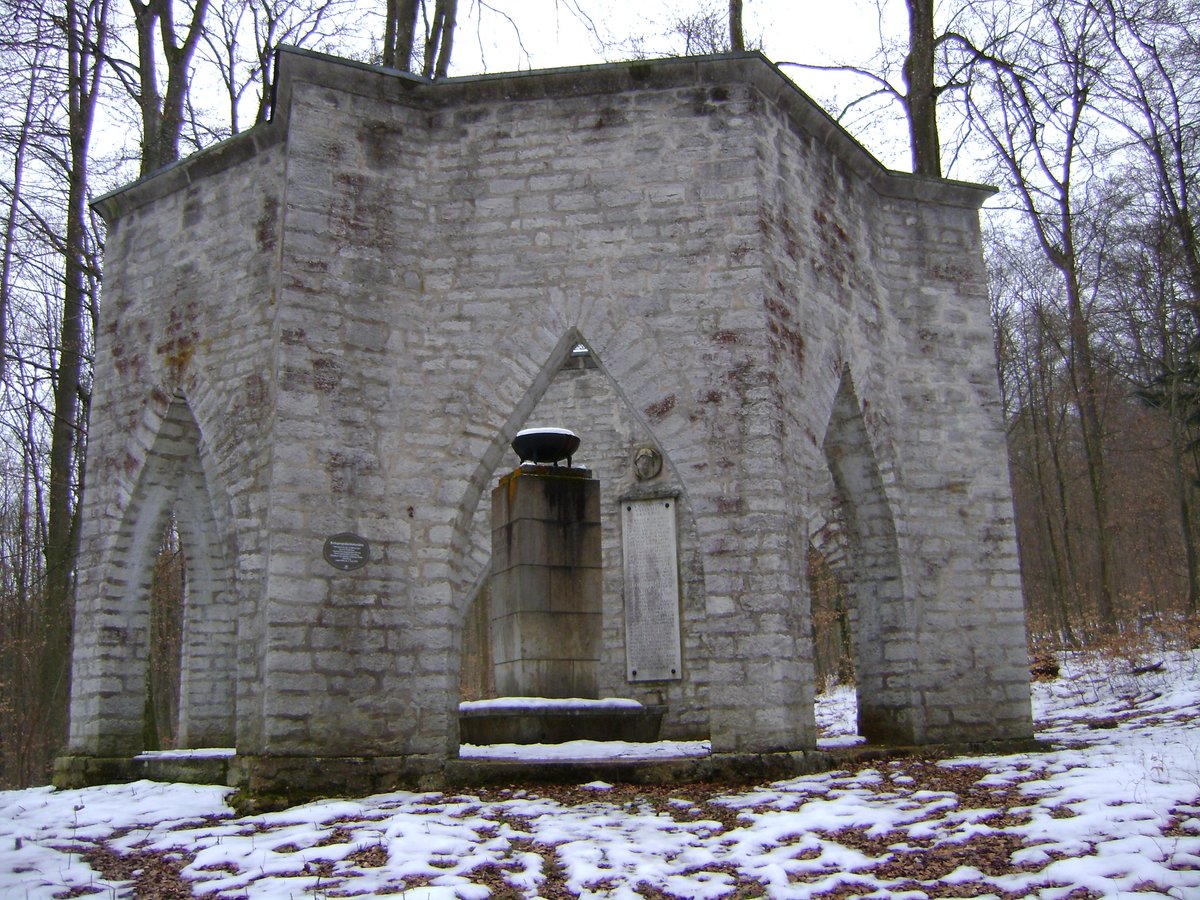
From the former fortification, a 10-meter-high ruin of the keep remains standing. It features a high entrance located behind the former shield wall on a base area of approximately 7.5 by 7.5 meters. A dry moat carved into the rocks remains part of the site on the southeastern-facing spur.
Sources: Wikipedia, OpenStreetMap, Wikidata, Wikimedia Commons
Written by Aurora
Discuss this with the author and others
No comments yet. Be the first to start the conversation.