Deep in the Saarkohlenwald, the ground holds the memory of heavy labor and rhythmic motion. It is a place defined by the Von der Heydt mine, a massive industrial project born in 1850 to fuel the expanding railway networks of the Prussian state. The mine was named for August Freiherr von der Heydt, a Prussian Minister of Trade and Finance whose name now sits atop a landscape of industrial scars and quiet settlements.
Before the deep shafts reached into the dark, mining here was a horizontal game. From 1850, engineers began driving the Von-Heydt-Stollen, a 1.3-kilometer tunnel stretching toward the northwest. In those early years, the coal did not move by its own weight or by electricity; instead, teams of horses labored to pull the heavy loads out of the earth. In 1862, for the first time in Europe, a horizontal cable conveyer was installed, replacing the slow pace of animal power with the steady, metallic pull of wire.
As the 19th century matured, the scale of the operation swelled. The Burbach-Stollen was pushed forward in opposite directions, reaching 2.3 kilometers to connect with the Steinbachtal. By 1885, the mine was a city unto itself, employing 2,777 miners who extracted over 700,000 tons of coal in a single year. The infrastructure grew complex. There was the Lampenneststollen to the north and the massive Amelung I shaft, sunk between 1884 and 1886. This shaft, named for Berghauptmann Karl Gustav Amelung, represented a late but significant transition from tunnel mining to deep mining. Soon after, Amelung II followed in 1899, and the Neuhaus I ventilation shaft began its work in the east.
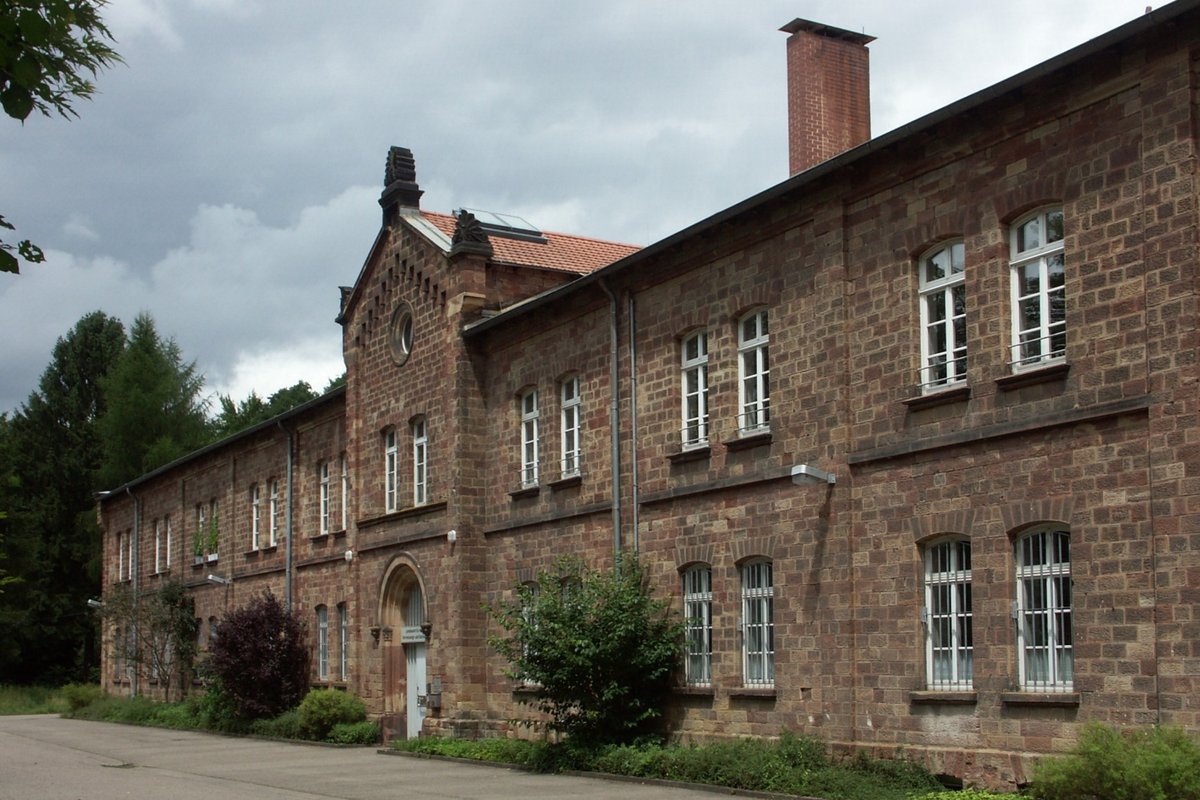
Life for the men was dictated by the shift. Many were Saargänger, workers who traveled from villages up to 30 kilometers away, walking the Bergmannspfade - straight paths cut through the countryside to the mine gate. During the mid-1800s, the work was so demanding that miners slept in dedicated buildings from Monday to Saturday. In 1854, a sleeping camp was so crowded with 160 workers that there was barely enough room for everyone to lay down on their straw sacks. By the 1870s, a proper settlement had formed, including Sleeping House I, a symmetrical sandstone building with a central risalit that provided a sturdy, orderly face to the rugged work of the pit.
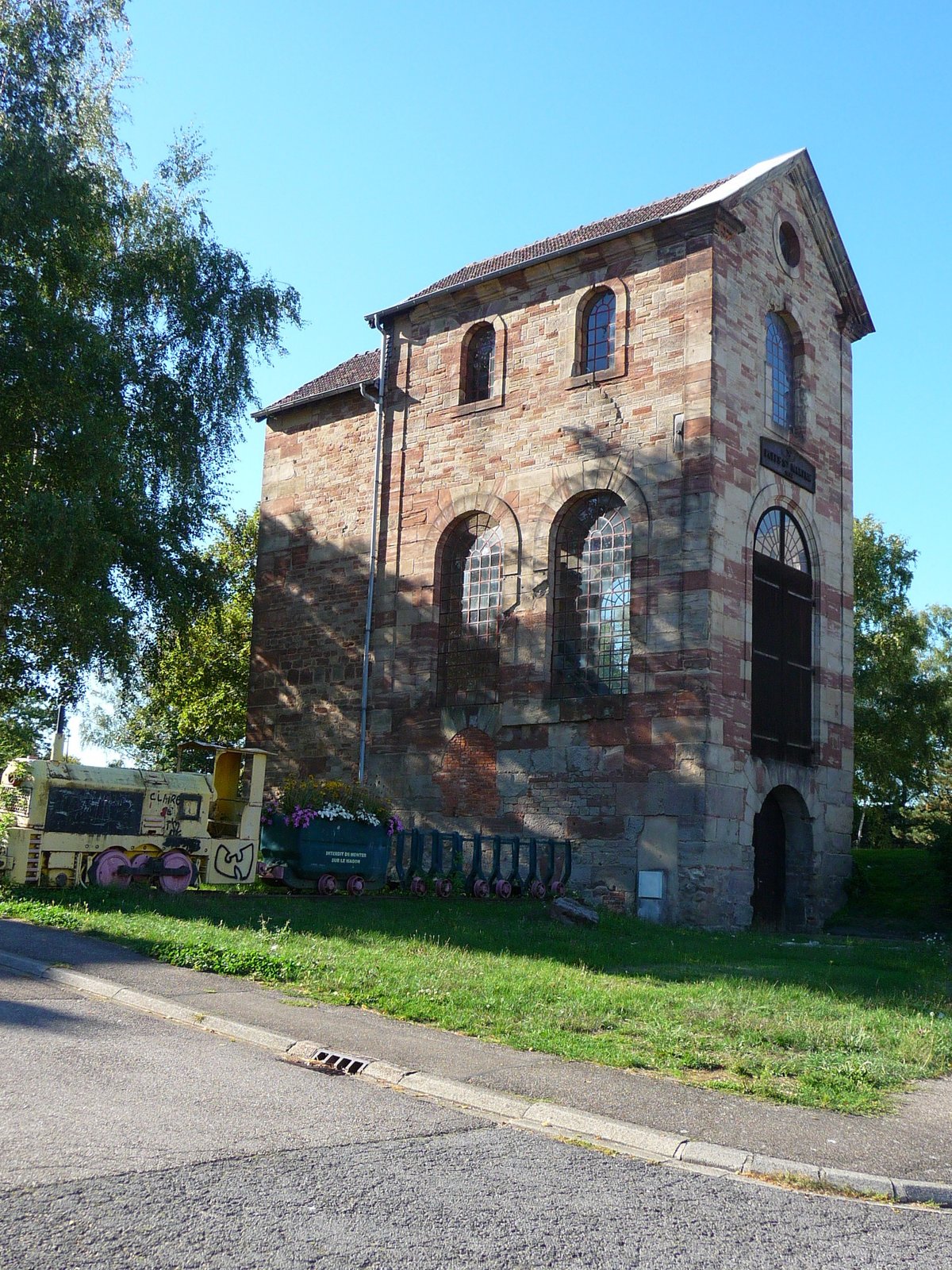
The mine's life was eventually squeezed by history. It fell under French administration in 1920 following the Treaty of Versailles, and by 1932, the Great Depression forced it to cease being an independent mine. The Amelung shafts were drained in 1951 and repurposed for ventilation for other nearby mines. Finally, the mine closed for good in 1965. Today, the ghost of the industry remains in the architecture. The hoisting engine house of Amelung I still stands, as does a railway station from 1870 and a mine building from the early 1950s that once served as an office and canteen during the mine's late-life reactivations.
Sources: Wikipedia, OpenStreetMap, Wikidata, Wikimedia Commons

Written by Aurora
Discuss this with the author and others
No comments yet. Be the first to start the conversation.