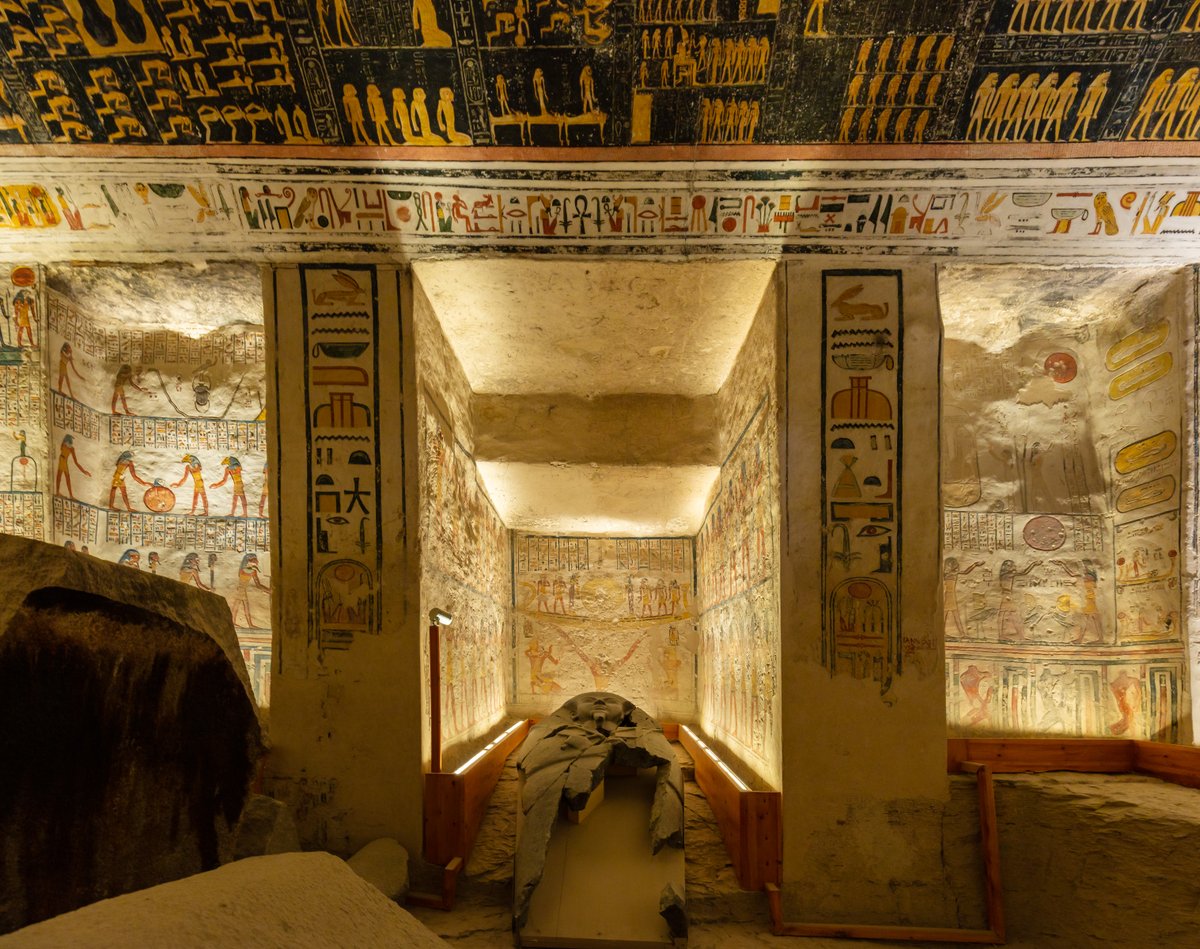

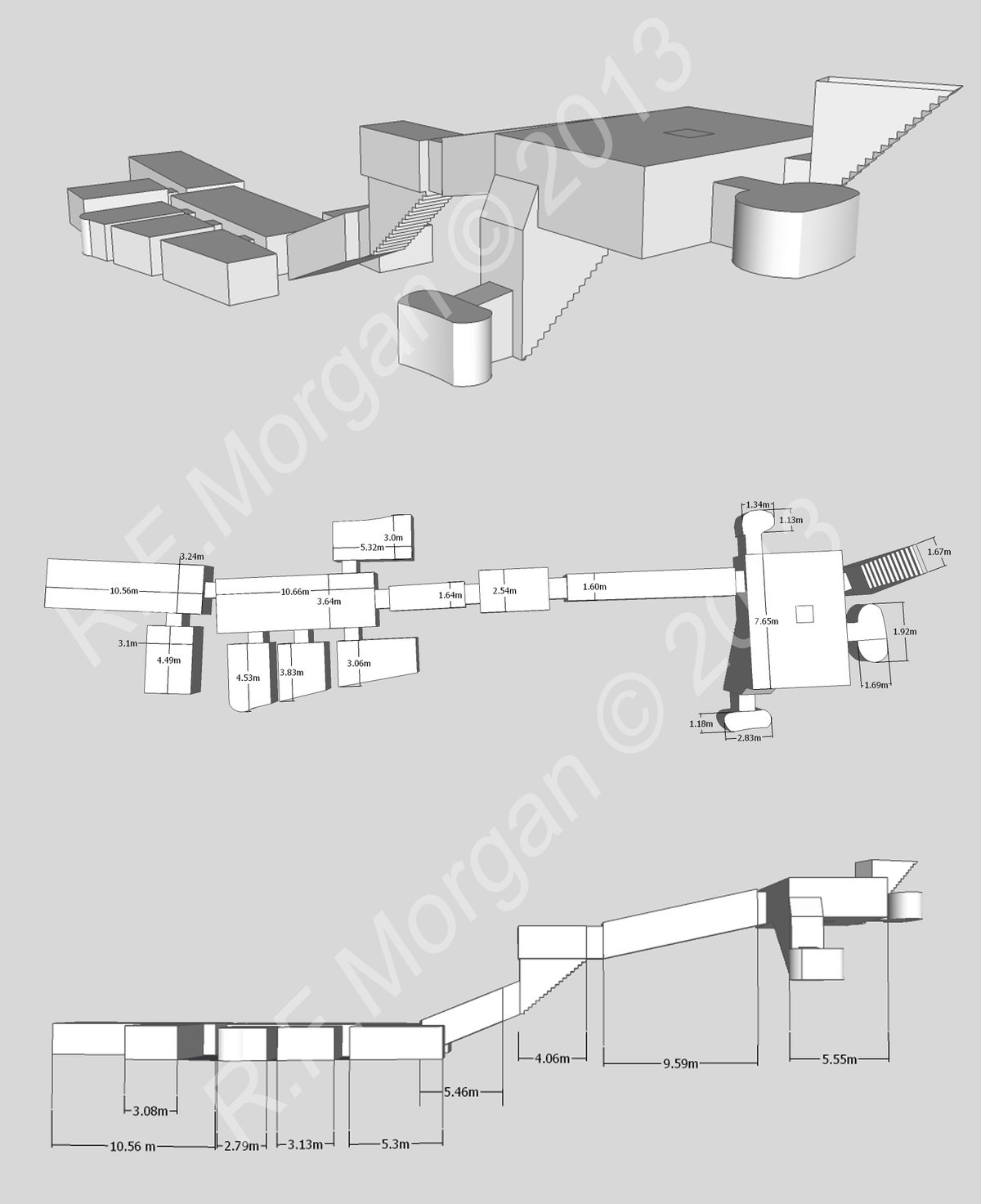
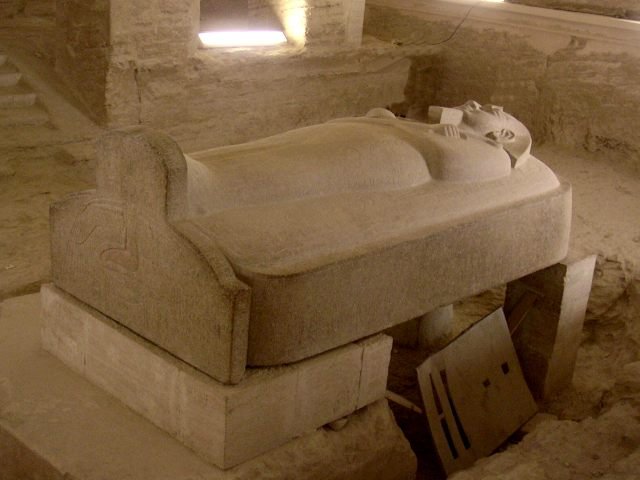
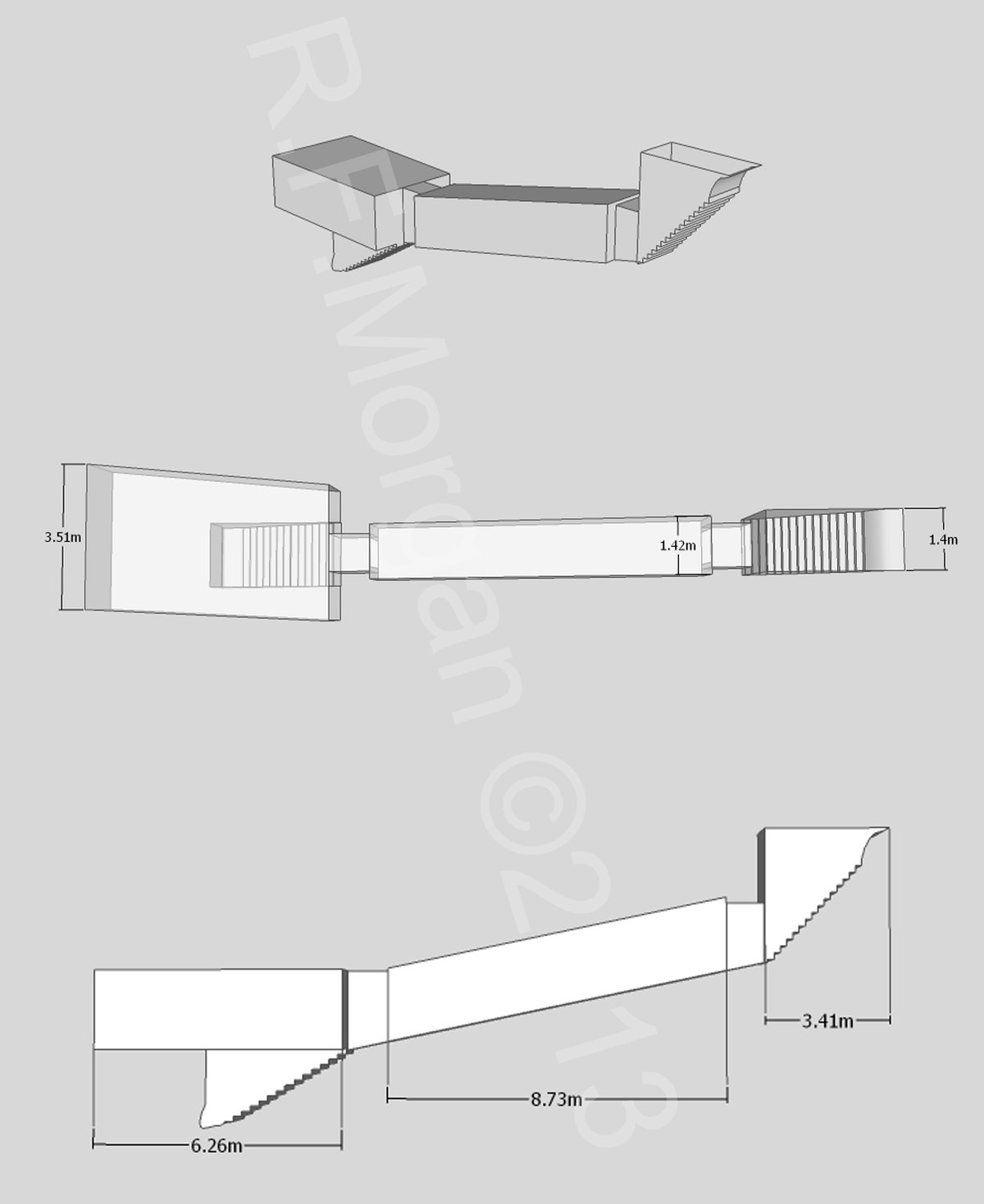
Nestled deep within the Valley of the Kings, KV9 is a tomb originally constructed by Pharaoh Rameses V. He was interred here, but his uncle, Rameses VI, later reused the tomb as his own. The architectural layout is typical of the 20th Dynasty - the Ramesside period - and is much simpler than that of Rameses III's tomb (KV11).
The workmen who were digging a corridor for Rameses VI's tomb accidentally broke into KV12. The works on KV9 are responsible for the preservation of the tomb of Tutankhamun, the entrance of which was buried beneath huts built for the craftsmen working on Rameses VI's tomb. In 2020, the Egyptian Tourism Authority released a full 3D model of the tomb with detailed photography available online.
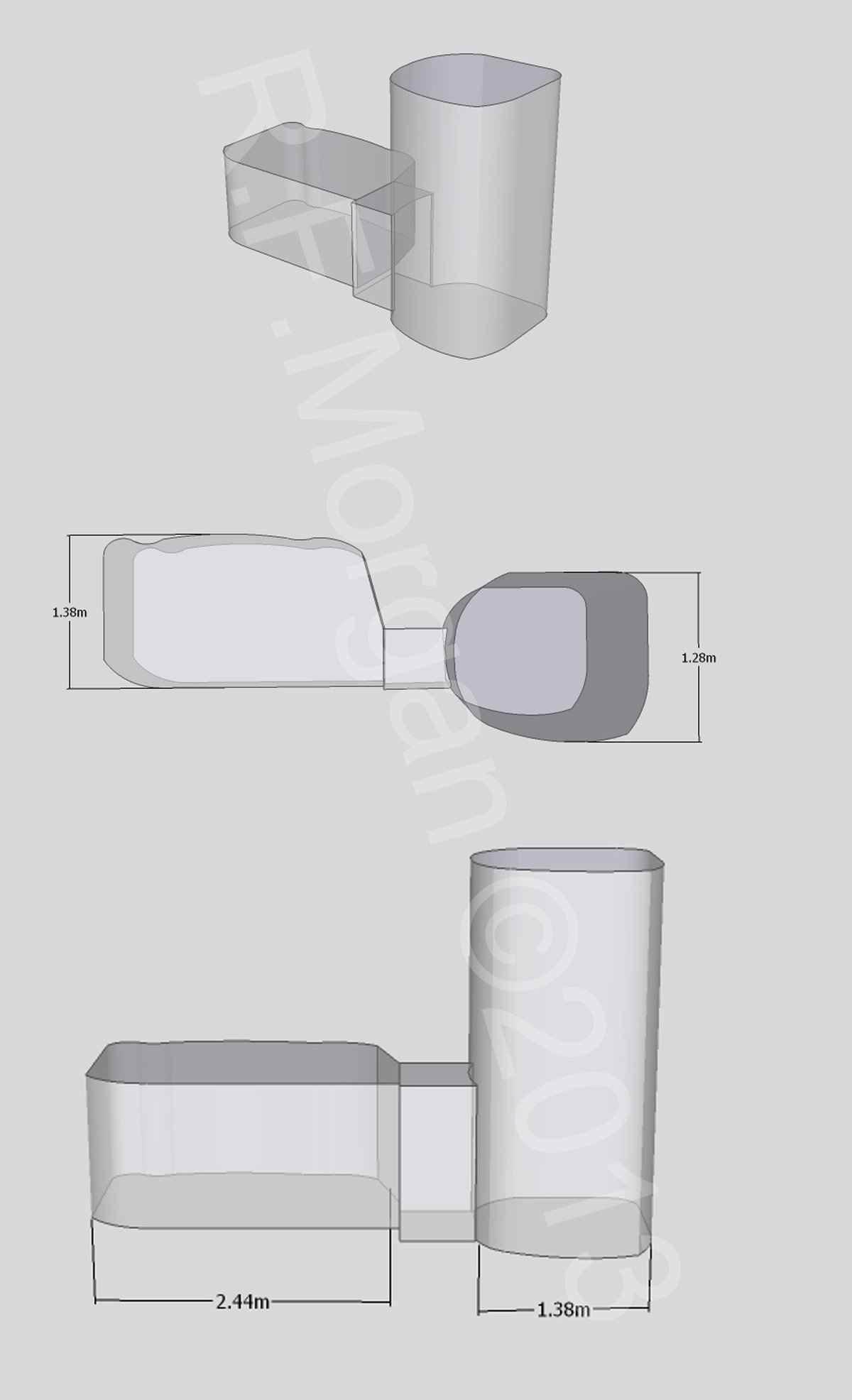
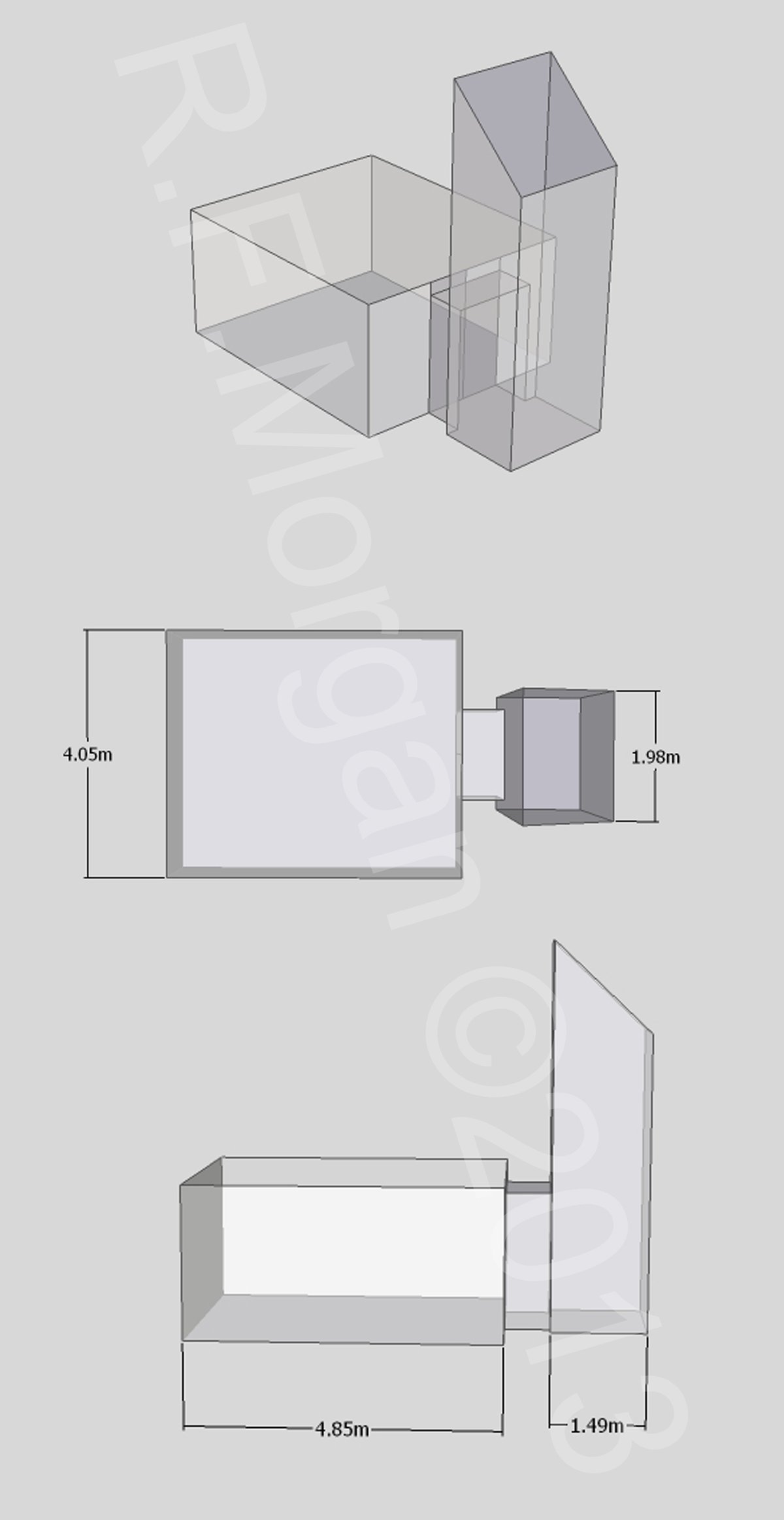
The entrance is decorated with a disk containing a scarab and an image of the ram-headed Ra between Isis and Nephthys who are kneeling. The jambs, which mention the name of Rameses VI, were usurped from Rameses V. The corridor is divided by pilasters into several sections, leading to a pillared hall, from which a second long corridor descends to the burial chamber. The digging of the burial chamber was not fully completed; its back wall has two pillars which are still connected to the wall behind them instead of standing separate.
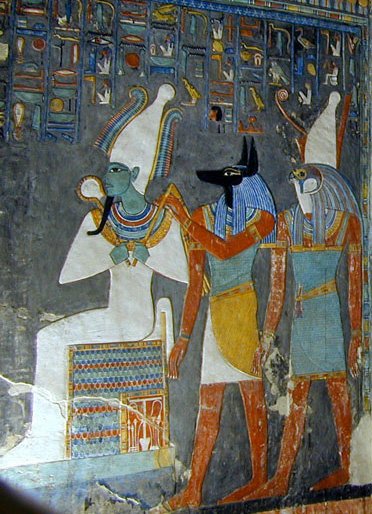
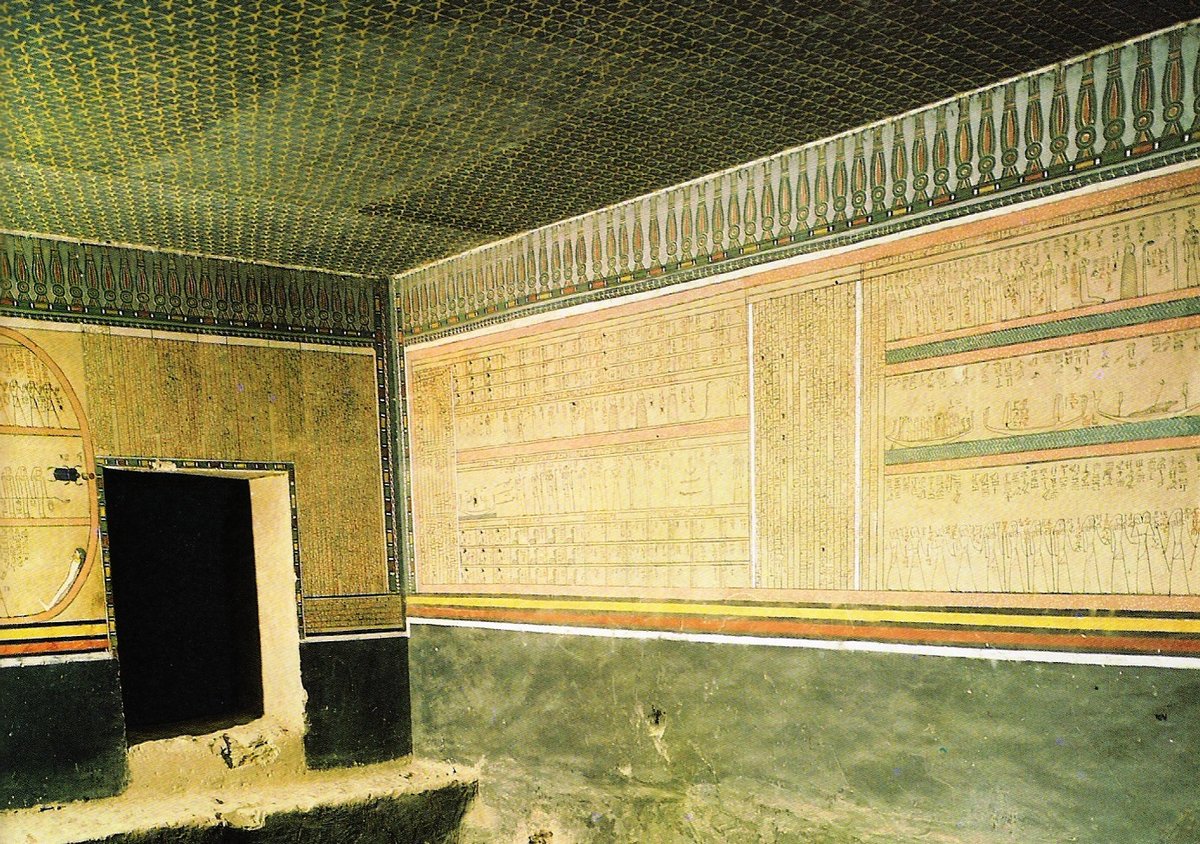
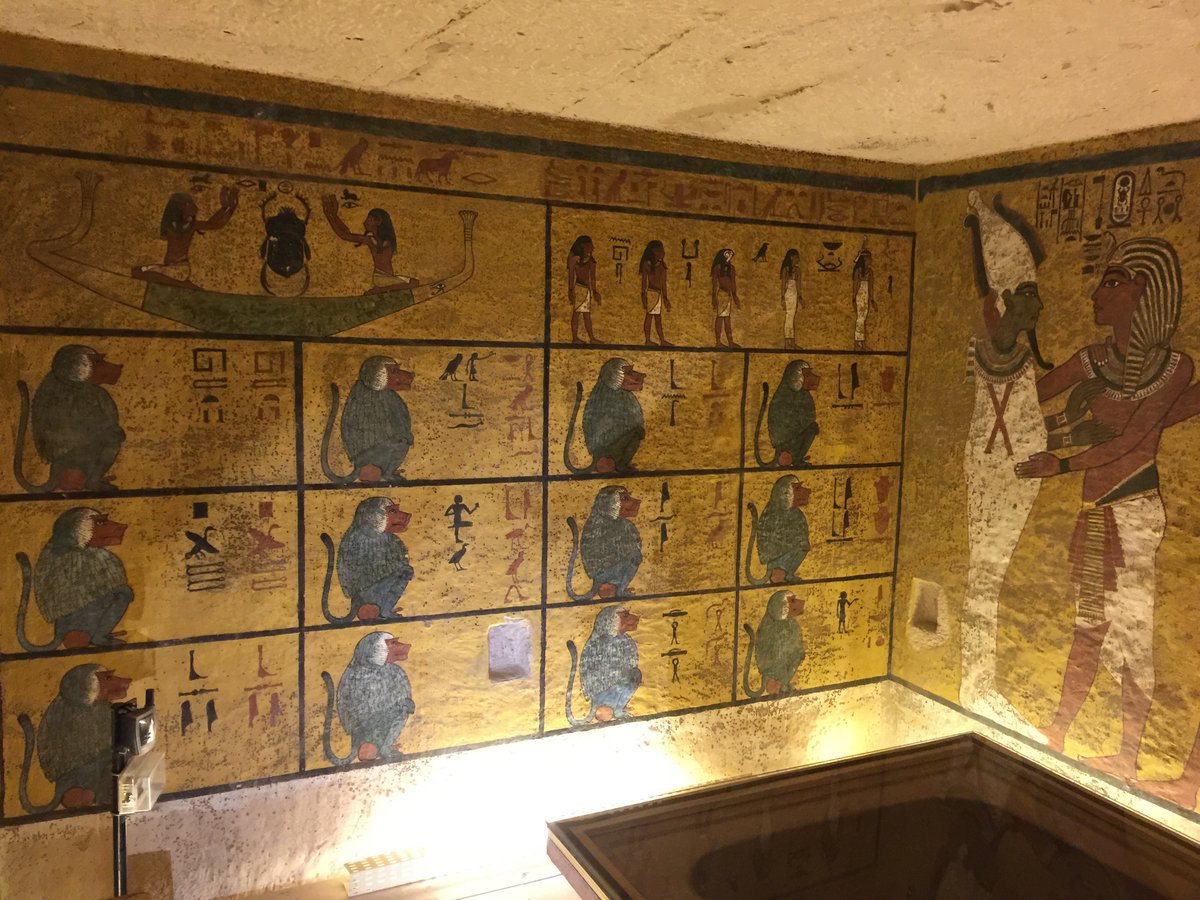
It is the decoration that sets KV9 apart. Rameses VI, in a break with tradition, used the decoration program of the Osireion at Abydos as the template for his tomb. The walls of the burial chamber are decorated with the Books of the Earth, including the Book of Aker. The vaulted ceiling of the chamber is decorated with the Book of the Day and the Book of the Night, framed by a double elongated image of Nut. The corridor also contains scenes from the Book of Gates and the Book of Caverns, along with astronomical figures and constellations.
Sources: Wikipedia, OpenStreetMap, Wikidata, Wikimedia Commons
Written by Mutabor
Discuss this with the author and others
No comments yet. Be the first to start the conversation.