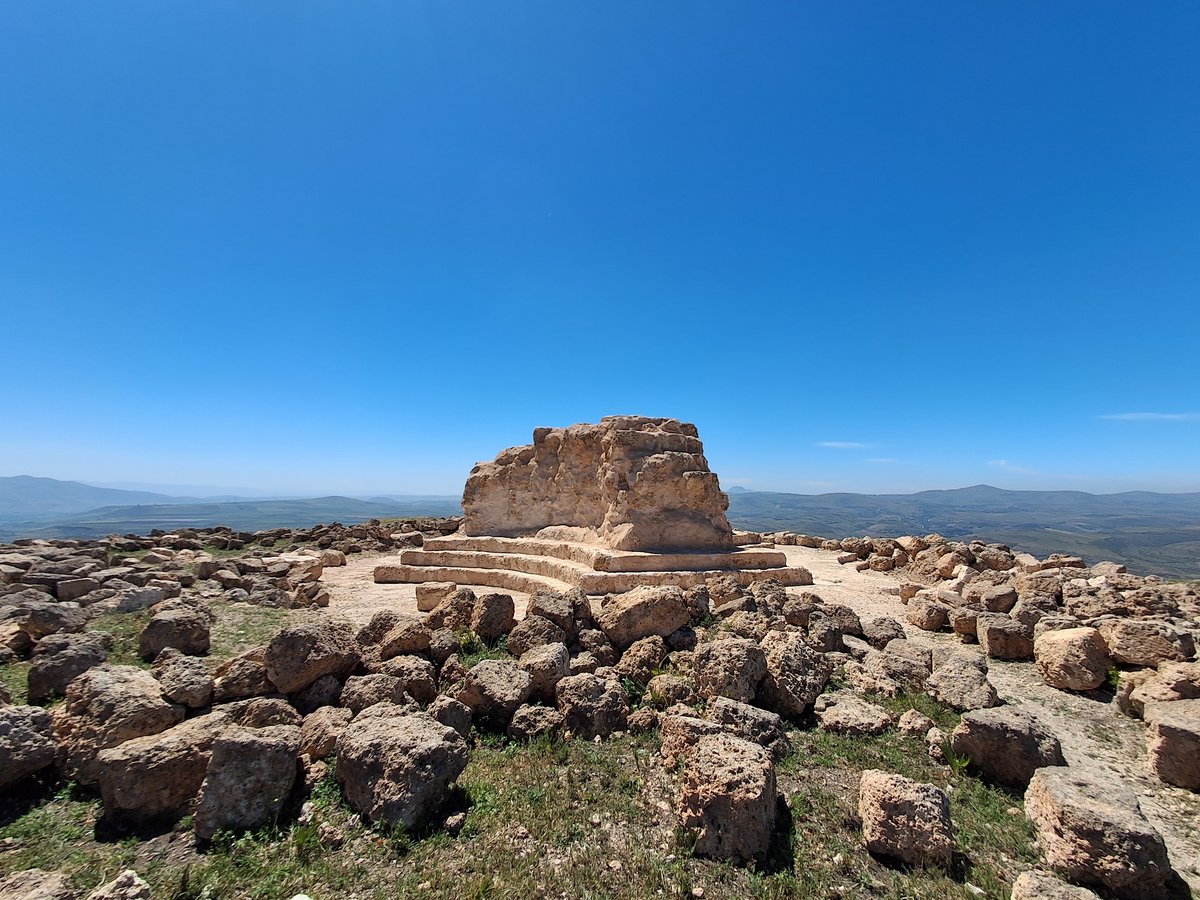

Before it was excavated in the 1960s and 1970s, the monument was buried under a pile of earth and stones known as Kerkour el Aiers, or "the Butte of Marriages". Local tradition dictated that newlyweds and their wedding processions go around the mound several times to ensure the fidelity of their future wives.
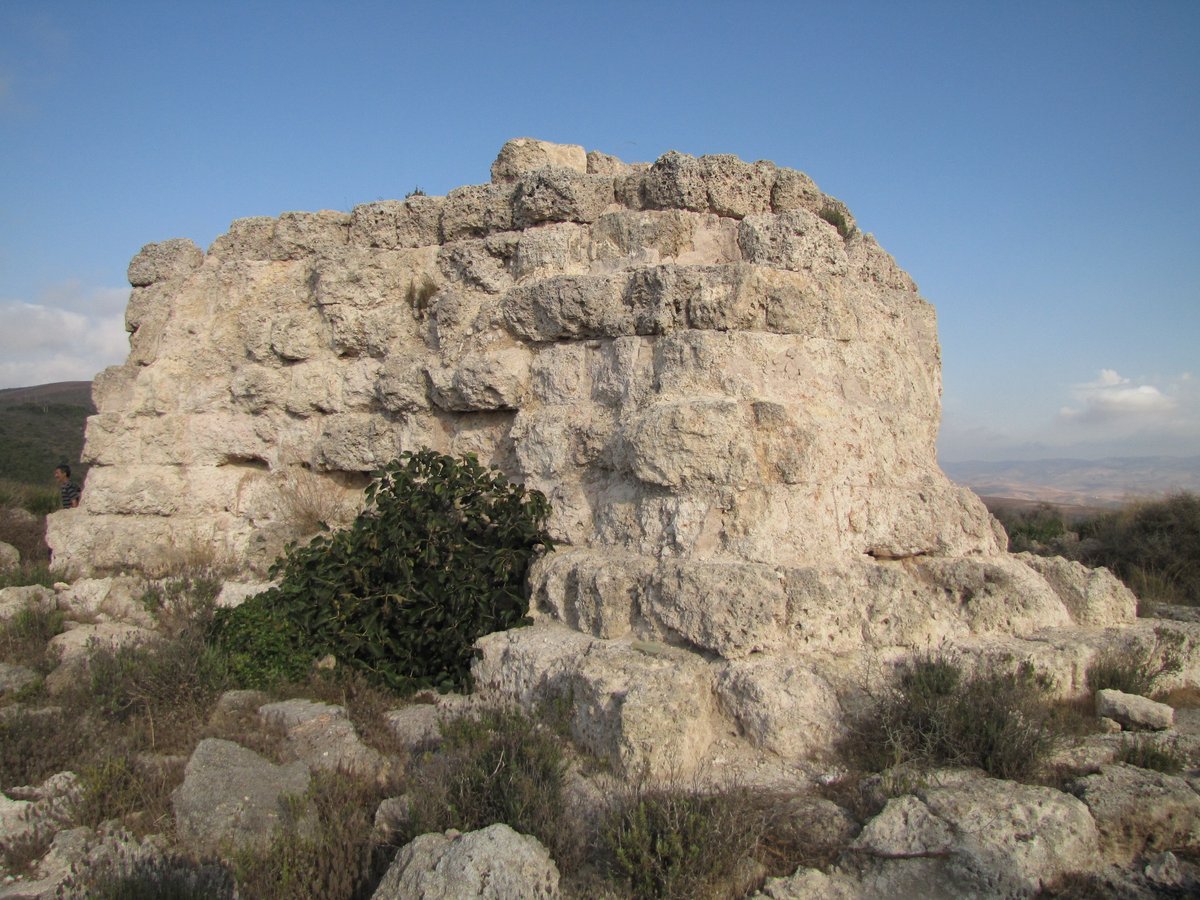
Beneath this mound lies the Mausolée de Beni Rhénane, a tower-shaped mausoleum dating from the end of the 2nd century BC. Located on a peak of the Skouna mountain, it overlooks the site of ancient Siga, the capital of King Syphax. The structure's height must have reached at least 30 meters, making it the most imposing tower-shaped monument in North Africa. It features a plan with alternating concave and rectilinear facades, similar to monuments at Sabratha and Djerba.
The mausoleum is unique for its series of underground chambers beneath its paving. While it was hypothetically attributed to Syphax's son Vermina, scholars like Jean-Pierre Laporte note that Syphax was buried in Italy, not here. Gabriel Camps suggests the monument may have been intended for King Micipsa. It likely suffered voluntary destruction shortly after its construction, possibly due to a dynastic change or the annexation of the western Numidian kingdom by Bocchus.
Today, the site is recognized as a UNESCO World Heritage monument. It stands as a significant example of Hellenistic formal vocabulary in North Africa. Its architectural similarities to the royal mausoleum near Tipasa suggest it may have been built by the same architect or school of builders.
Sources: Wikipedia, OpenStreetMap, Wikidata, Wikimedia Commons
Written by Mutabor
Discuss this with the author and others
No comments yet. Be the first to start the conversation.