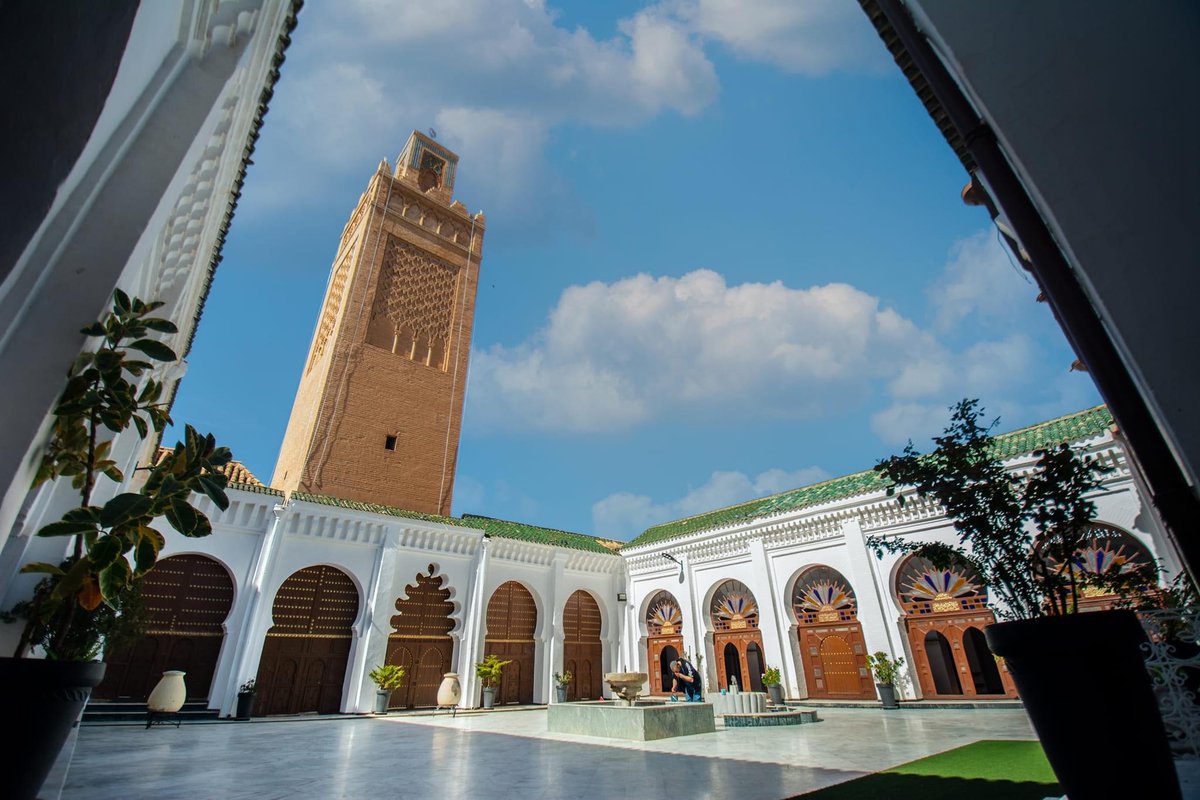

In 1082, Yusuf ibn Tashfin founded the city of Tagrart and established the Great Mosque. Modified and embellished several times, the structure remains one of the most important examples of architecture under the Almoravid dynasty. The mosque was later renovated and decorated by his son, Ali ibn Yusuf, who completed the celebrated dome near the mihrab in 1136. Curiously, the actual name of the emir was erased from the inscription below the dome, possibly by the Almohads who ruled the city after the Almoravids.
The mosque features a hypostyle prayer hall divided into 13 naves by 12 rows of horseshoe arches. In front of the mihrab, an intricate ribbed dome dates to the Almoravid renovation. The structure of the dome consists of multiple ribs forming a twelve-pointed star pattern, allowing light to filter through a screen of pierced and carved arabesque decoration. Below this dome, the maqsura was once separated from the rest of the mosque by a richly-crafted wooden lattice screen, which now sits in a local museum.
In 1236, Sultan Yaghmorasan of the Abdalwadid dynasty added a brick minaret near the courtyard and modified the mosque's structure. The minaret stands 29.15 metres tall and features carved panels of sebka motifs. One odd detail of the decoration is that the panel on the courtyard side is uneven, with the space between the engaged columns on the left being wider than the others. A large circular chandelier hangs from the ribbed dome, traditionally attributed to a donation by Yaghmorasan.
Sources: Wikipedia, OpenStreetMap, Wikidata, Wikimedia Commons
Written by Mutabor
Discuss this with the author and others
No comments yet. Be the first to start the conversation.