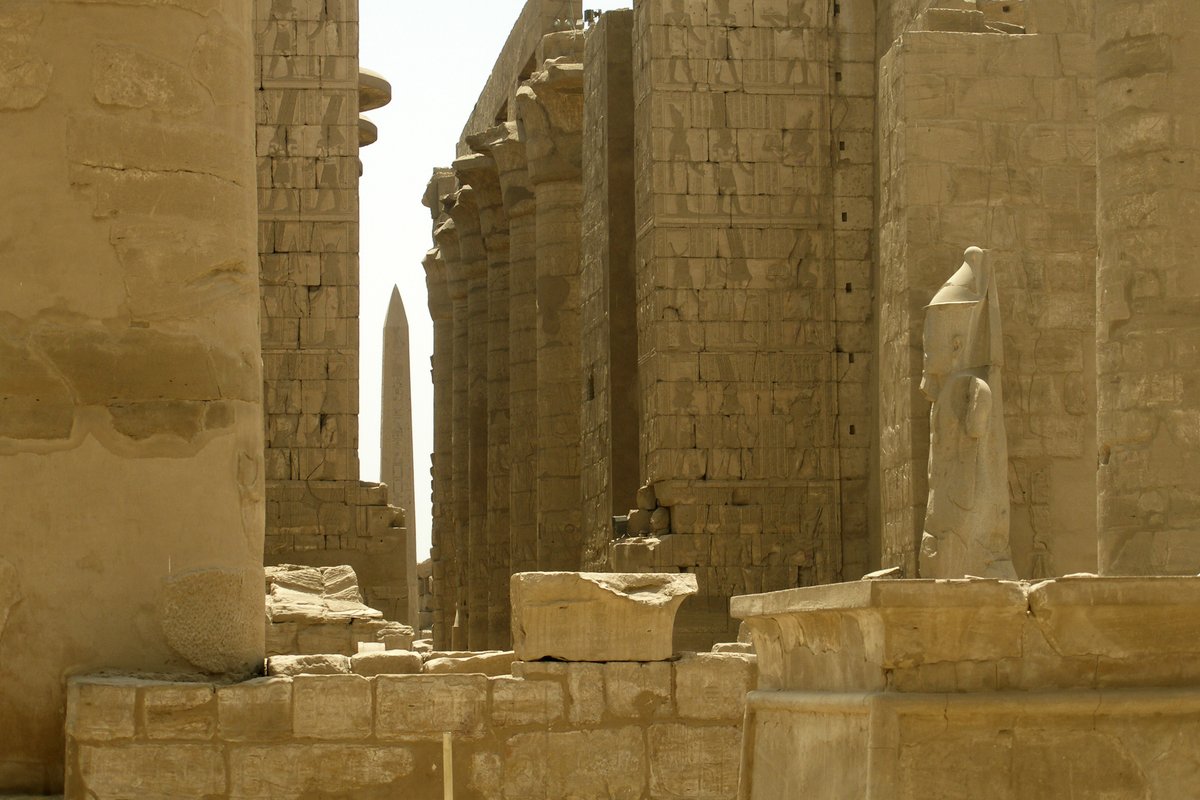

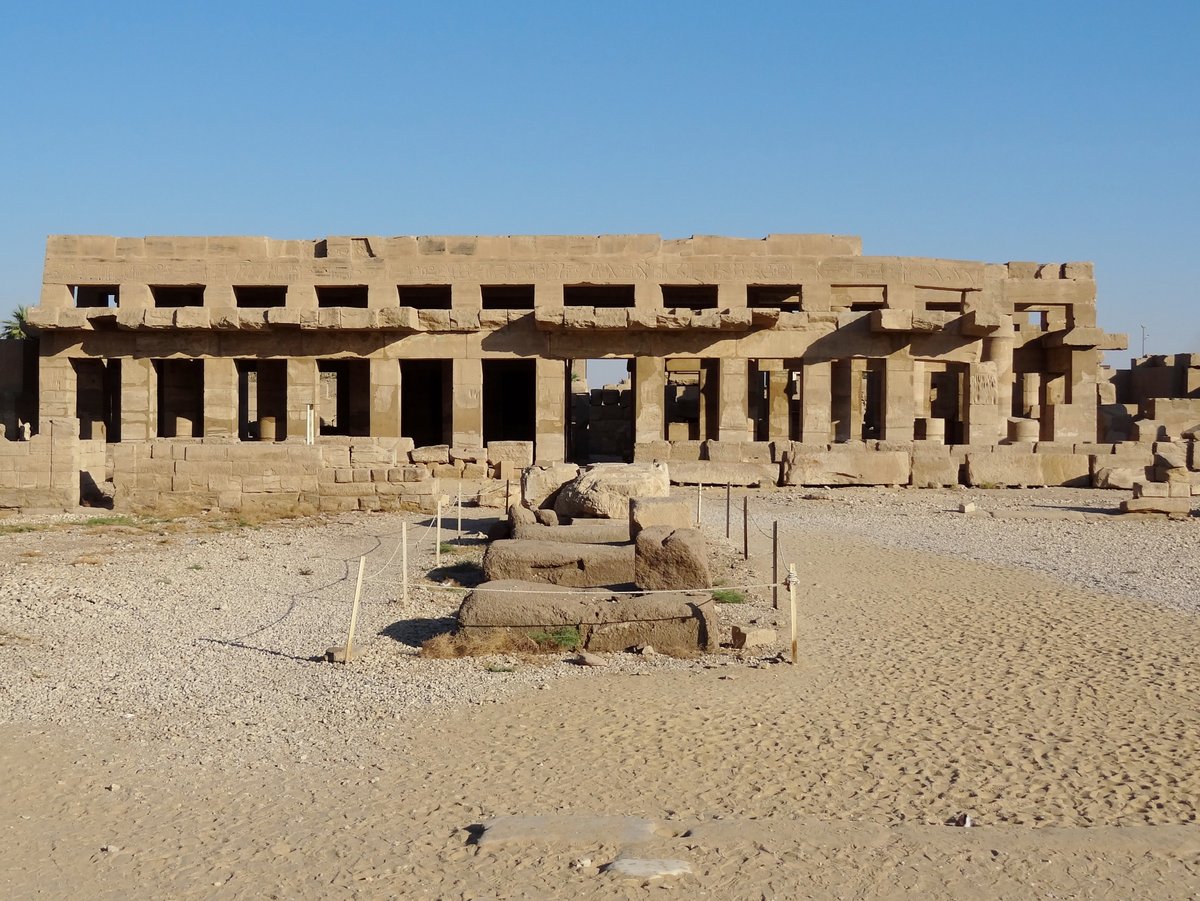
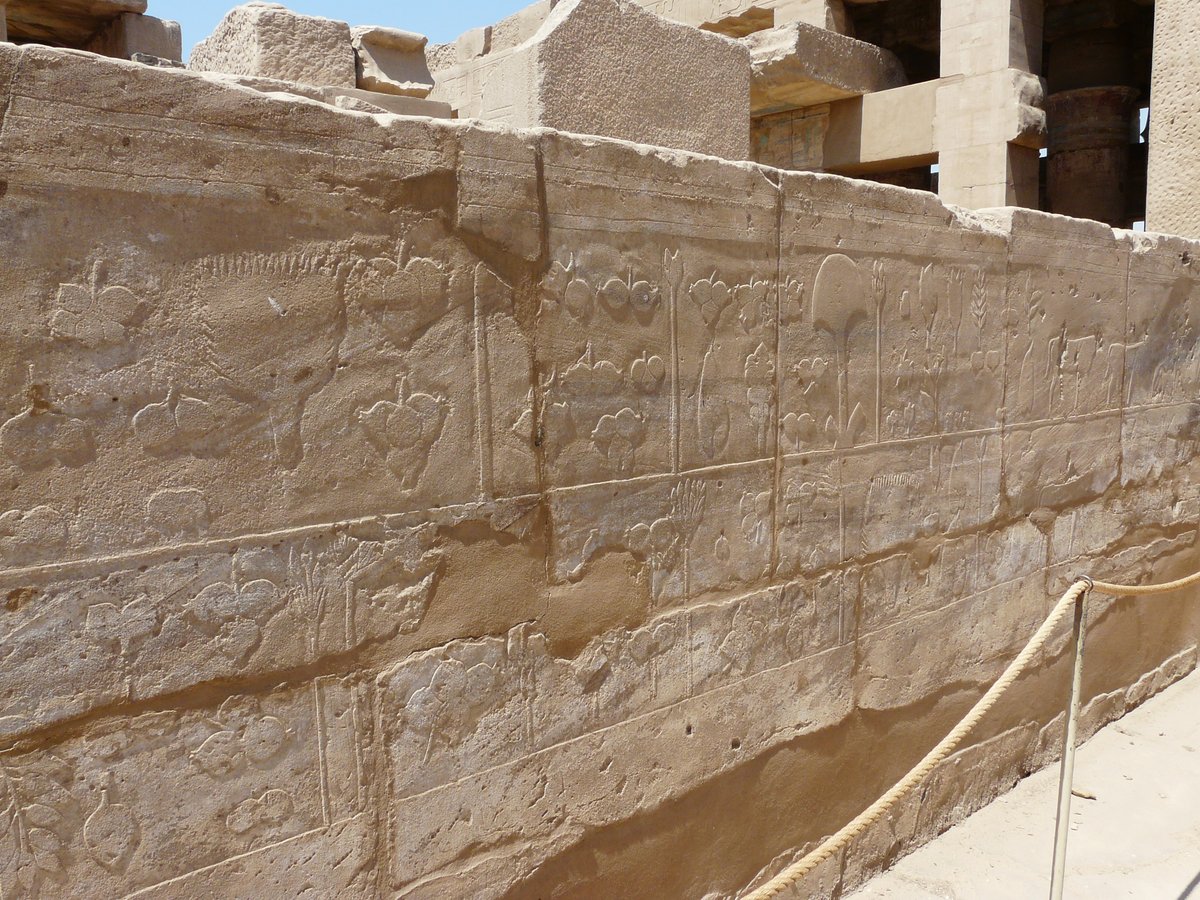
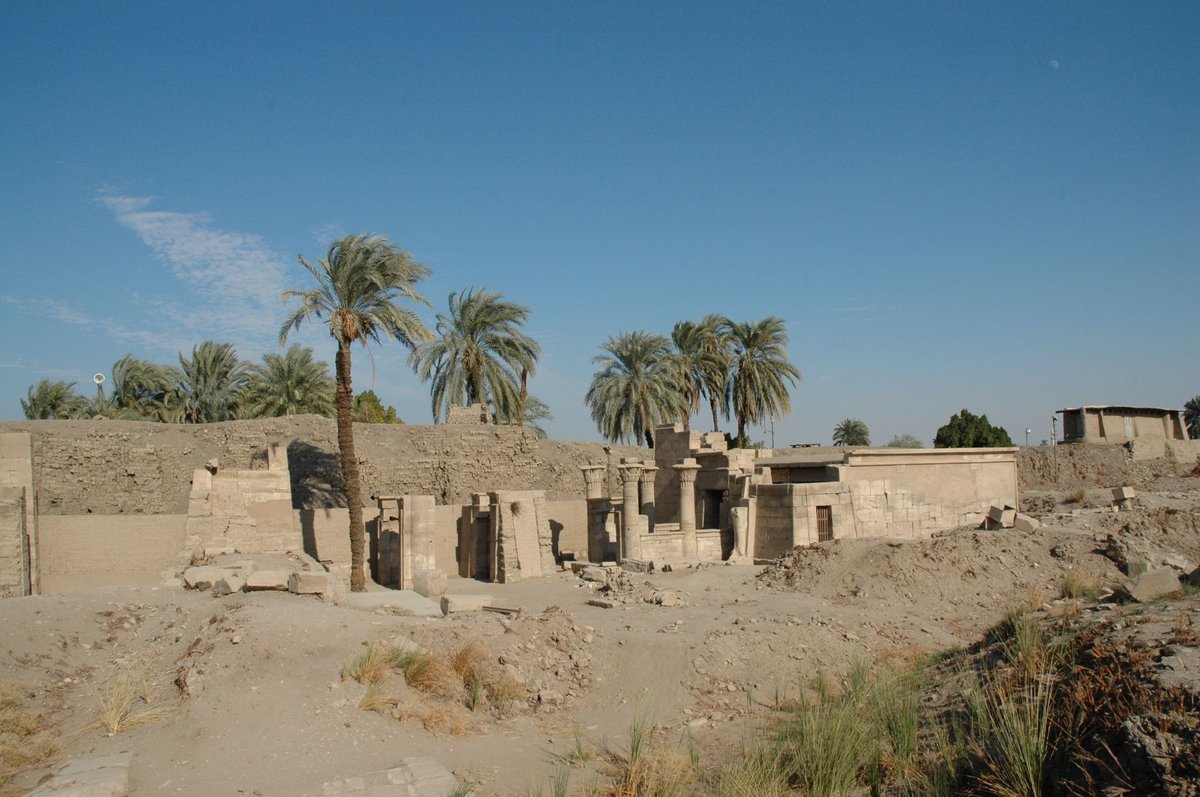
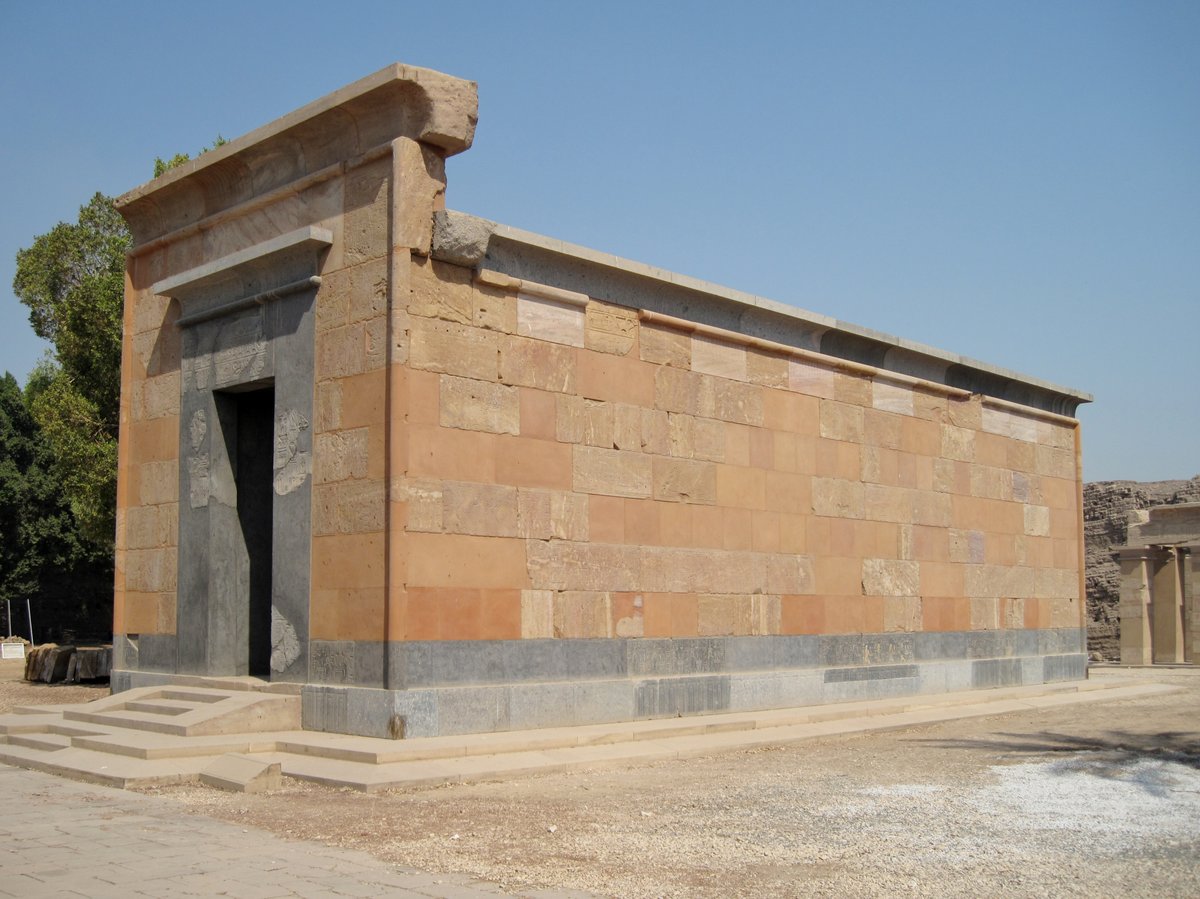
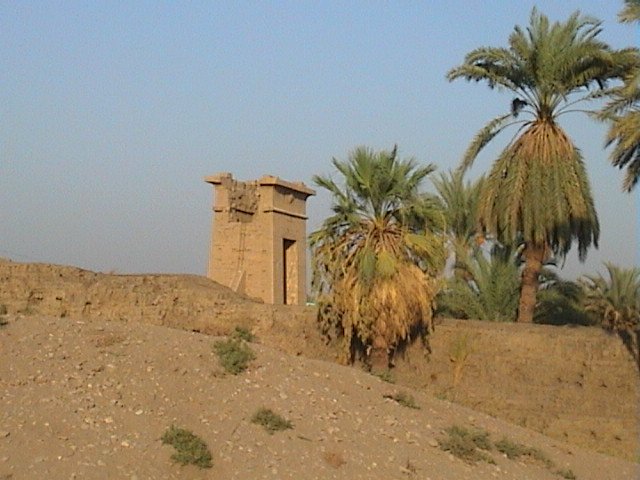
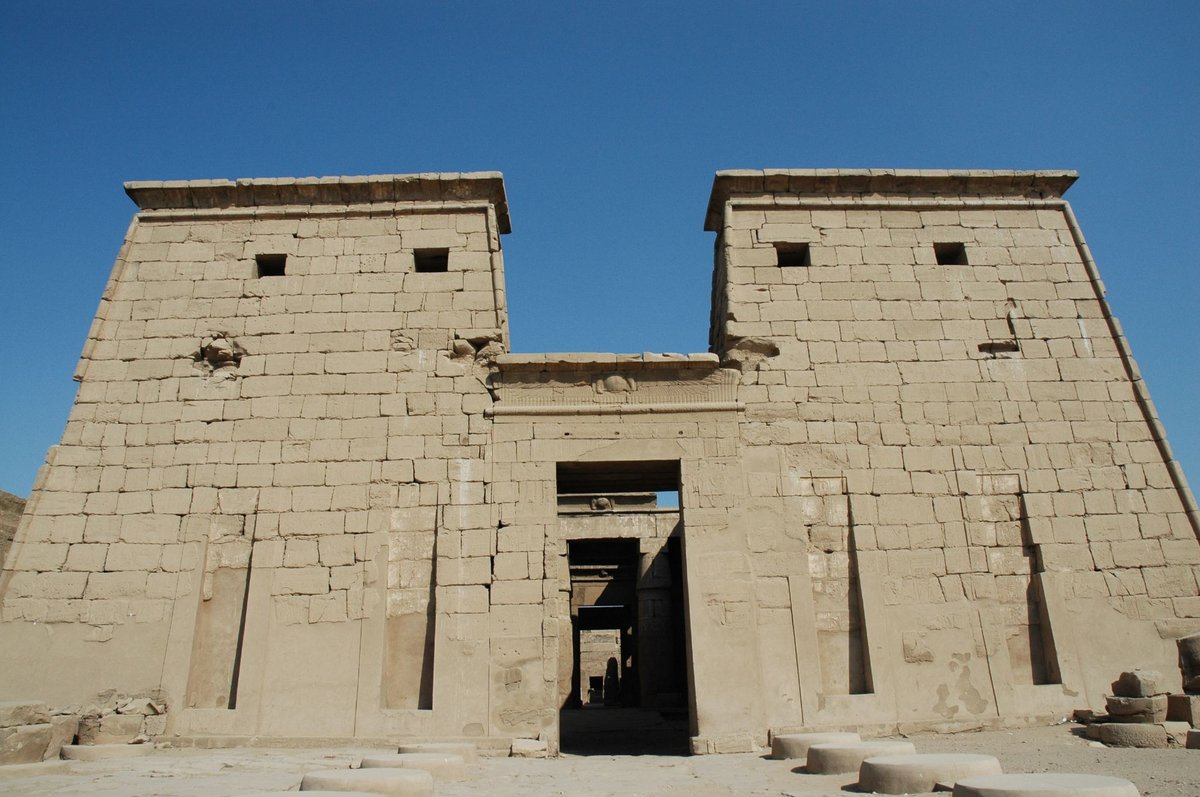
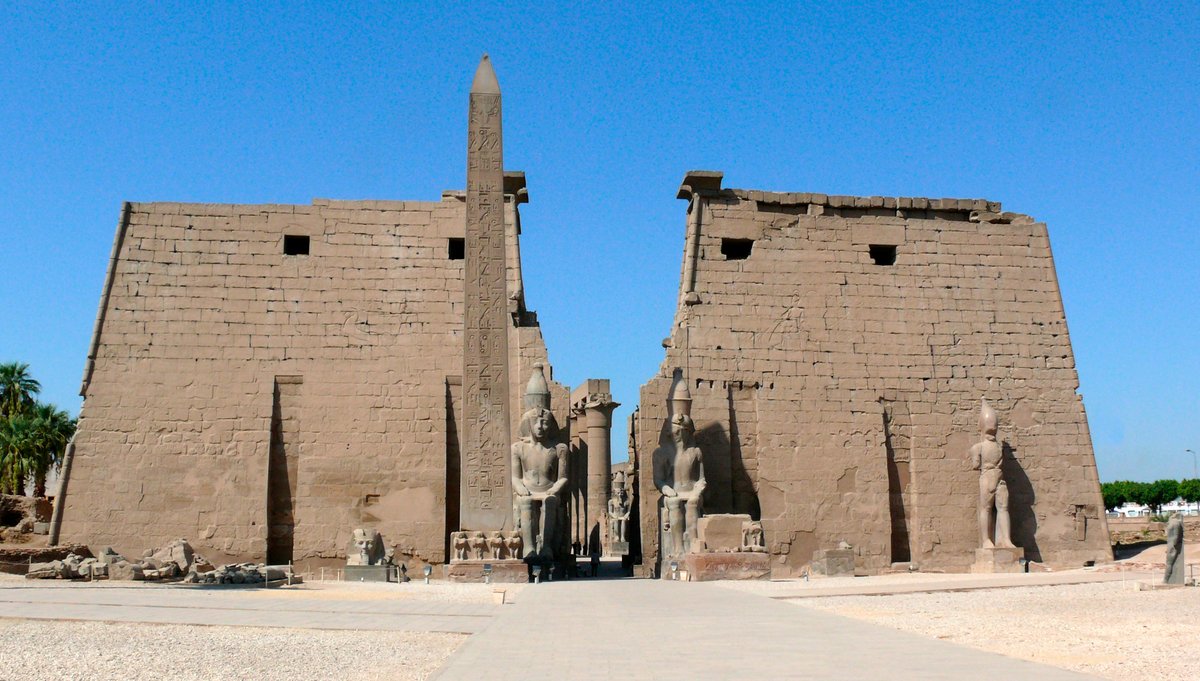
Wander through the halls of Ipet-isut, a temple complex consisting of a vast mix of temples, pylons, chapels, and other buildings near Luxor, Egypt. The area around Karnak was the ancient Egyptian Ipet-isut, meaning "The Most Select of Places". It served as the main place of worship of the 18th Dynastic Theban Triad, with the god Amun as its head. The complex is a vast open site that includes the Karnak Open Air Museum.
Construction of the complex began during the reign of Senusret I in the Middle Kingdom (c. 2000–1700 BC) and continued into the Ptolemaic Kingdom (305–30 BCE). While the term Karnak is often understood as the Precinct of Amun-Re, the complex consists of four main parts. Only the Precinct of Amun-Re is currently open to the public, while the Precinct of Mut, the Precinct of Montu, and the dismantled Temple of Amenhotep IV are closed. The key difference between Karnak and most other sites in Egypt is the length of time over which it was developed and used, with approximately thirty pharaohs contributing to its size and complexity.
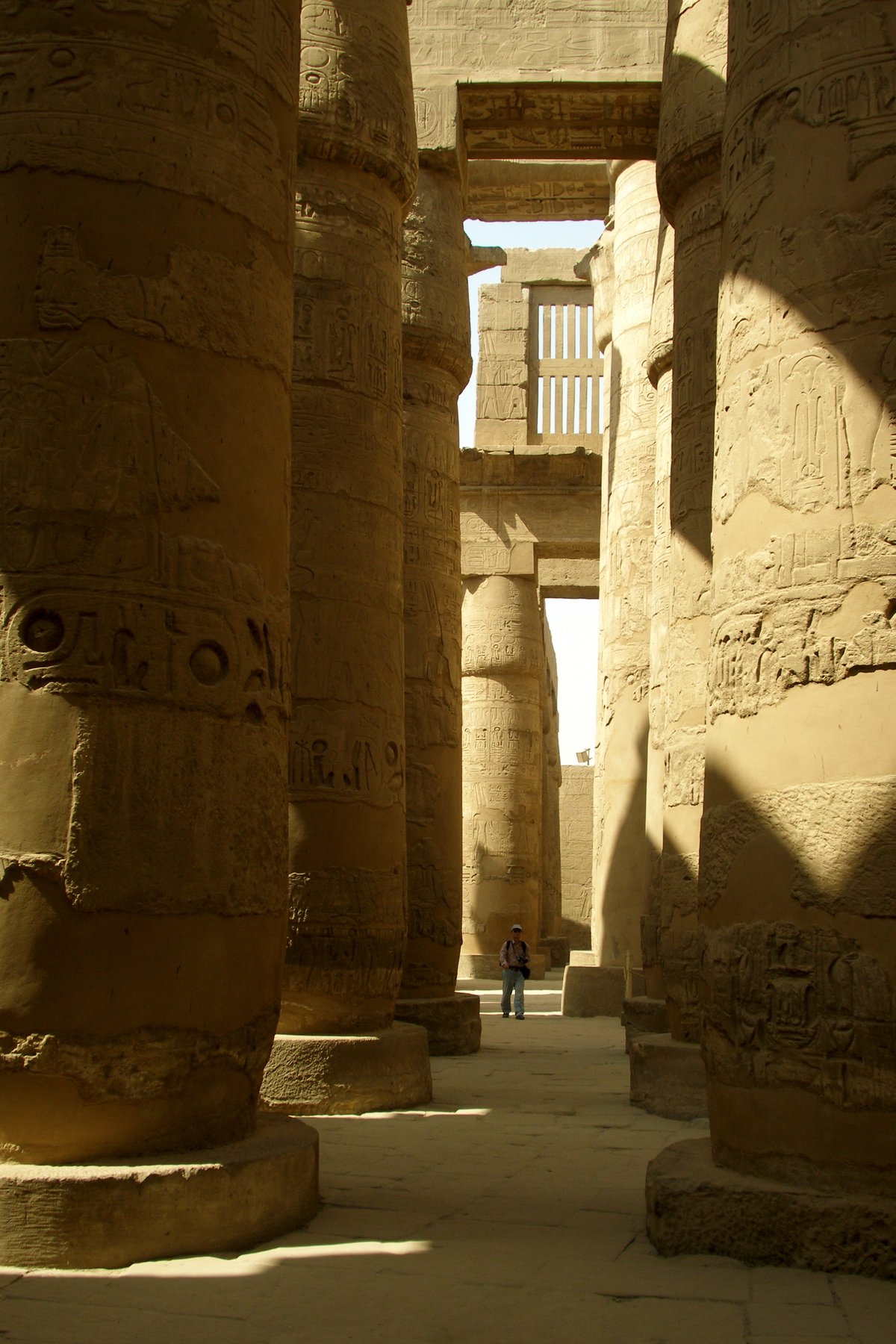
The Great Hypostyle Hall in the Precinct of Amun-Re has an area of 5,000 m2 (1.2 acres) with 134 massive columns arranged in 16 rows. One hundred and twenty-two of these columns are 10 metres (33 ft) tall, and the other 12 are 21 metres (69 ft) tall with a diameter of over 3 metres (9.8 ft). The architraves on top of these columns are estimated to weigh 70 tons.
The sun god's shrine was built so that it has light focused upon it during the winter solstice. The history of the complex reflects the changing role of Thebes, which became a capital of the unified culture during the Eighteenth Dynasty. Early building in the area was destroyed by invaders, but artifacts like an eight-sided column from the Eleventh Dynasty mention Amun-Re, who was a local tutelary deity identified with the ram and the goose.
The Precinct of Mut is very ancient and dedicated to an Earth and creation deity, but it has not yet been restored. In an out-of-the-way location, there is an unfinished pillar that indicates how it would have been finished, showing that final carving was executed after the drums were put in place so that it would not be damaged during placement.
Sources: Wikipedia, OpenStreetMap, Wikidata, Wikimedia Commons

Written by Mutabor
Discuss this with the author and others
No comments yet. Be the first to start the conversation.