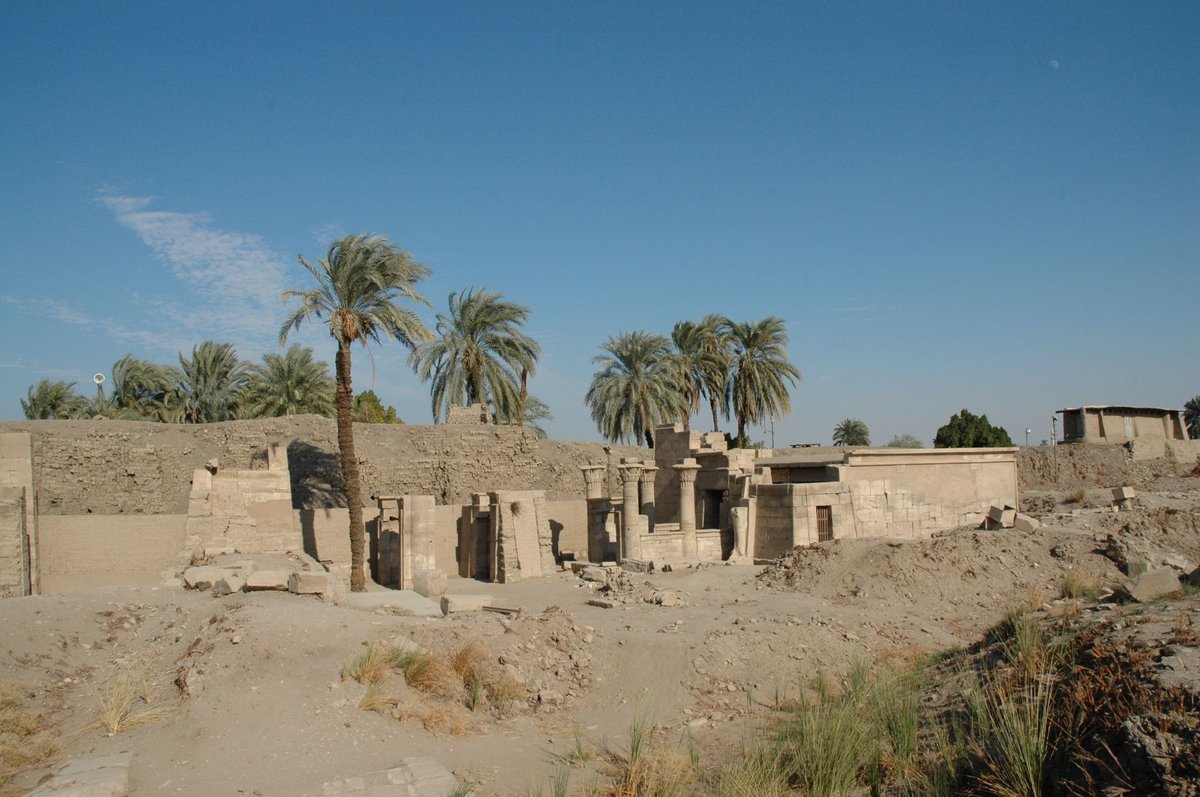

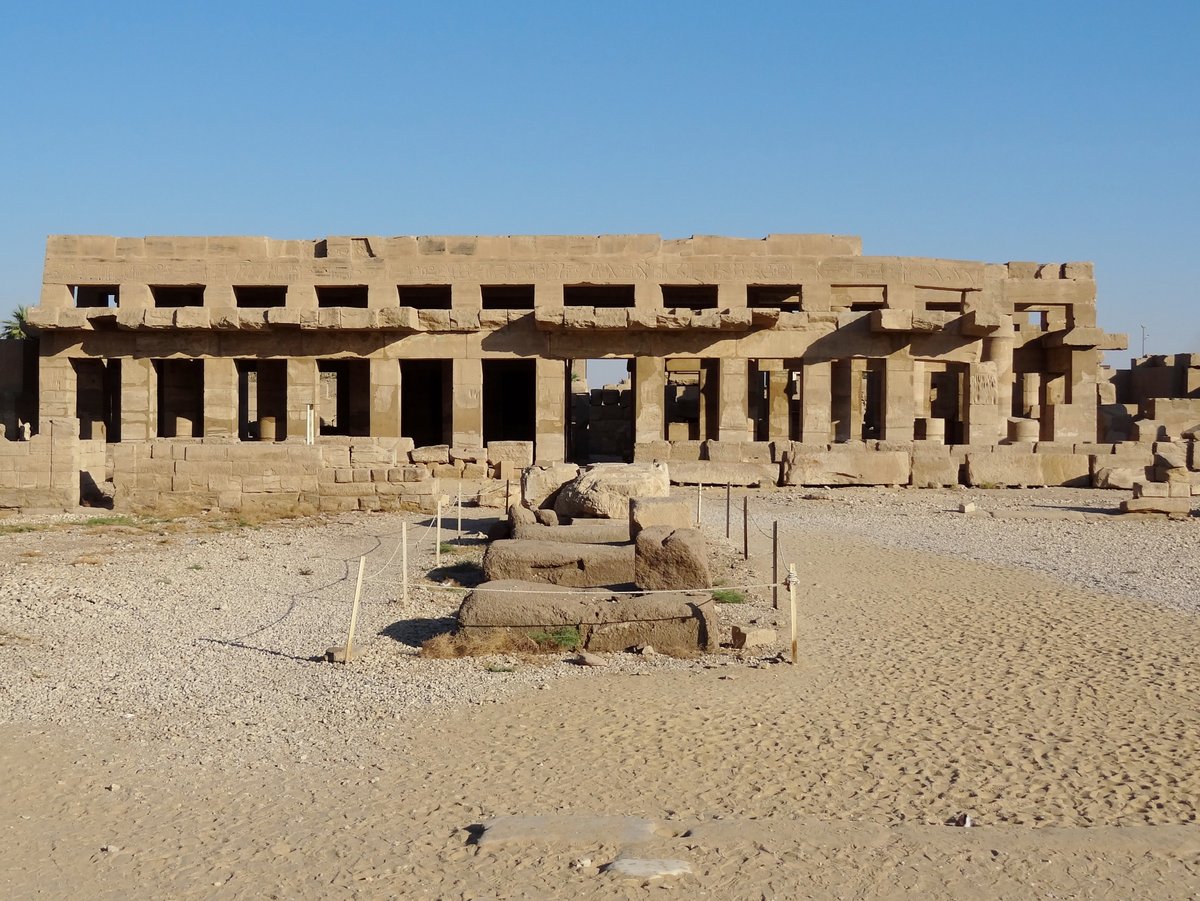
Sunken in time, hidden within the grand Precinct of Amun-Re at Karnak, Luxor, Egypt, the Temple of Ptah stands north of the main Amun temple, just within the boundary wall. The building was constructed by the Pharaoh Thutmose III upon the site of an earlier Middle Kingdom temple, with the Ptolemaic Kingdom later expanding it. It is a shrine dedicated to the ancient Egyptian god Ptah, his wife Sekhmet the goddess of war, and his son Nefertem.
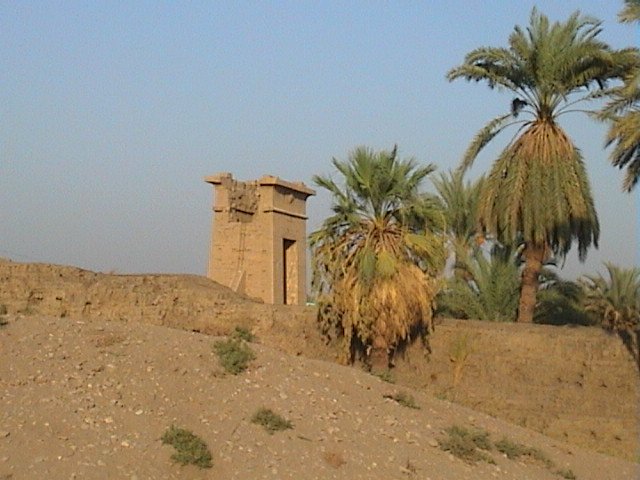
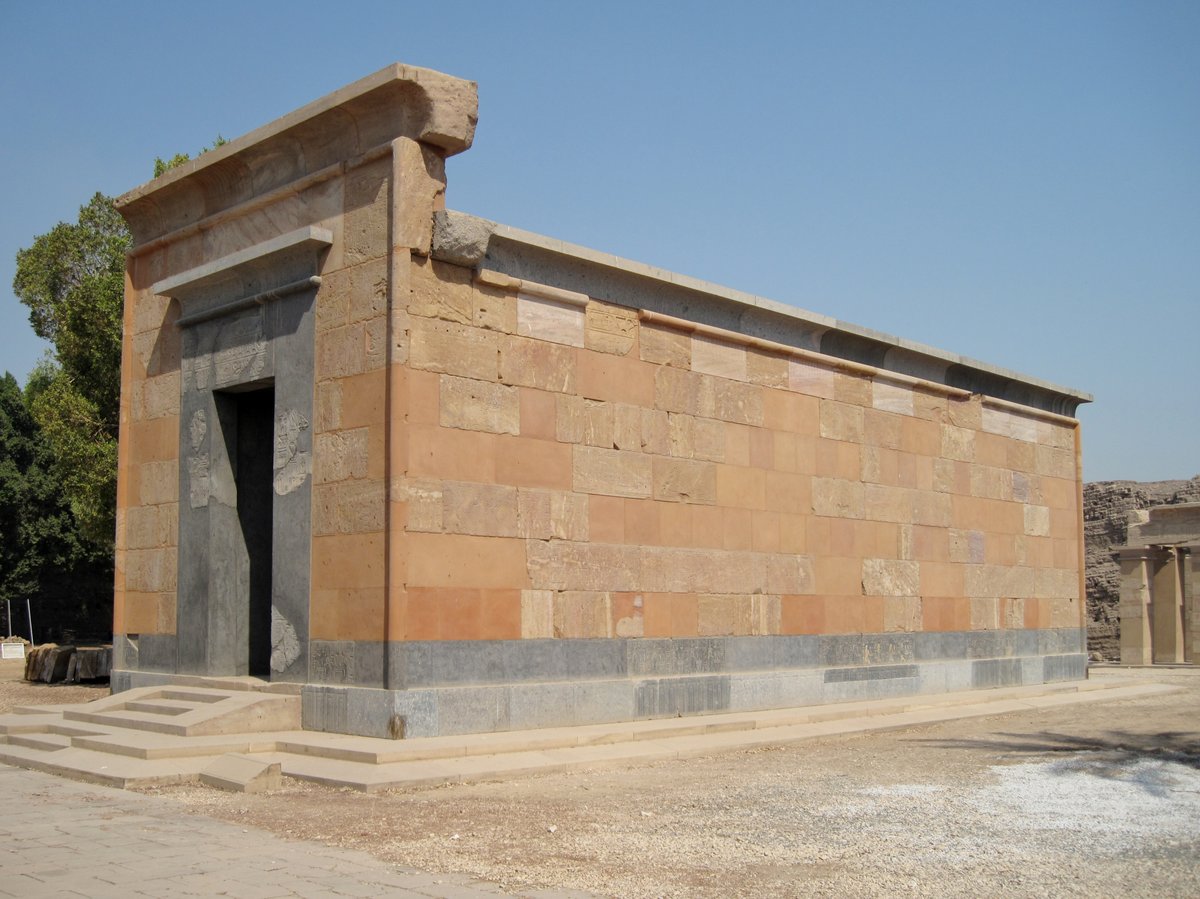
The temple consists of six small gateways built close together. The first, to the west, was constructed by the Ptolemies. The second gateway is a replica of the first but much more enclosed. The third gateway incorporates two engaged columns that connects with the fourth gateway. The fifth gateway serves as the entrance to the portico of four Composite order columns. The sixth gateway crosses through the pylons and runs through directly into the central sanctuary, where the statue of Ptah stands. The sanctuaries of Ptah and Sekhmet are situated here.
The first gateway crosses an enclosed cartouche of Ptolemy VI. On the interior façade of the first gateway are passages of Ptolemy XI and Ptolemy XIII. The jambs next to the first gateway depict Nefertem bearing a blue lotus flower. The second and fourth gateways contain cartouches in the name of Shabaka. The third gateway cartouche is in the name of Ptolemy XIII. The fifth gateway leading to the portico columns of Ptolemy III contains the title of Thutmose III and on the gate contains the name of Ptolemy III.
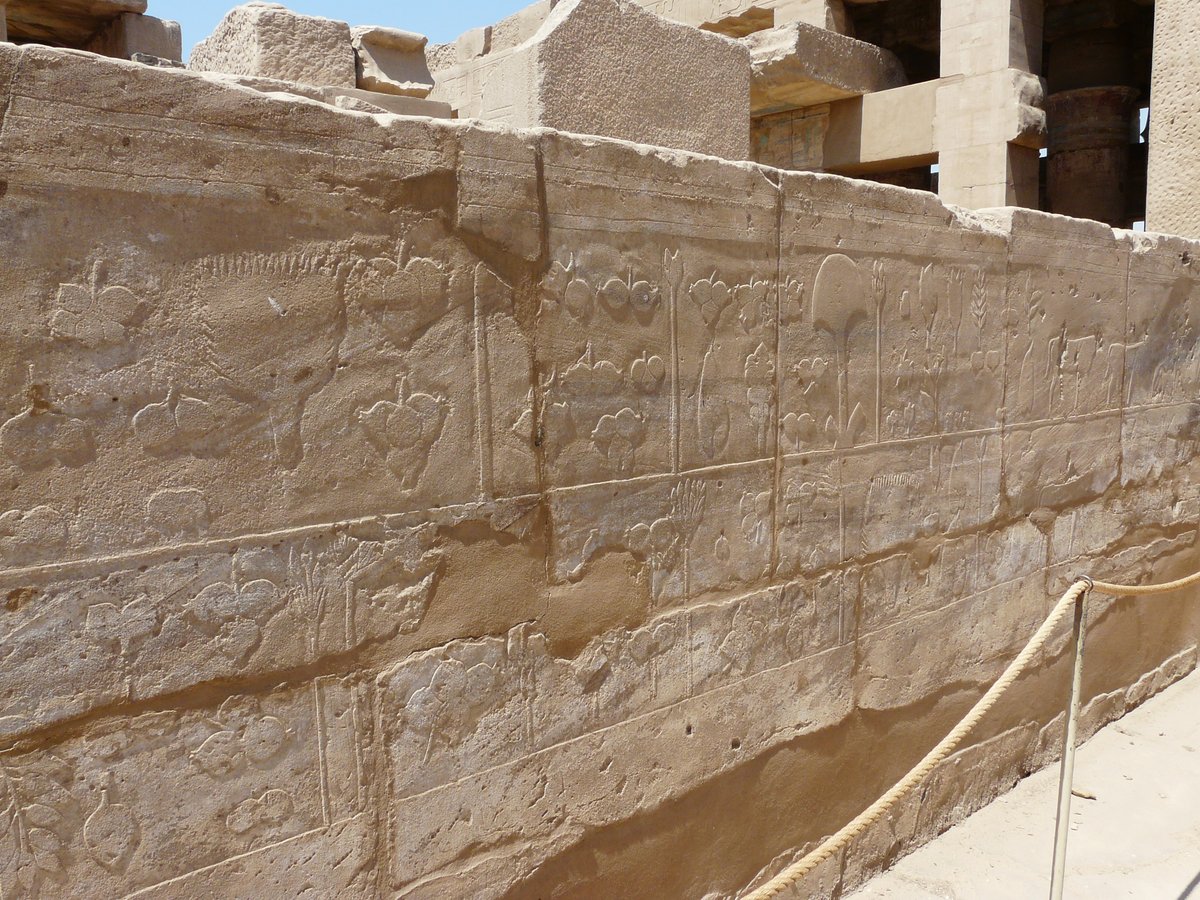
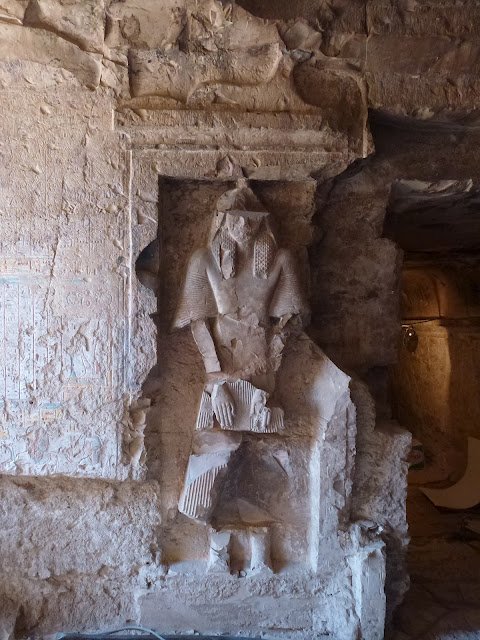
This is where the doorpost of the pylon extends beyond the doors. Here, the king, adorned in the white and red crowns, is seen. On the north side, the king wears the red crown. On the south wall of the main central chamber, scenes in sunk relief can be seen. On the right, the scepter of Amun with four vertical lines and more inscriptions can be found. Inside the sanctuary stand two statues. The sanctuary is the most sacred place in the temple, which is why statues of Ptah and another of Sekhmet stand here. Sekhmet's statue in the chapel is dedicated to the goddess Hathor.
Behind the statue of Ptah, Khonsu holds scepters in his hands: the djed pillar, was scepter, ankh, heka scepter, and nekhakha scepter. There are numerous paintings of scenes of the king, offering with the sign of Ma'at to the god Amun Re. The back, outside wall of the temple is also noteworthy. Here, at two different levels going from left to right, are a representation of Ptah in light relief, whose head must have been sculpted on a stone that is now missing, and also one of Hathor, followed by two deified scribes from the Old and New Kingdom. Most of the renovations were done under the reigns of Ptolemy III and Ptolemy IV, who were generally concerned with changes to the courtyard.
Sources: Wikipedia, OpenStreetMap, Wikidata, Wikimedia Commons

Written by Mutabor
Discuss this with the author and others
No comments yet. Be the first to start the conversation.