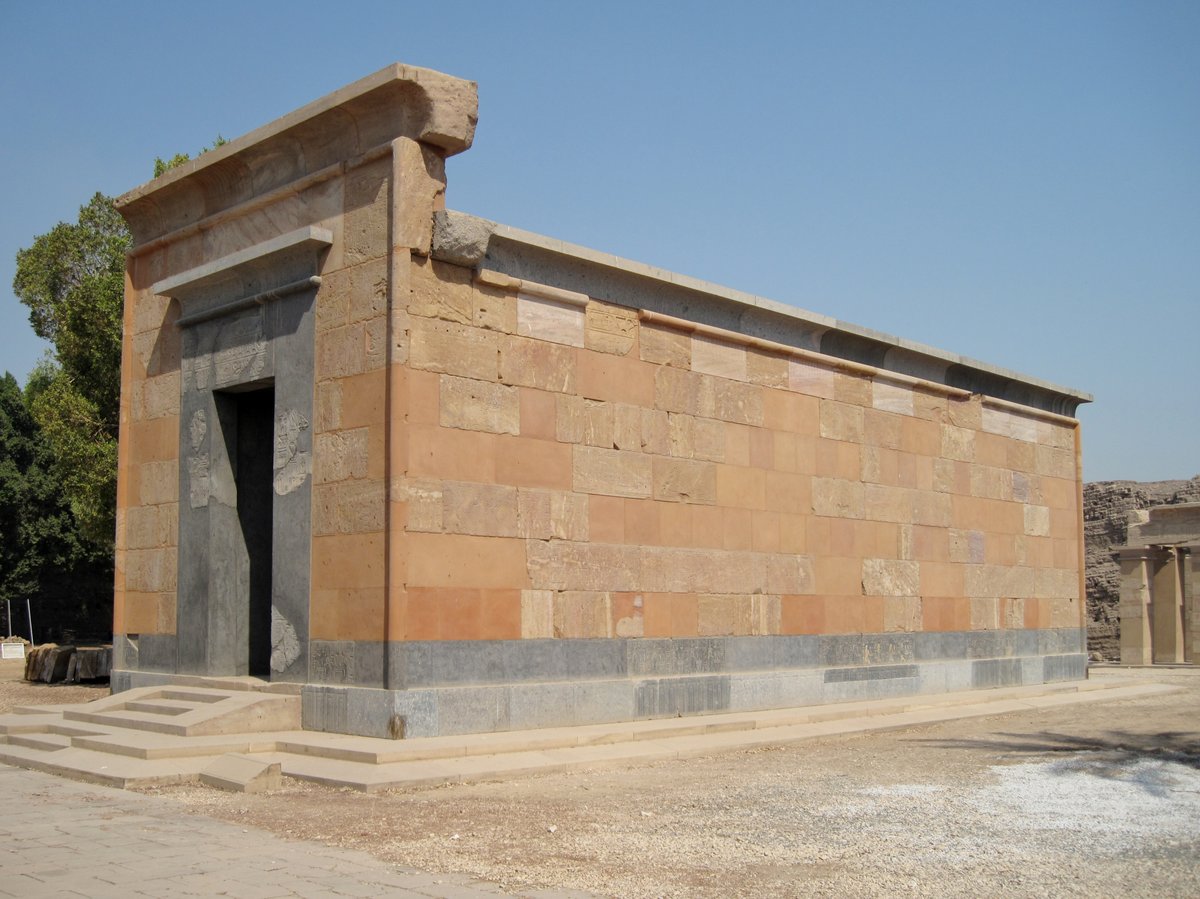

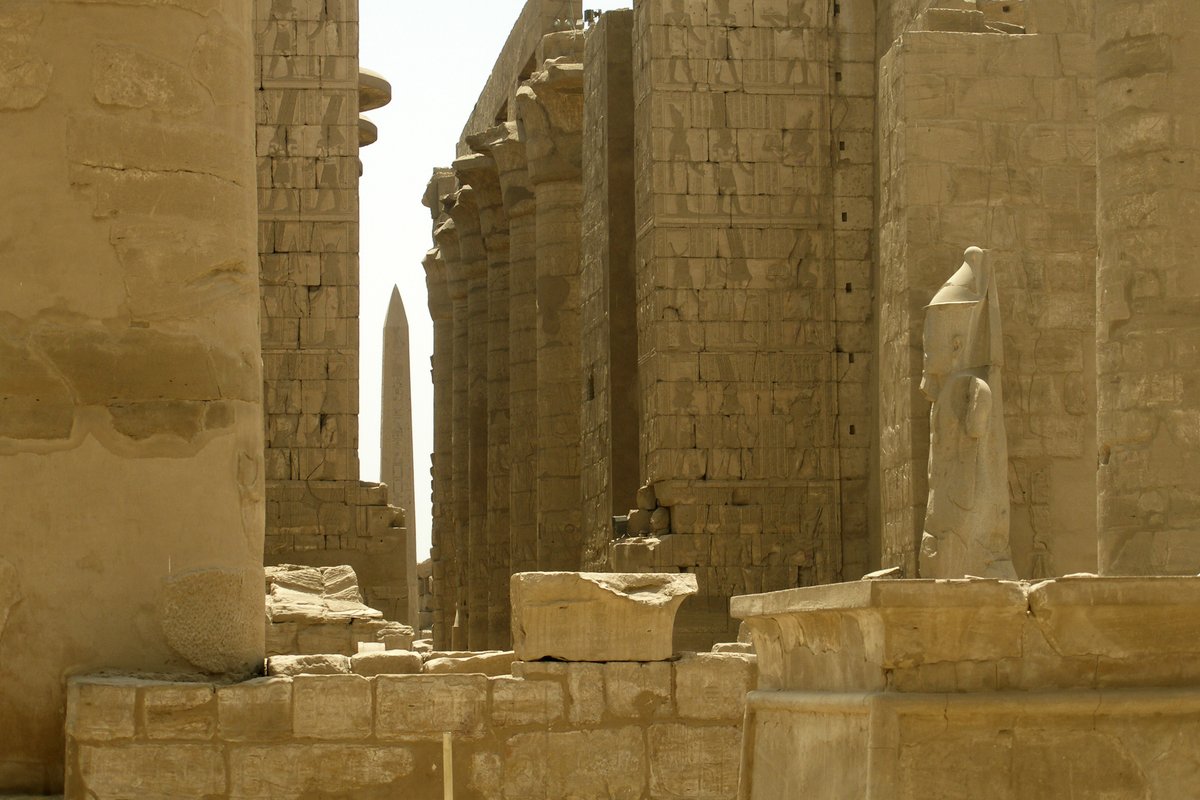
Hatshepsut was the fifth pharaoh of the 18th Dynasty, reigning from around 1479 to 1458 BC. During her reign, she began construction on the Red Chapel of Hatshepsut, a religious shrine located in the sanctuary of Amun-Ra at Karnak. While the chapel was demolished in antiquity and its parts reused in other projects, it was rebuilt in 1997 using its original materials. The chapel was placed within the Palace of Ma’at, honoring one of the oldest deities.
The chapel's construction was a significant contribution to Karnak. It consisted of two rooms, a vestibule, and a sanctuary raised on a diorite platform, accessible by short ramps. The structure was designed to house the Userhat-Amun, a small-scale wooden boat covered in gold. This barque was believed to be used by the deity Amun to travel during festival days, resting in its own shrine when not being carried in procession by priests.
The building is approximately 18 m long, 6 m wide, and 5.5 m high. Its upper portion is made of red quartzite, while the foundation is built of black diorite, with black granite and grey diorite also used in its construction. The chapel features two open courts; the first contains a basin for a model of a barque, and the inner court contains two rectangular stone slabs marking places where statues or barques might have been placed.
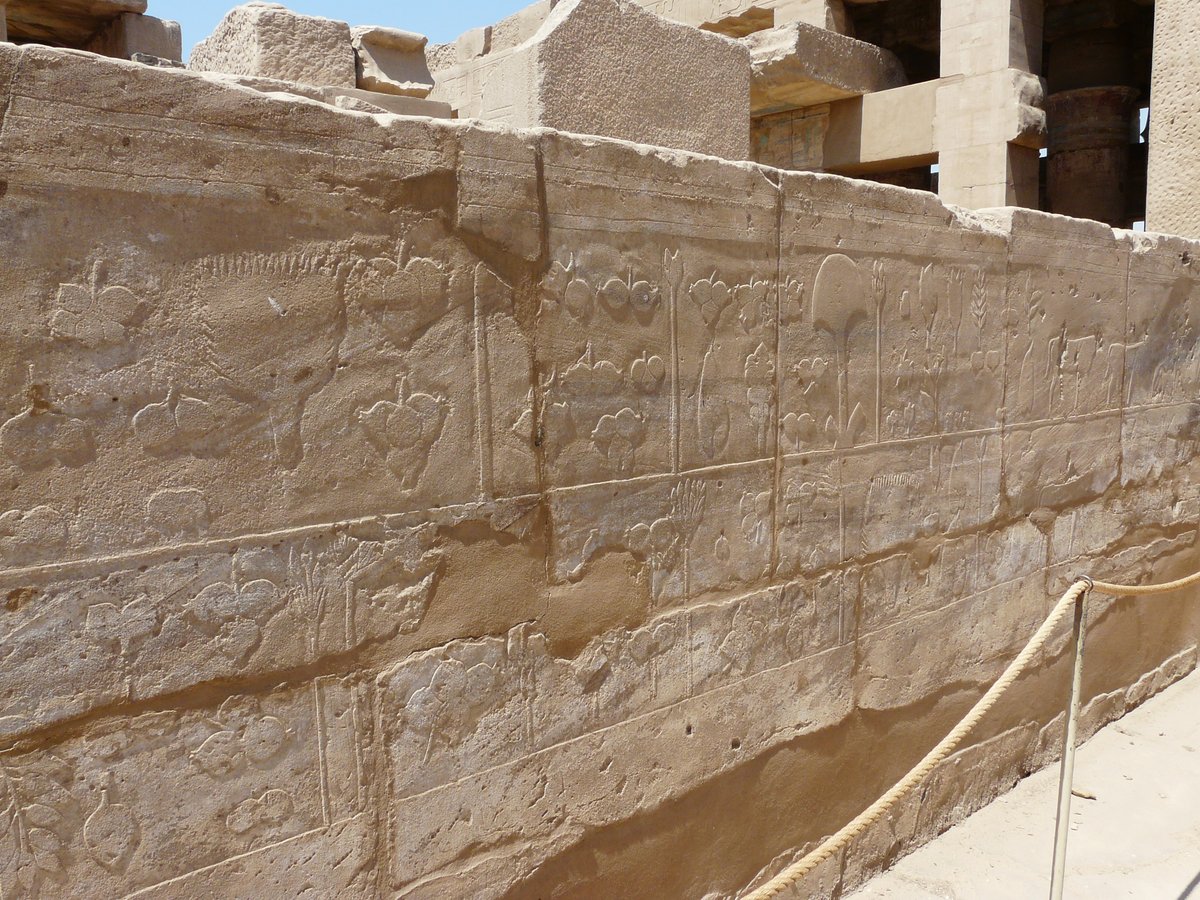
Though Hatshepsut began the chapel in the seventeenth year of her reign, she likely did not complete the decoration before her death. The upper blocks show only her successor, Thutmose III, who had become pharaoh by that time. Some blocks depict the God's Wife of Amun, likely Neferure, the daughter of Hatshepsut and Thutmose II. These carvings provide insight into the active role the God's Wife played in religious practices, such as leading priests to be purified or performing sacred rites in front of the statue of Amun.
Sources: Wikipedia, OpenStreetMap, Wikidata, Wikimedia Commons
Written by Mutabor
Discuss this with the author and others
No comments yet. Be the first to start the conversation.