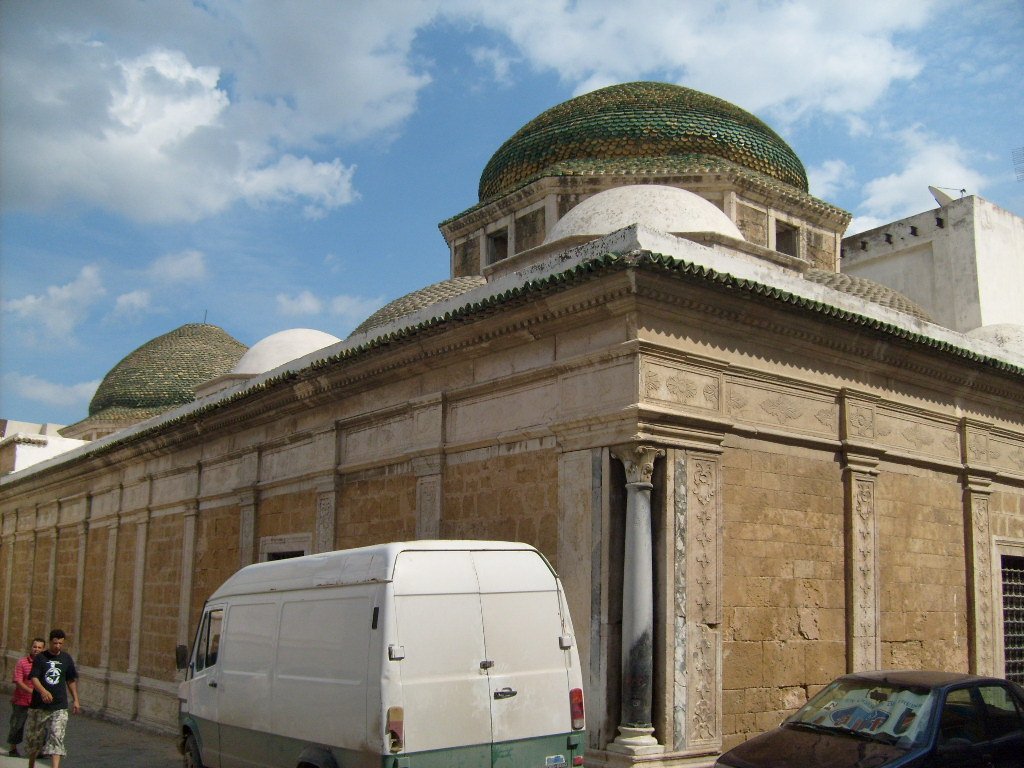

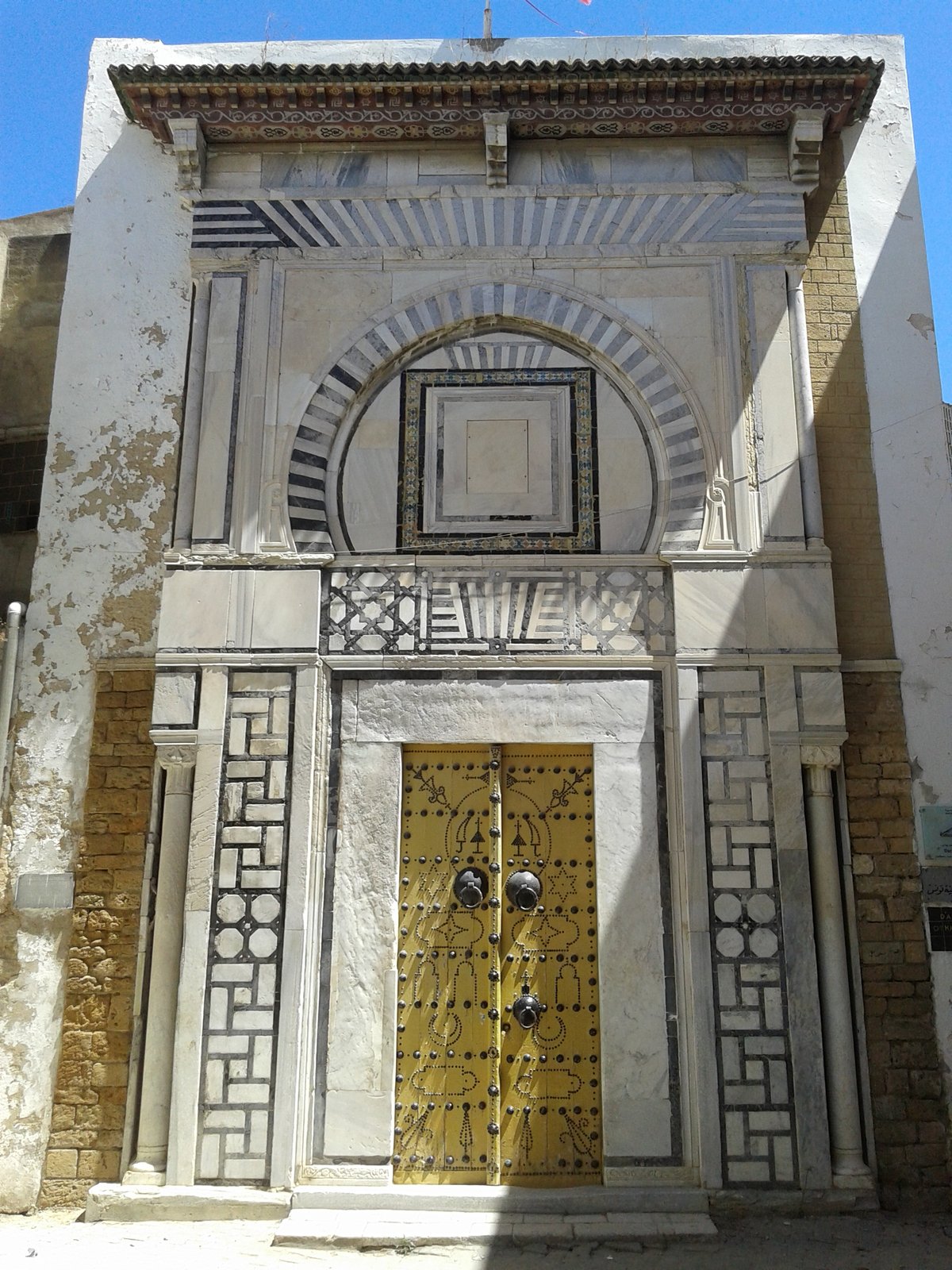
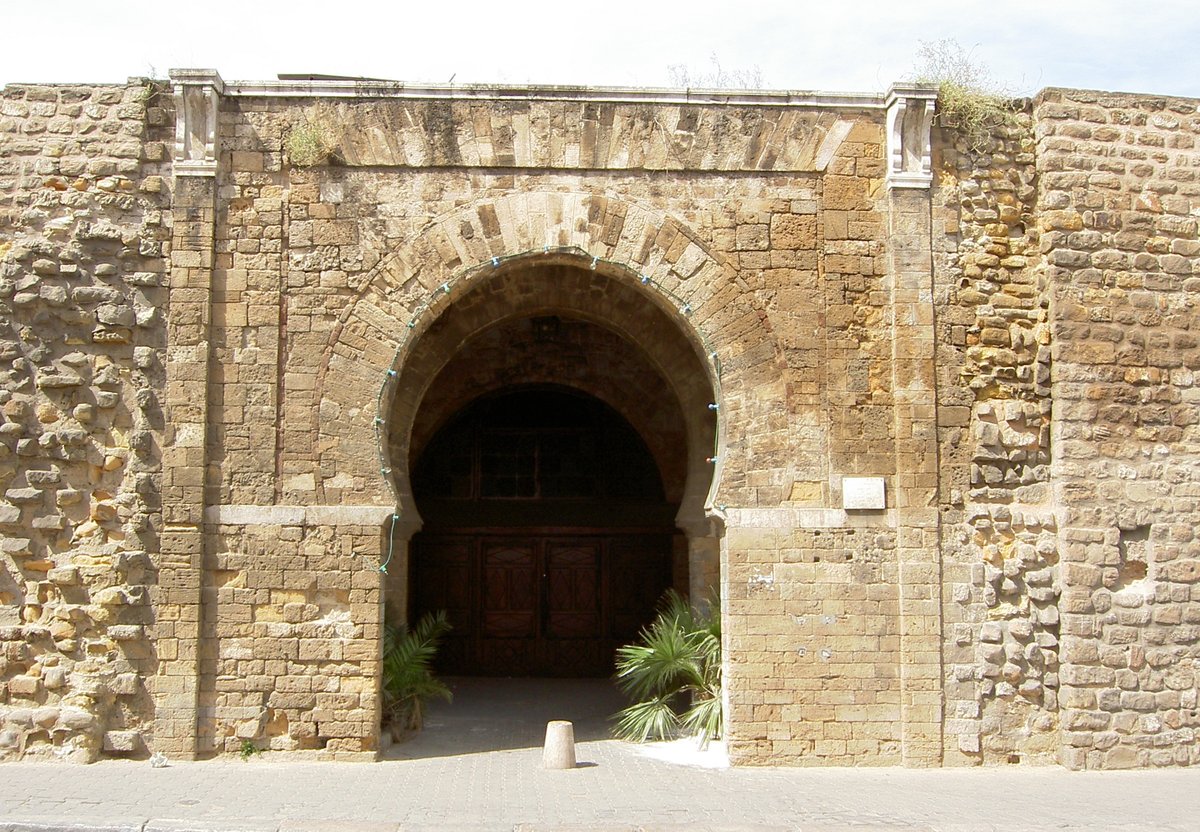
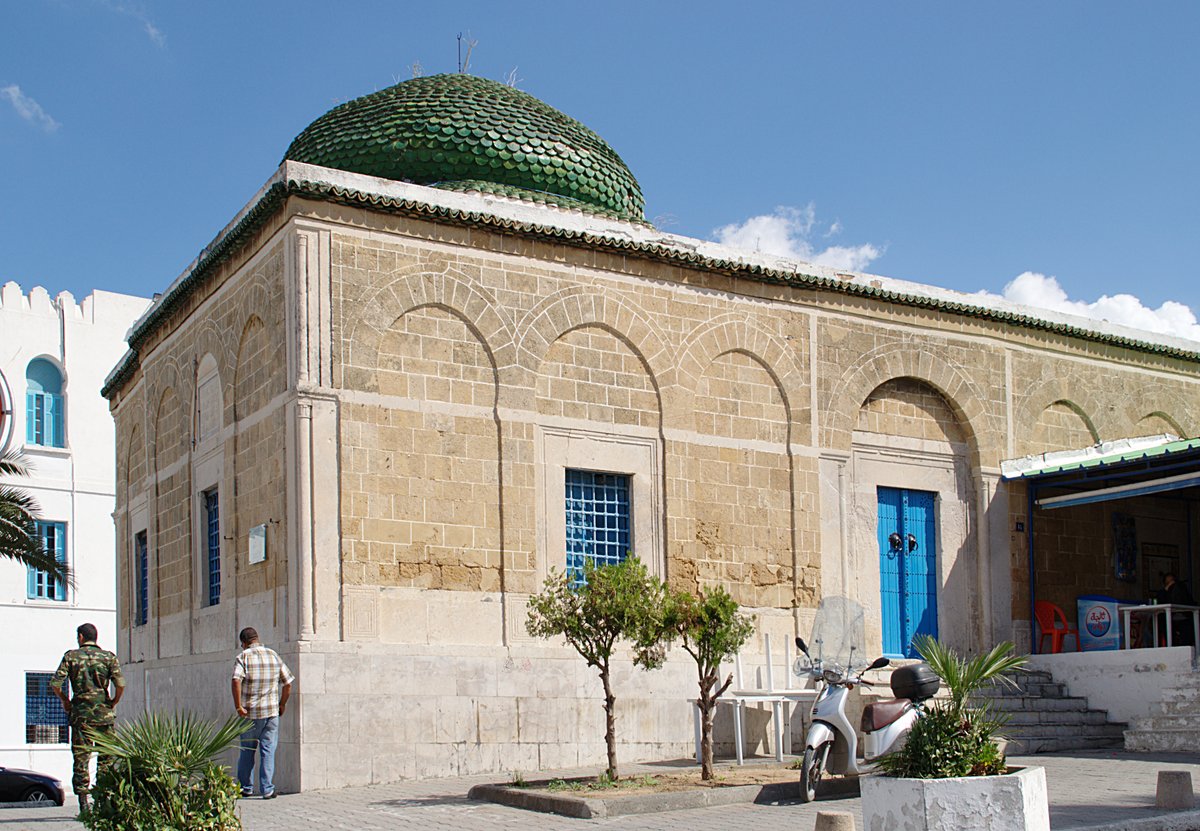
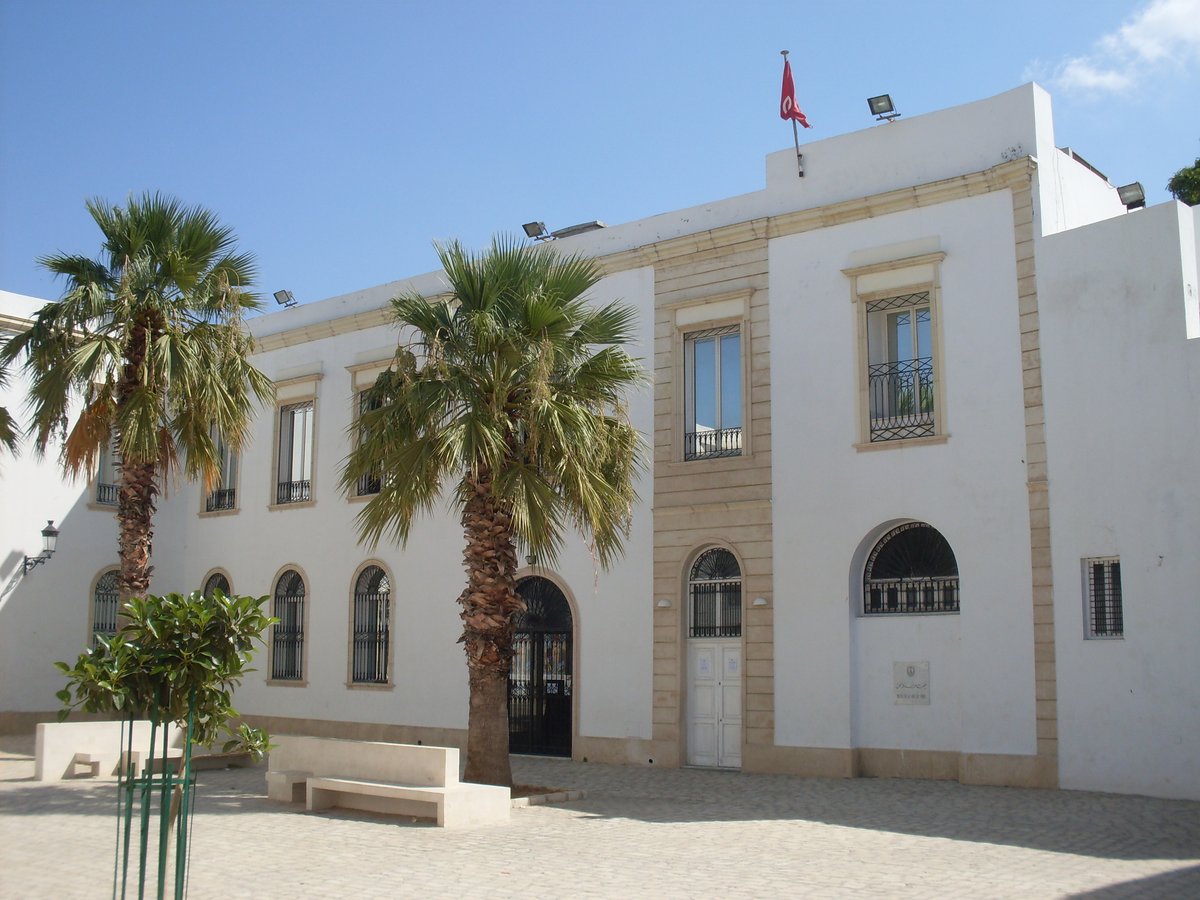
Located in the southwest of the medina of Tunis, the Tourbet el Bey is the largest funerary monument in the city. Constructed during the reign of Ali II ibn Hussein (1759-1782), the mausoleum serves as the final resting place for most of the Husainid dynasty rulers, excluding the last two who were buried in other locations. The building is topped with domes, the main ones covered in green tortoiseshell-shaped tiles, and features facades of ochre sandstone decorated with pilasters and Italian-style entablatures.
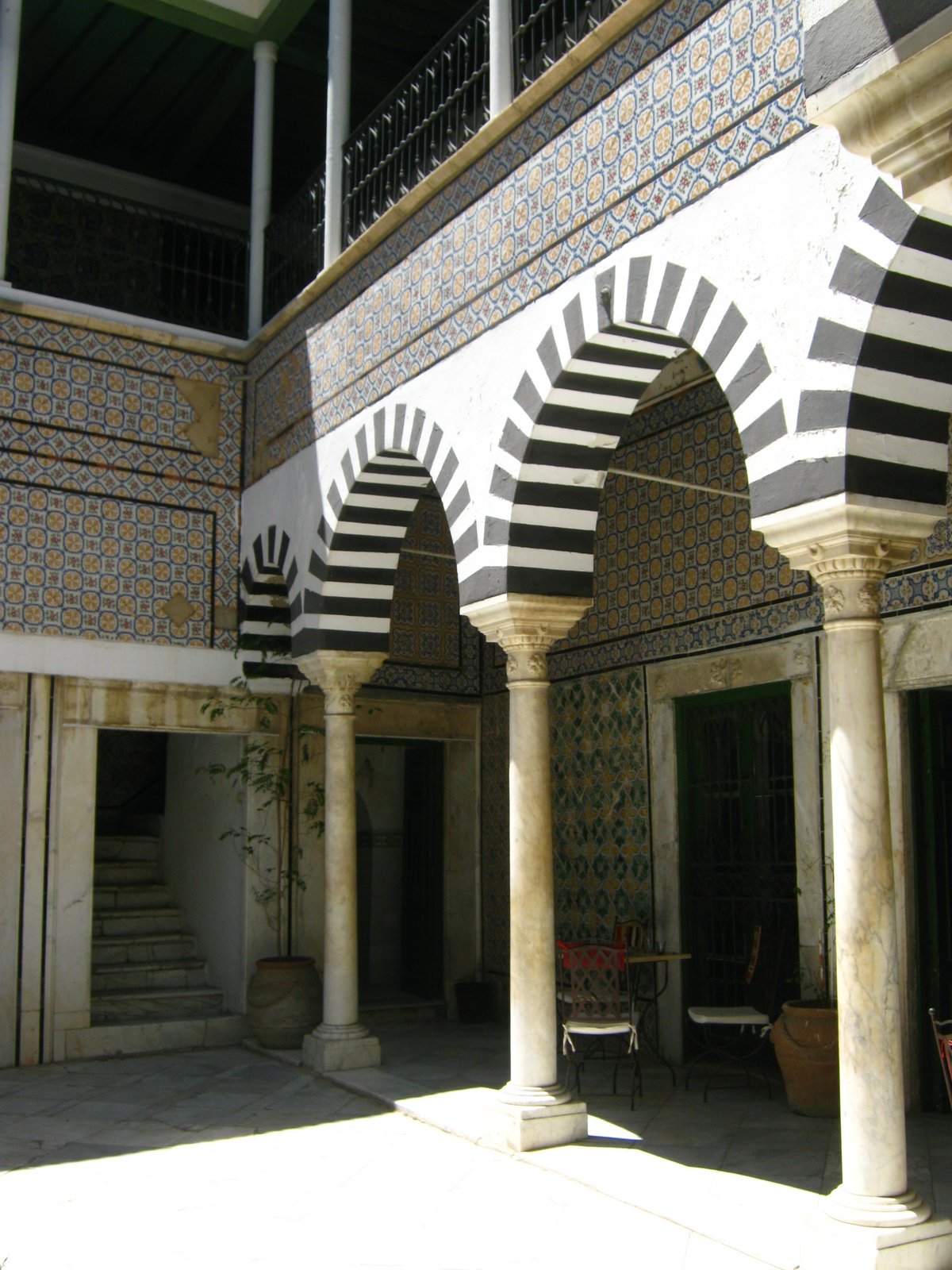
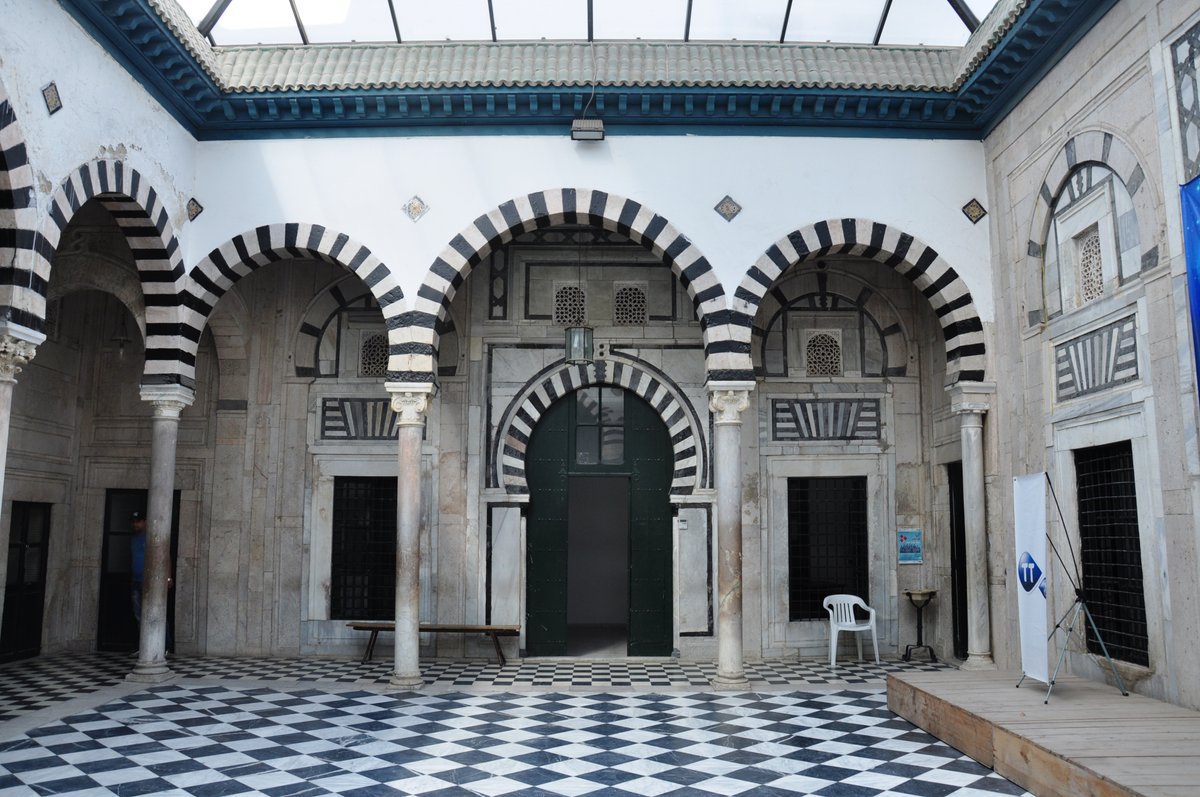
The mausoleum comprises eight funerary chambers built around two patios. The south-west side opens into the chamber of the Beys, the most important chamber in the complex, housing the tombs of thirteen reigning Beys. This square chamber, with walls fifteen metres long, replicates the proportions of an Ottoman mosque with four large cruciform pillars supporting a large central cupola. The interior features polychrome marble marquetry on the lower parts of the walls and pillars up to a height of 2.5 metres, alongside finely-sculpted plaster on the caps of the cupolas.
For around thirty years, the tourbet was abandoned and its roof structures and rich decorations deteriorated. In the 1990s, the National Heritage Institute began restoration work and opened the site to visitors. On February 24, 2023, the monument was reopened after eleven years of closure and restoration work, which cost approximately 120,000 dinars.
Sources: Wikipedia, OpenStreetMap, Wikidata, Wikimedia Commons
Written by Mutabor
Discuss this with the author and others
No comments yet. Be the first to start the conversation.