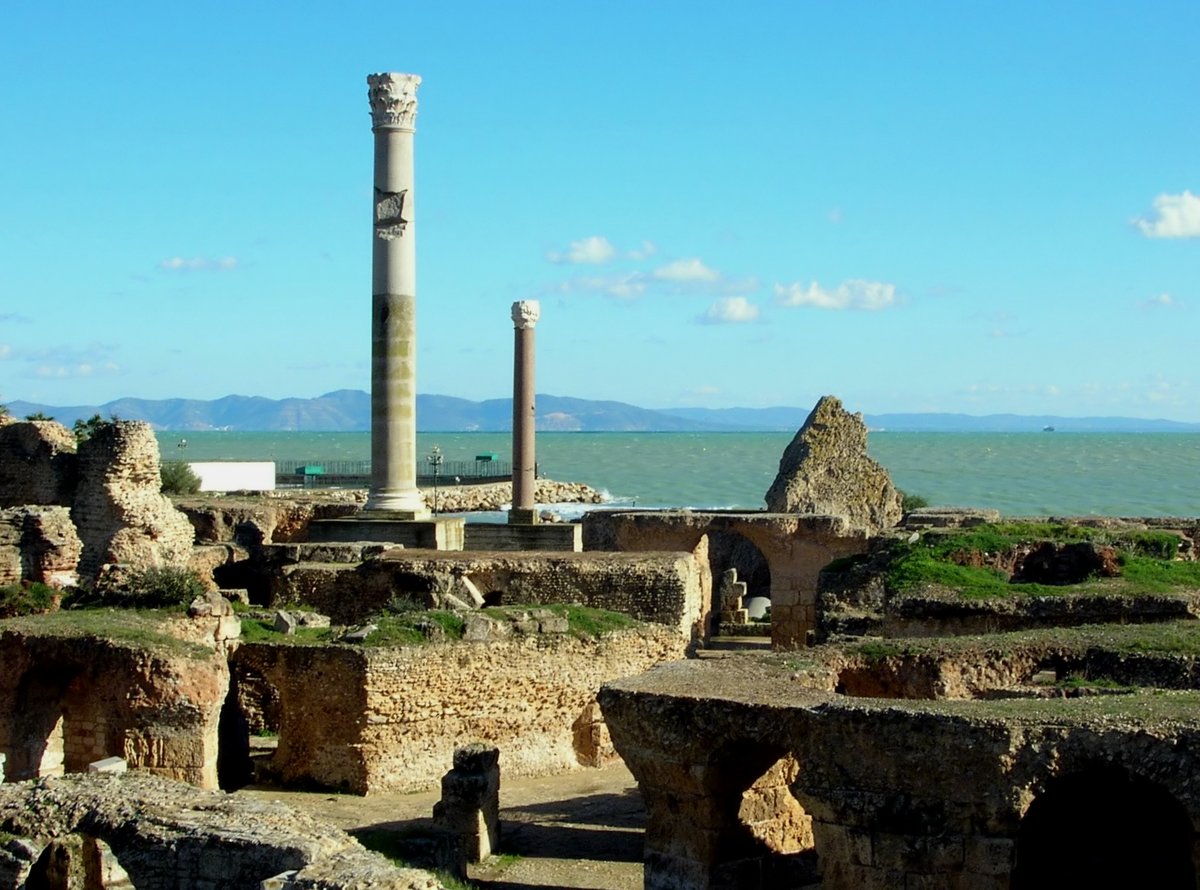

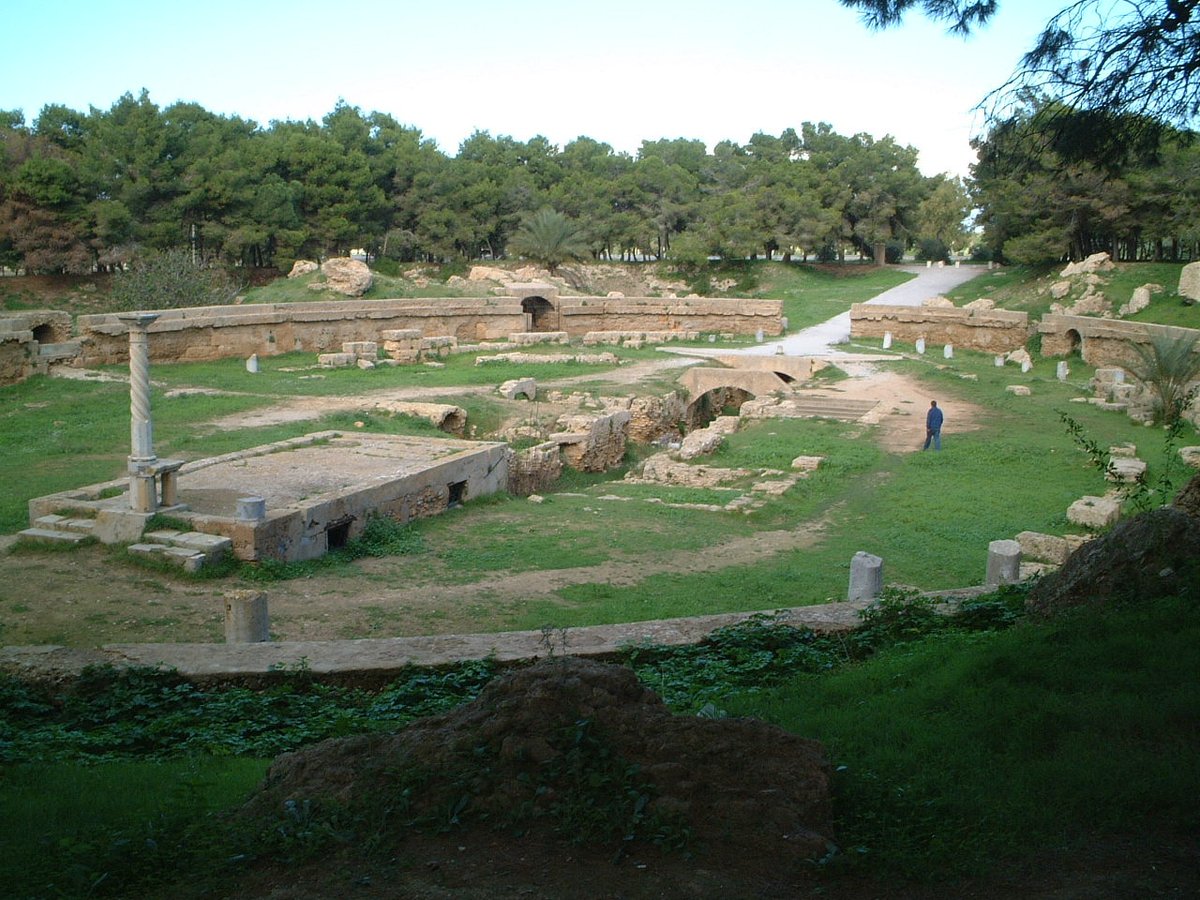
The Baths of Antoninus, also known as the Baths of Carthage, stand as one of the most significant surviving sets of Roman thermae. Located in Carthage, Tunisia, they are the largest set of Roman thermae built on the African continent and one of the three largest built in the Roman Empire. These colossal structures were built during the reign of Roman Emperor Antoninus Pius, though they were constructed under the control of Emperor Hadrian along the Mediterranean Sea.
After the Punics were defeated during the Third Punic War (149–146 BC), Roman traditions and customs took hold of Carthage. The city eventually became the third city for the allied Berber kings of the Romans. The bathhouses remained in use until the Vandals invaded Tunisia in 439 AD and destroyed them. Today, the site is mostly in ruins, though some pieces have been preserved. Archaeological excavations began during the Second World War and concluded with the creation of an archaeological park for the monument.
The baths are structurally unique because the soft clay soil bordering the Mediterranean Sea required a larger foundation than typical structures. While other Roman bathhouses had service areas in the basement, the designers had to adapt and raise the structure of these baths, making them taller than other Roman bathhouses. The baths are today part of the Archaeological site of Carthage on the list of World Heritage sites of UNESCO. On 17 February 2012, the Tunisian government proposed the Roman hydraulic complex Zaghouan-Carthage, of which the baths are part, as a future World Heritage site.
Sources: Wikipedia, OpenStreetMap, Wikidata, Wikimedia Commons
Written by Mutabor
Discuss this with the author and others
No comments yet. Be the first to start the conversation.