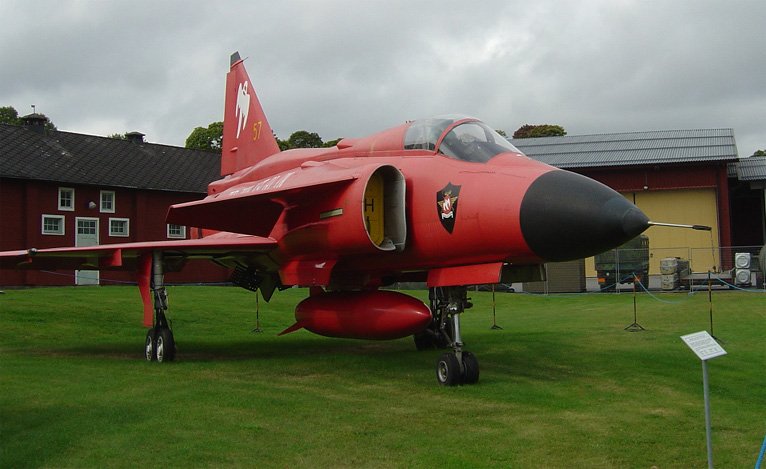

We must look at the Saab 37 Viggen as a profound breakthrough in aeronautical engineering. It stood as the first mass-produced jet to utilize a canard wing and a revolutionary onboard digital central computer with integrated circuits. By automating intricate processes that once demanded a full crew, this technology empowered the pilot to master tactical choices during high-speed engagements. This leap in digital integration remained unsurpassed until the Panavia Tornado arrived in 1981.
The journey toward this machine began in the early 1950s as a successor to the Saab 32 Lansen and 35 Draken. Engineers explored over 100 distinct concepts, including VTOL options, before they committed to the delta wing shape. They sought a versatile multirole aircraft capable of utilizing runways as short as 500 meters. After the aerodynamics reached a final state in 1963, the prototype achieved its first flight in February 1967.
Official service commenced in June 1971 for the Swedish forces. The aircraft functioned as a vital component of the national electronic air defense system to create a unified weapon network. Though Sweden produced various versions for maritime patrol and reconnaissance, the Viggen remained a Swedish exclusive because export efforts failed.
Sweden retired the Viggen in November 2005 to make way for the Saab JAS 39 Gripen. Now, we view this aircraft as a preserved sculpture and a masterpiece of industrial design. It stands as a permanent reminder of a period when Sweden boldly explored the frontier of digital aviation.
Sources: Wikipedia, OpenStreetMap, Wikidata, Wikimedia Commons






Written by Nik Frost
Discuss this with the author and others
No comments yet. Be the first to start the conversation.