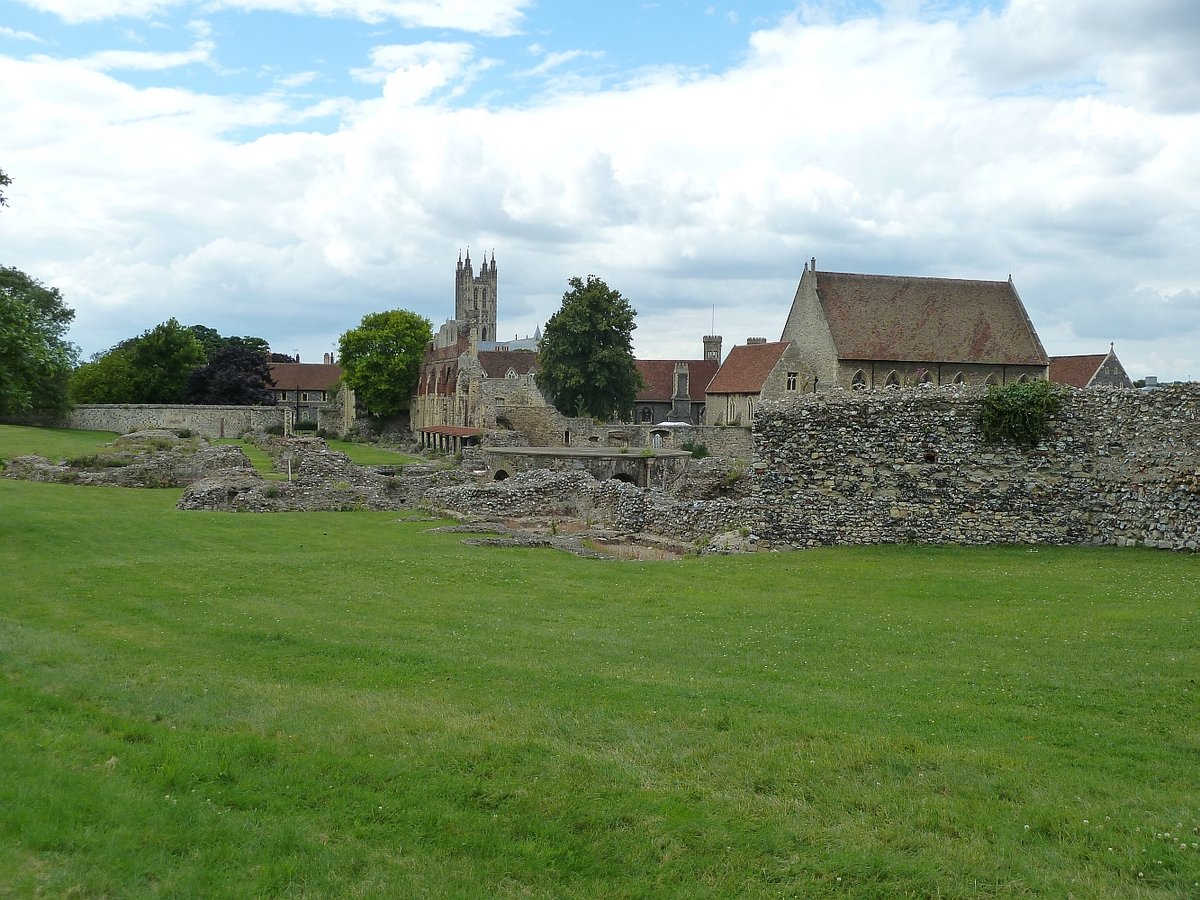
St Augustine's Abbey was founded in 598. It was originally named the Monastery of Ss Peter and Paul, but was later renamed St Augustine's after its founder, Augustine of Canterbury, who died in 604. The abbey was built at the request of King Æthelberht, who was married to the Christian Bertha, and was initially a wooden structure but was later rebuilt in solid masonry. The church was completed and consecrated in 613. Eadbald, son and successor of Æthelberht, founded a second church dedicated to Saint Mary in 624.
The abbey functioned as a monastery until its dissolution in 1538 during the English Reformation. It was at the time the oldest church in England, and was described by the historian John Stow as one of the historic wonders of the world. The abbey was rebuilt following the Norman Conquest of England in 1066. By 1100, all the original buildings at St Augustine's Abbey had disappeared under a Romanesque edifice. There was further rebuilding at St Augustine's Abbey as a result of the great fire in 1168.
The fire's destruction accounts for the paucity of historical records for the preceding period at St Augustine's Abbey. Abbot Fyndon rebuilt the abbey gatehouse from 1301 to 1309. The chamber above the entrance of Fyndon Gate was the state bed-chamber of the monastery. Charles I of England and Queen Henrietta Maria slept in the state bed-chamber of Fyndon Gate in 1625. In 1660, Charles II and his brothers stayed in Fyndon Gate on their way to London. Fyndon’s gate suffered damage by German bombs during the Second World War and had to be rebuilt.
Sources: Wikipedia, OpenStreetMap, Wikidata, Wikimedia Commons
Written by Nicolo Ciampini
Discuss this with the author and others
No comments yet. Be the first to start the conversation.