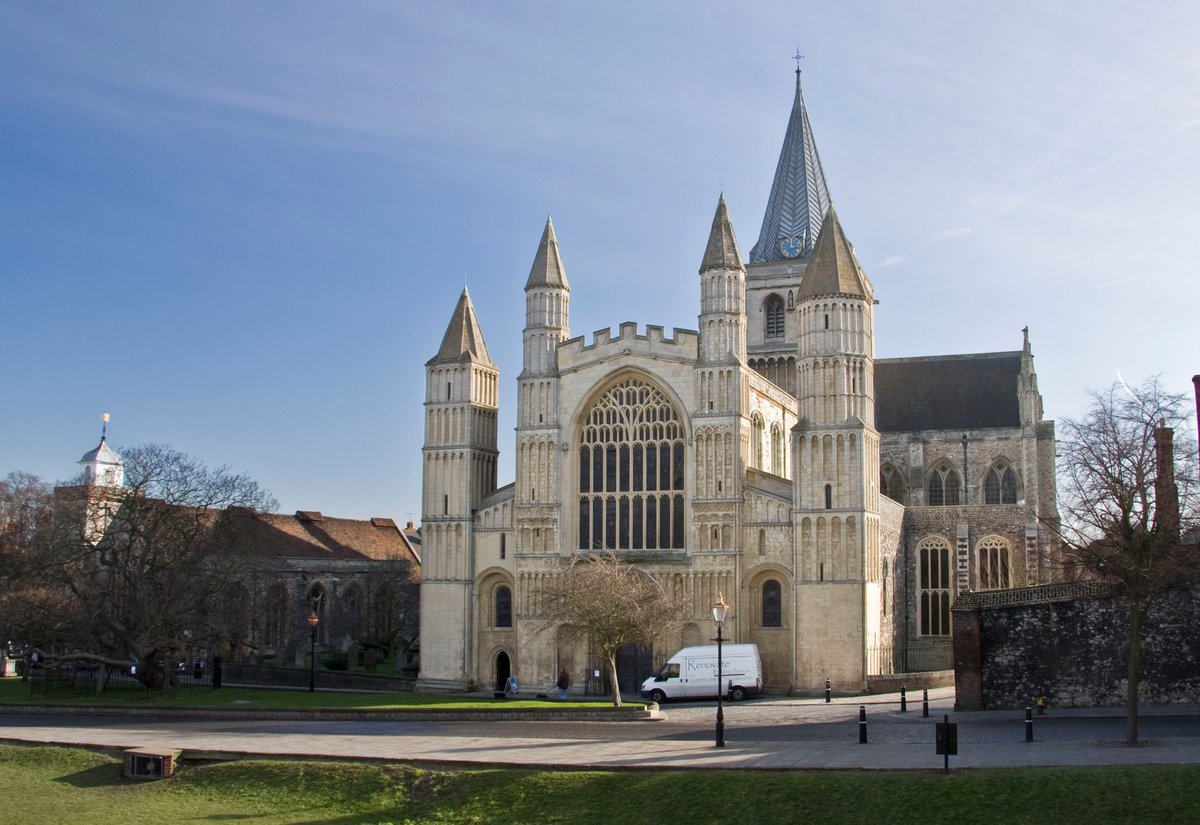
Rochester Cathedral, standing today as the Cathedral Church of Christ and the Blessed Virgin Mary, is a Grade I listed building in Rochester, Kent, England. It is the mother church of the Church of England Diocese of Rochester and seat (cathedra) of the Bishop of Rochester, the second oldest bishopric in England after that of the Archbishop of Canterbury. The present cathedral, rebuilt on the site of its predecessor in the Norman style, is a testament to the rich history of this ancient city.
The history of Rochester Cathedral can be traced back to the Anglo-Saxon period, when it was founded by St Justus, one of the missionaries who accompanied Augustine of Canterbury to convert the pagan southern English to Christianity. Justus established the cathedral on the site of the present cathedral, which was made the seat of a bishopric dedicated to Andrew the Apostle. However, it was during the Norman Conquest that the cathedral underwent significant changes.
Gundulf, a talented Norman architect and the first Norman bishop of Rochester, rebuilt the cathedral and its monastic buildings, starting work in 1080. Gundulf's work was not without controversy, as he clashed with Odo, the powerful Earl of Kent and half-brother of William the Conqueror, who had been accused of plotting against William. It was Gundulf who brought Odo to trial, and after being found guilty, Odo was exiled. Gundulf continued to work on the cathedral, and today the crypt, dating from the Norman period, is still a significant feature of the cathedral.
Sources: Wikipedia, OpenStreetMap, Wikidata, Wikimedia Commons
Written by Nicolo Ciampini
Discuss this with the author and others
No comments yet. Be the first to start the conversation.