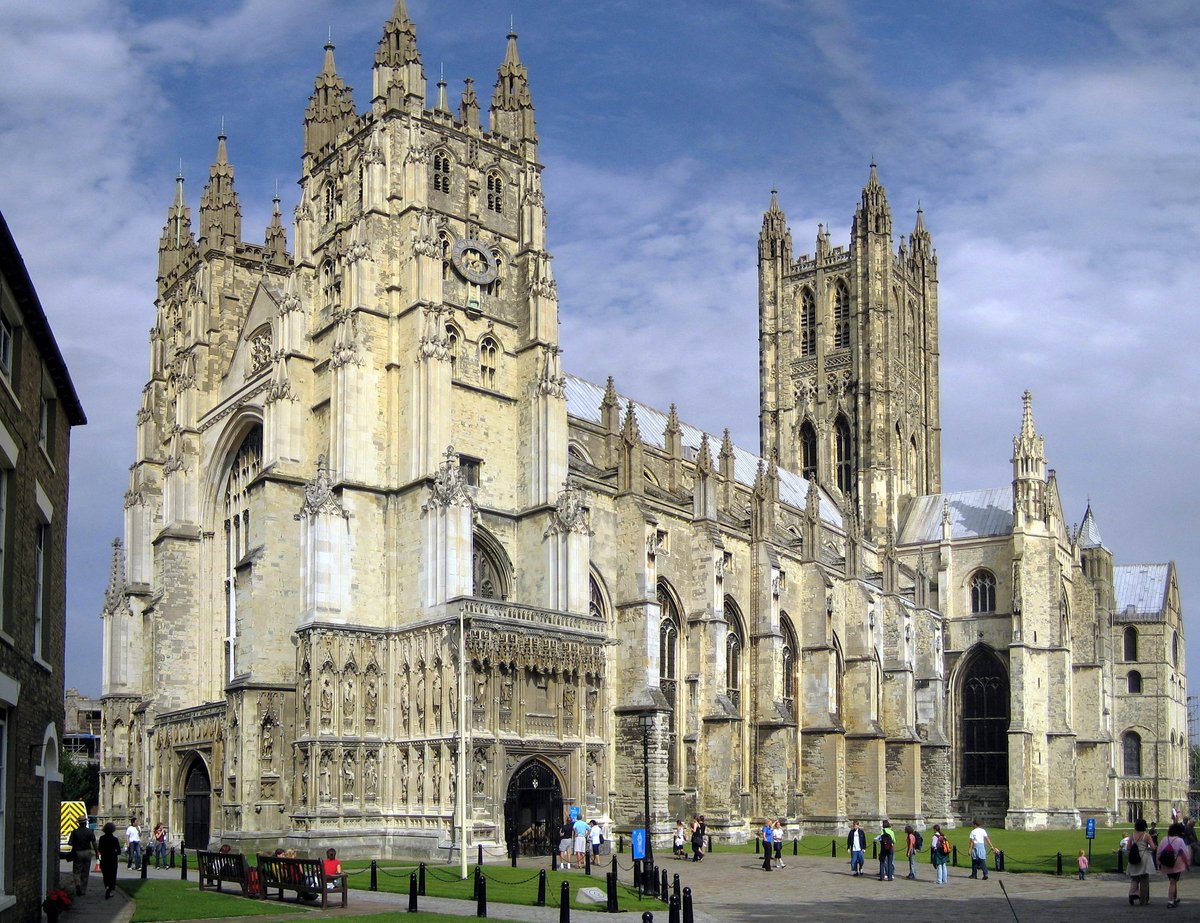

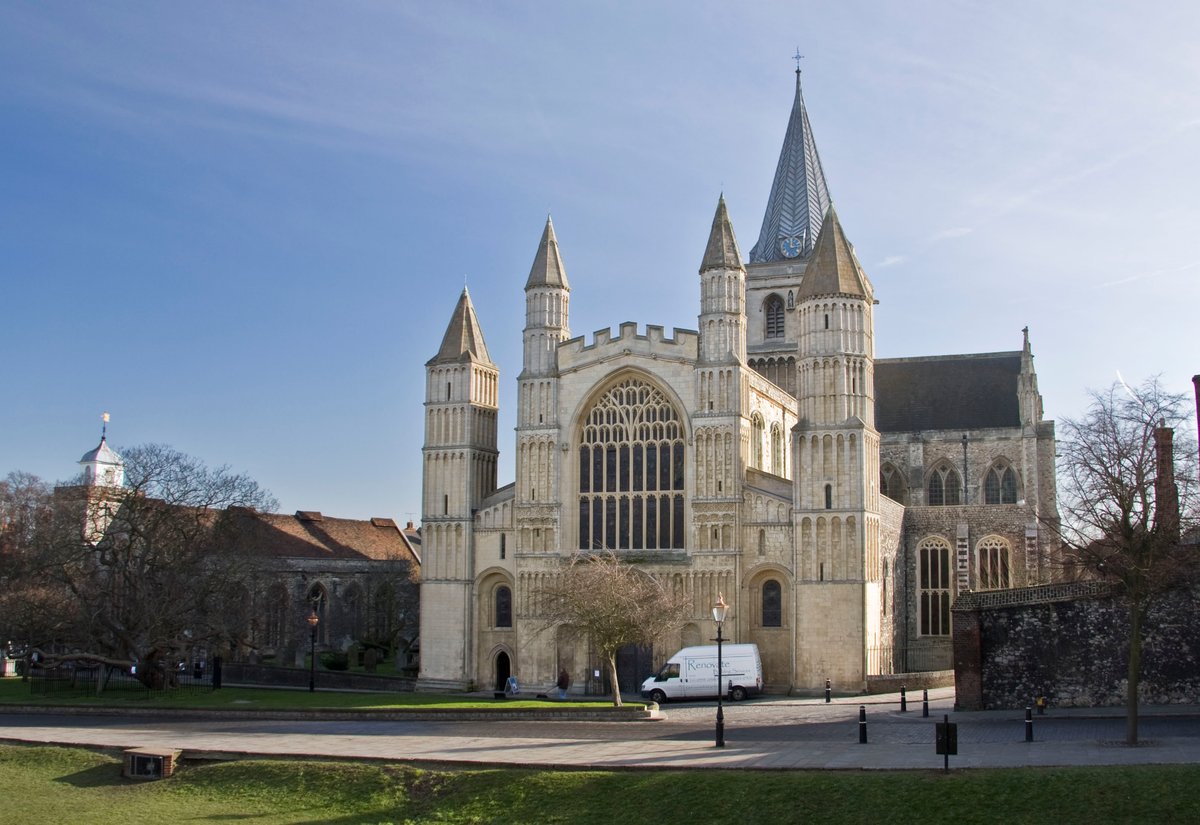
The eastern end of Canterbury Cathedral features a distinct architectural style because it was largely rebuilt in the Gothic style following a fire in 1174. This expansion was necessitated by the flow of pilgrims visiting the shrine of Thomas Becket, the archbishop who was murdered in the cathedral in 1170.
St Augustine founded the site in 597 by reusing a former Roman church. Beneath the present nave, excavations have revealed Anglo-Saxon foundations from a structure that resembled St Peter in Rome in its basilican form. During the reforms of Dunstan, archbishop from 960 until his death in 988, a Benedictine abbey named Christ Church Priory was added to the cathedral.
The original Norman nave and transepts were demolished in the late 14th century to make way for the present structures. The cathedral remains the seat of the spiritual leader of the Church of England.
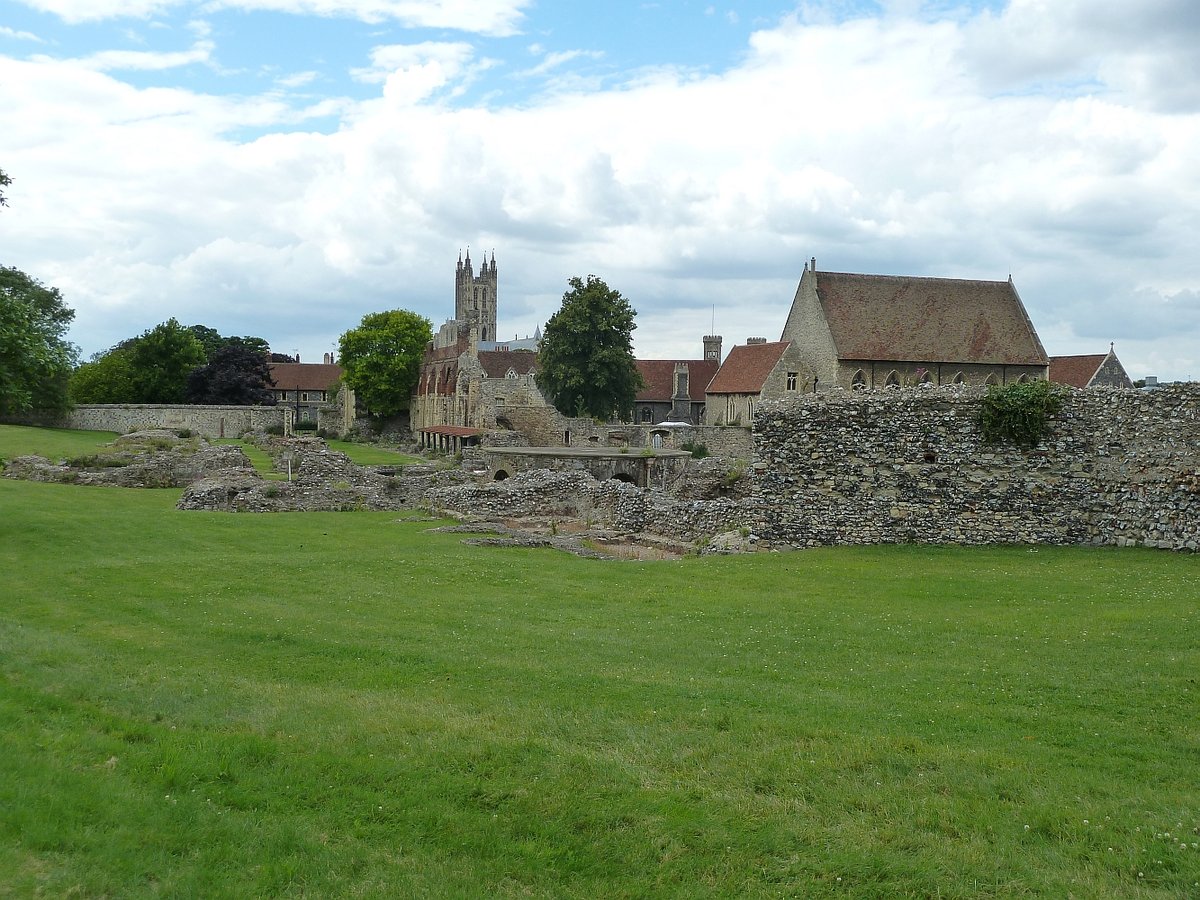
Visitors can explore the precinct to see the cathedral alongside the ruins of St Augustine's Abbey and the ancient Church of St Martin. Together, these three parts reflect milestones in the history of Christianity in Britain, including the reintroduction of Christianity to southern Britain by St Augustine in 597.
Sources: Wikipedia, OpenStreetMap, Wikidata, Wikimedia Commons
Written by Nicolo Ciampini
Discuss this with the author and others
No comments yet. Be the first to start the conversation.