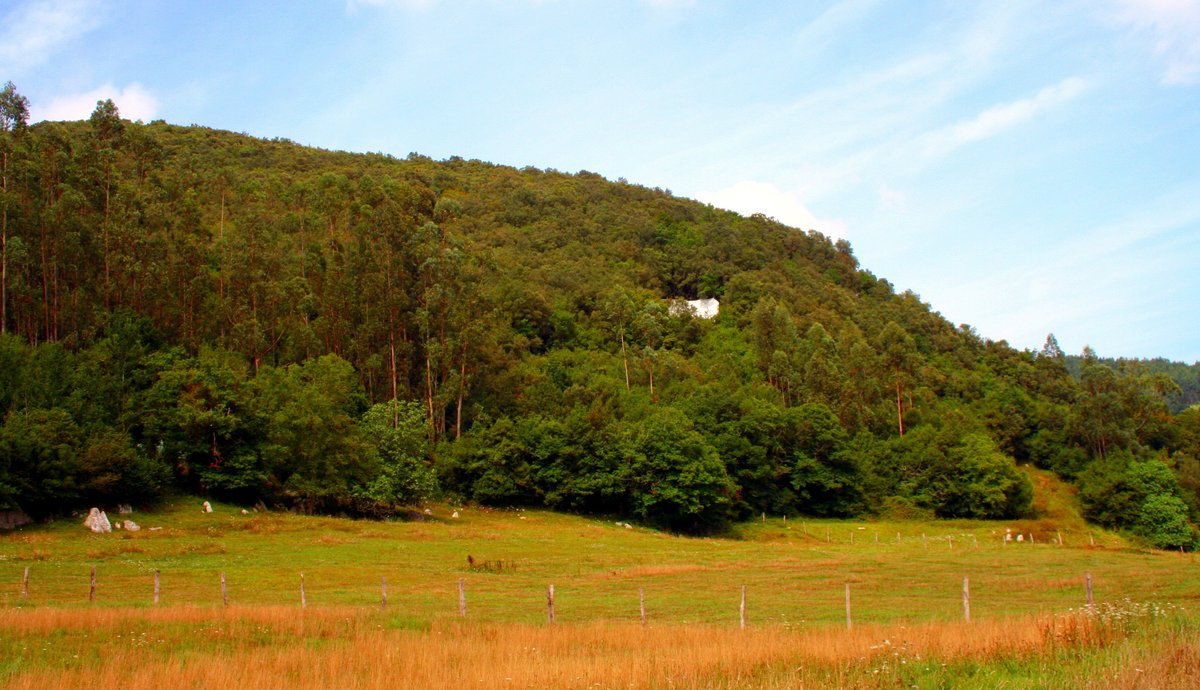

Nestled in the picturesque region of Cantabria, Spain, the La Garma Cave Complex stands as a time capsule of human development. Located north of Omoño, this site is a veritable goldmine of over 4,000 fossils and 500 graphical units. One of its most significant areas, the Lower Gallery, showcases a rich repository of Magdalenian portable art, dating back an impressive 175,000 years. The preserved Magdalenian floor of the Lower Gallery is one of the best-preserved Paleolithic cave floors ever discovered, making it a hotspot for paleoanthropologists. This complex is part of the Cave of Altamira and Paleolithic Cave Art of Northern Spain World Heritage Site.
The complex encompasses ten archaeological sites, including La Garma A, La Garma B, and the Lower Gallery. The entrance to the cave system, La Garma A, boasts a complex stratigraphy, consisting of layers from the Aurignacian, Gravettian, Solutrean, and Magdalenian periods, as well as Mesolithic, Neolithic, Chalcolithic, Bronze Age, and Middle Ages layers. La Garma B, situated between La Garma A and the Lower Gallery, houses Chacolithic and Bronze Age layers. The Lower Gallery, discovered in November 1995, is a 300-meter-long gallery, originally accessible, but sealed during the Pleistocene by a rockslide around 16,000 years ago, keeping the cave floor remarkably well-preserved.
Sources: Wikipedia, OpenStreetMap, Wikidata, Wikimedia Commons
Written by Nik Frost
Discuss this with the author and others
No comments yet. Be the first to start the conversation.