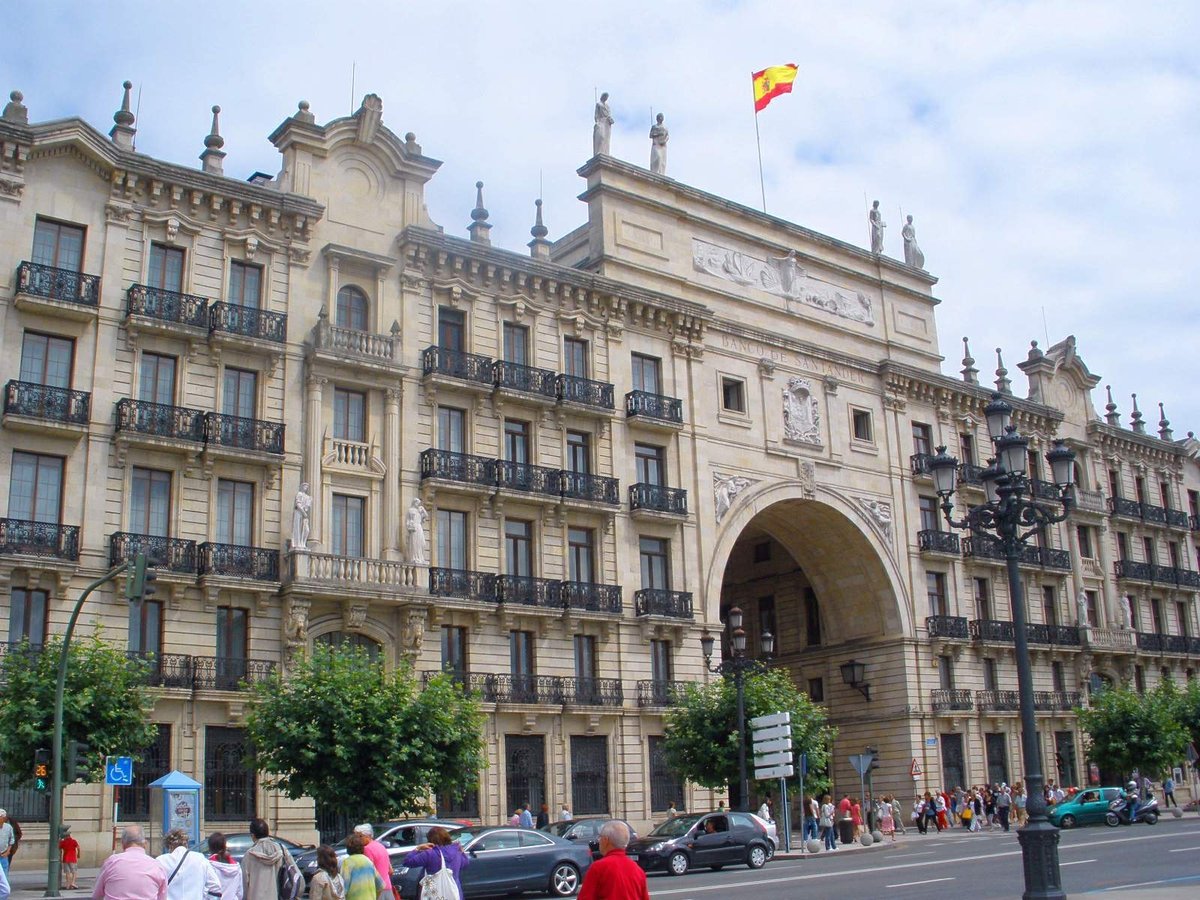

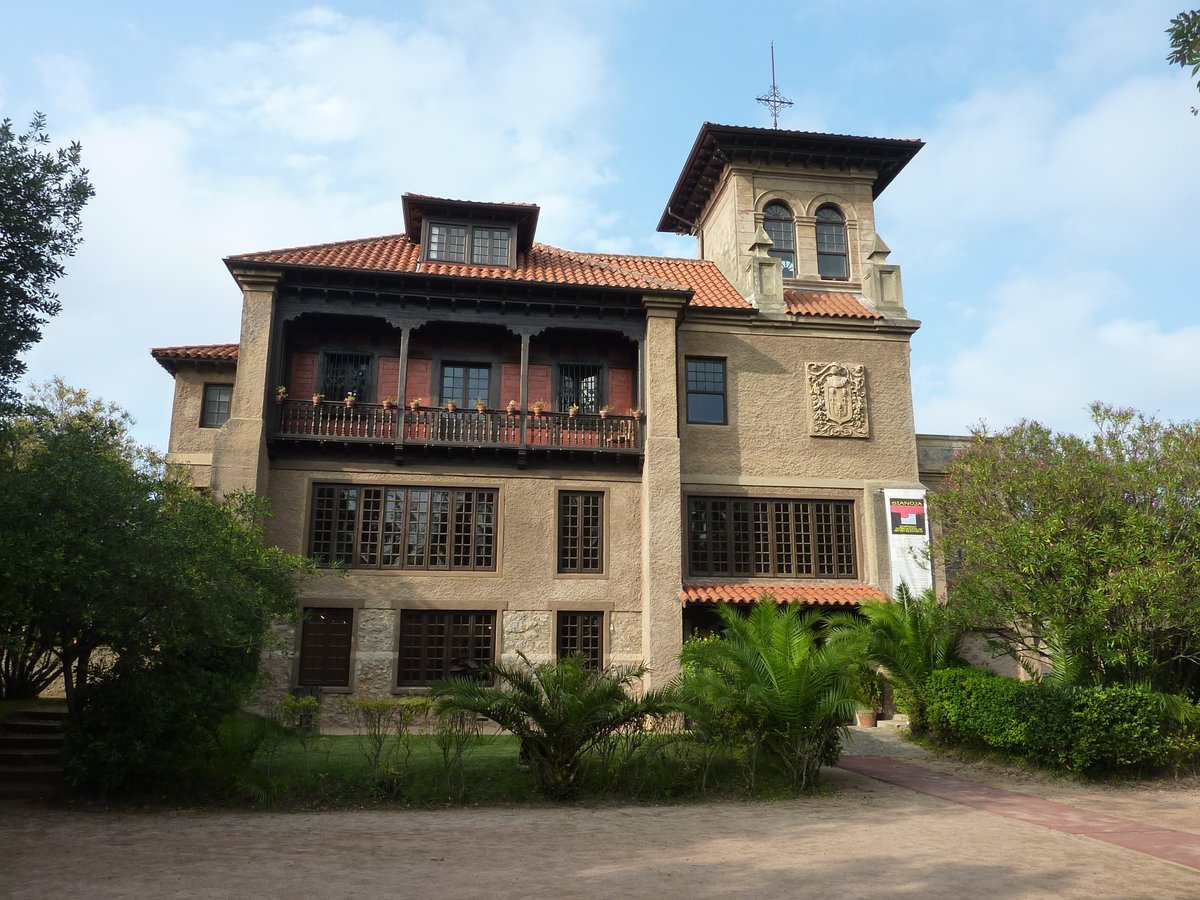
The Banco de Santander Building is a landmark located on Paseo de Pereda in the city of Santander. Established in 1795, this architectural marvel has undergone numerous transformations throughout the 19th and 20th centuries. In 1880, a fire marked a significant turning point, following which the building served concurrently as a hotel and a club de regatas before being acquired by Banco Santander in 1919 to become their central office.
In the late 1950s, a monumental arco was constructed to bridge the old and the new structures, allowing for communication on the upper level. This expansion, completed in 1963, featured a facade looking toward the bay enriched with sculptures by Blanes. Four statues represent the arts, culture, commerce, and navigation. The lower frieze presents an allegory of banking, protecting additional sculptural elements representing industry, high furnaces, mining, and sports.
After weathering numerous changes, the Faro Santander museum now resides within the Banco de Santander building. This museum will house the private art collection of the Fundación Banco Santander, which consists of more than 1000 works. The collection includes paintings by Rubens, El Greco, Van Dyck, Picasso, Chillida, Sorolla, and Joan Miró, as well as the largest and most prominent collection of works by José Gutiérrez Solana in the world.
Sources: Wikipedia, OpenStreetMap, Wikidata, Wikimedia Commons
Written by Nik Frost
Discuss this with the author and others
No comments yet. Be the first to start the conversation.