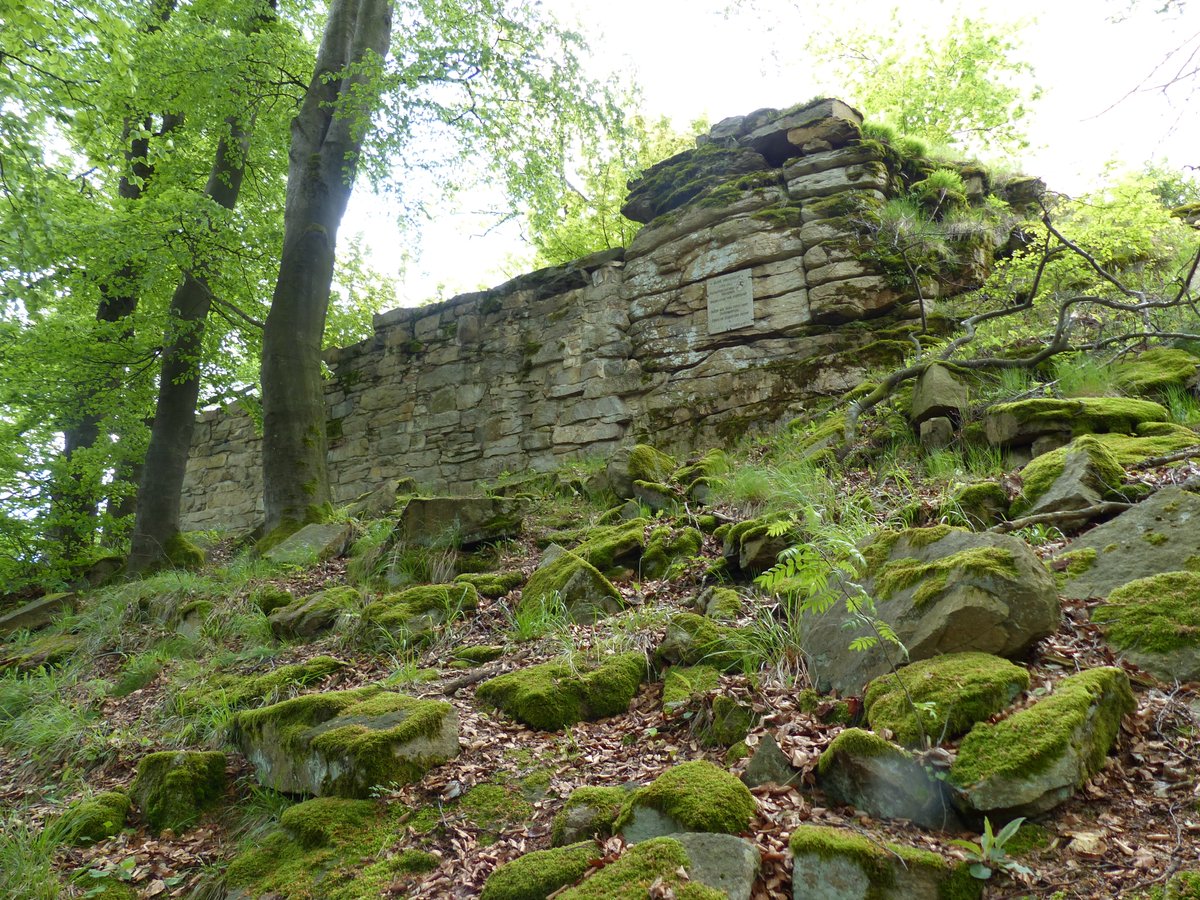
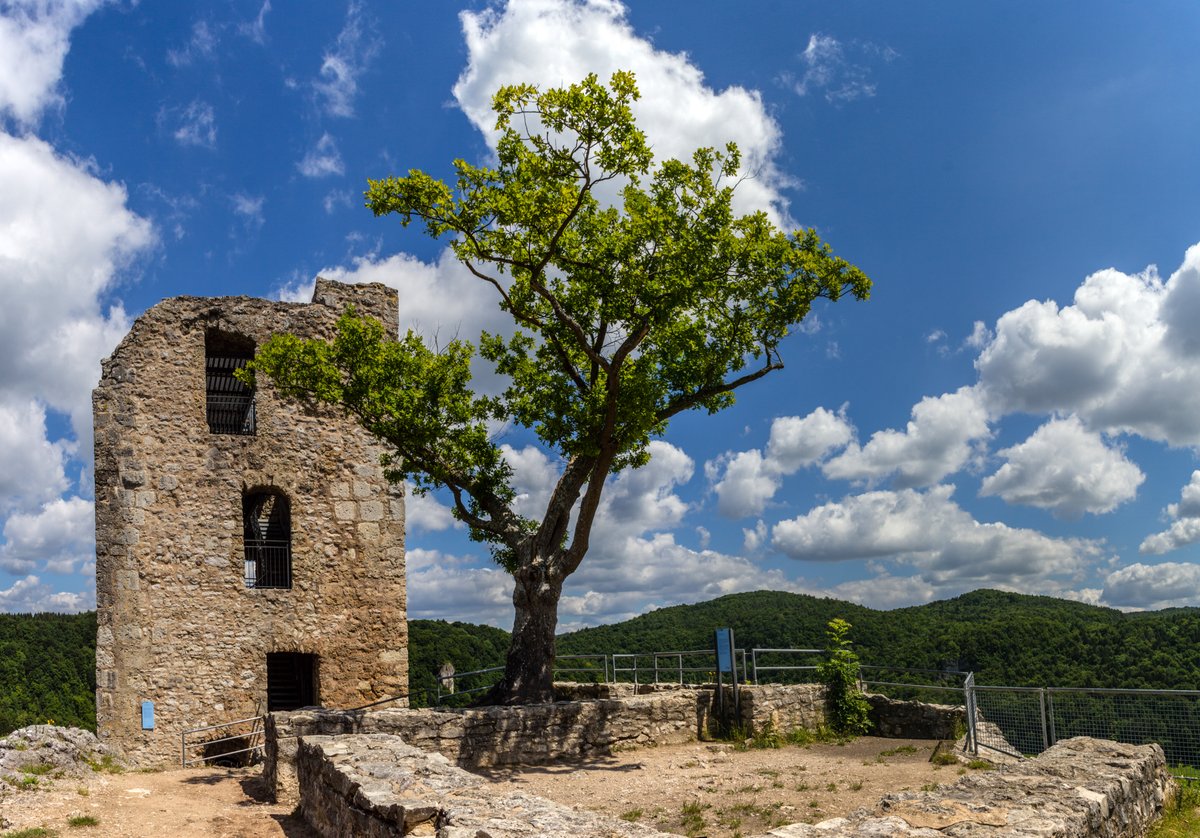
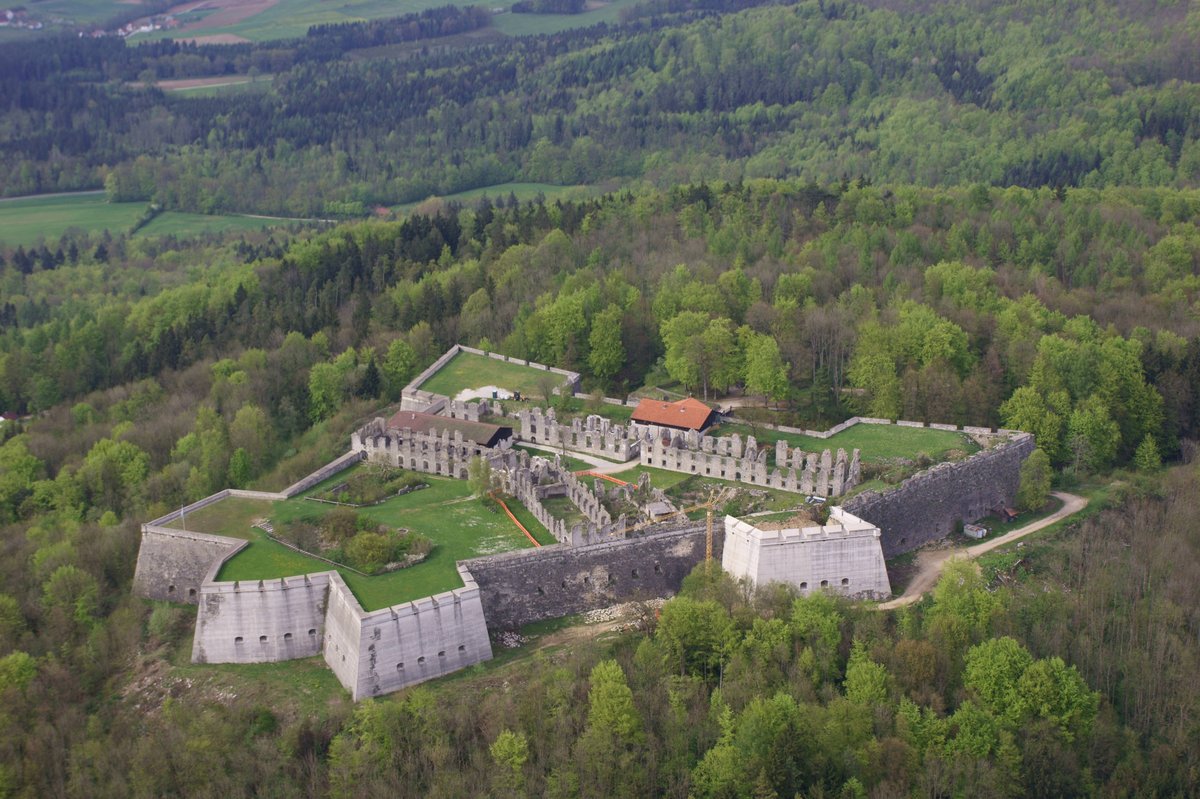
Twelve meters of rough granite cling to a cliffside, a jagged memory cradled by the Bavarian wind. At 744 metres above the Fichtelgebirge, Ruine Hirschstein holds its place. Sharp edges meet heavy stone where a four-metre wall turns ninety degrees to face the deep valley below.
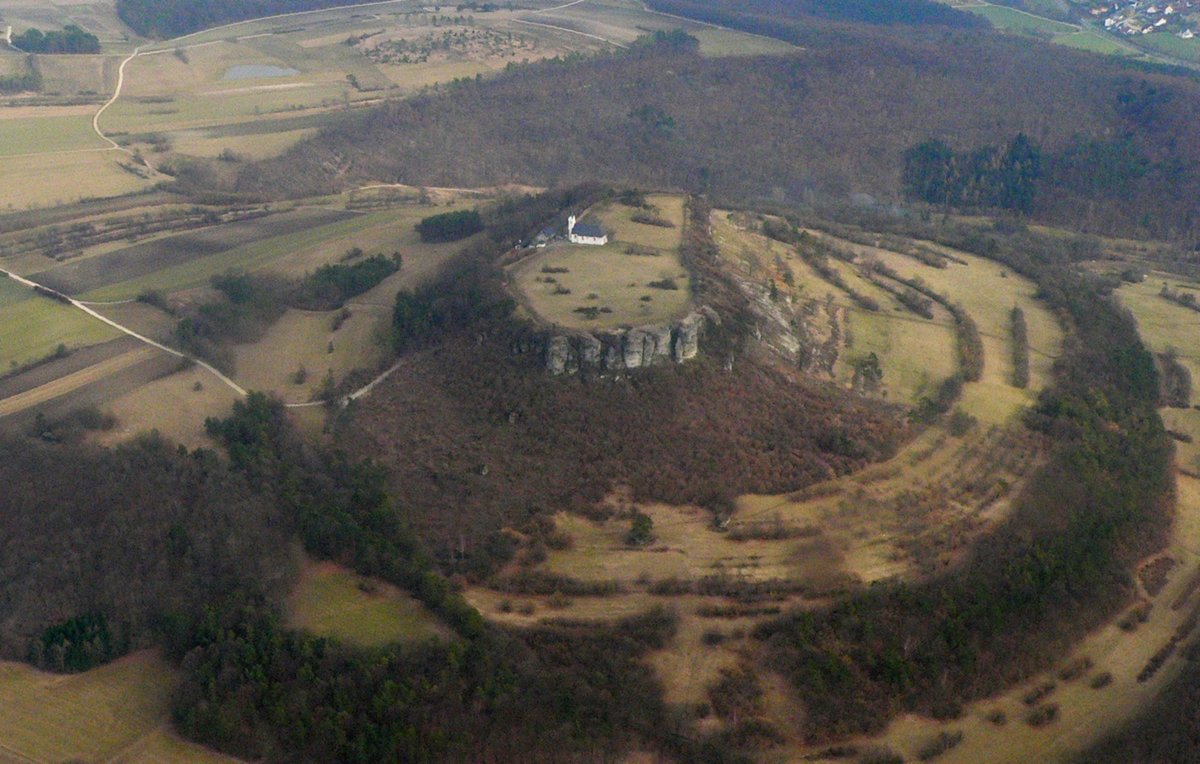
Records trace back to 1223, but pottery finds indicate habitation during the 13th and 14th centuries. In 1317, Count Berthold of Henneberg enfeoffed the 'five brothers' of the von Hirschberg family - Heinrich, Fridrich, Arnolt, Eberhart, and Heymann - with the 'house' on the Kornberg. The castle was destroyed in the mid-14th century, presumably by the Nuremberg Burggraf to enforce the Landfriede.
In 1361, Burggraf Friedrich of Nuremberg permitted the Hirschbergers to rebuild the castle. Despite repeated permission, the family never rebuilt the fortress and moved to Burg Grünstein instead. The ruin later served as a watchtower. During the Thirty Years War, the ruins and vaults served as a refuge for the rural population.
By the 18th century, the vaults were filled in on a Margrave's order because 'Gypsies and other light-shy scum' had taken up residence there. Today, granite skeletons remain. You can trace the remains of a foundation for a square tower. Northward, the Markgrafenstein stone of 1742 stands as a marker between the Margraviate of Brandenburg-Bayreuth and Kirchenlamitz.
Sources: Wikipedia, OpenStreetMap, Wikidata, Wikimedia Commons

Written by Aurora
Discuss this with the author and others
No comments yet. Be the first to start the conversation.