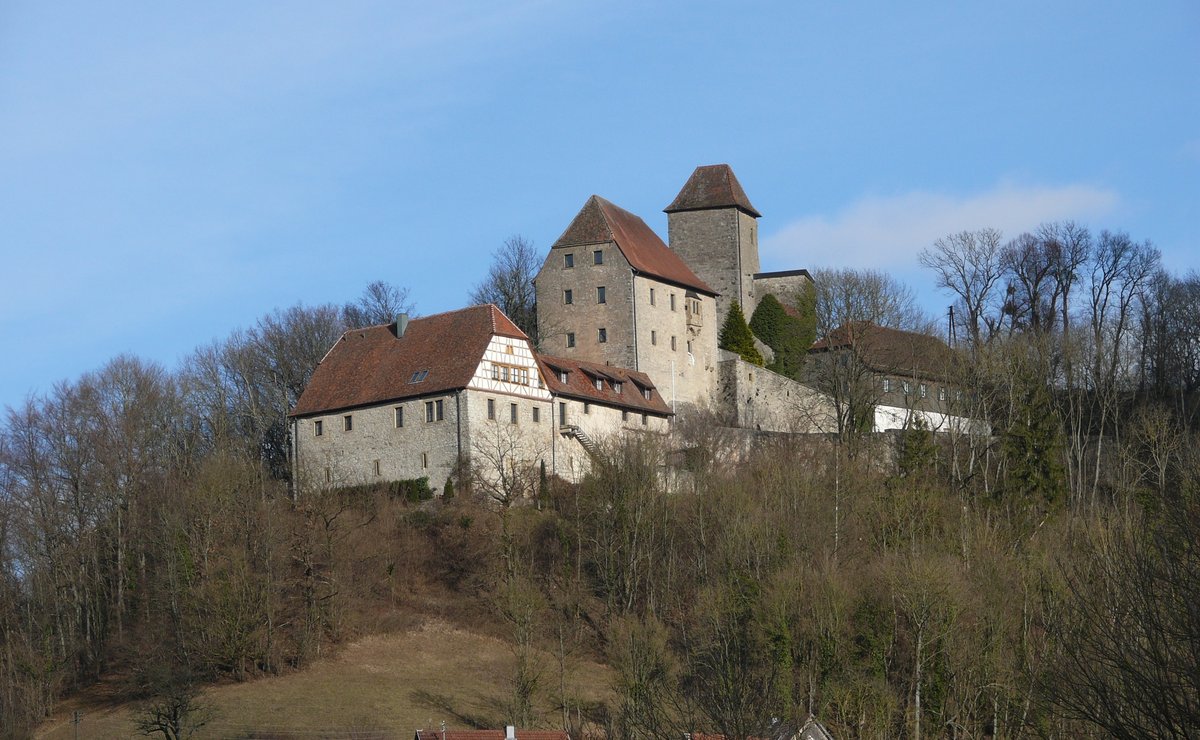
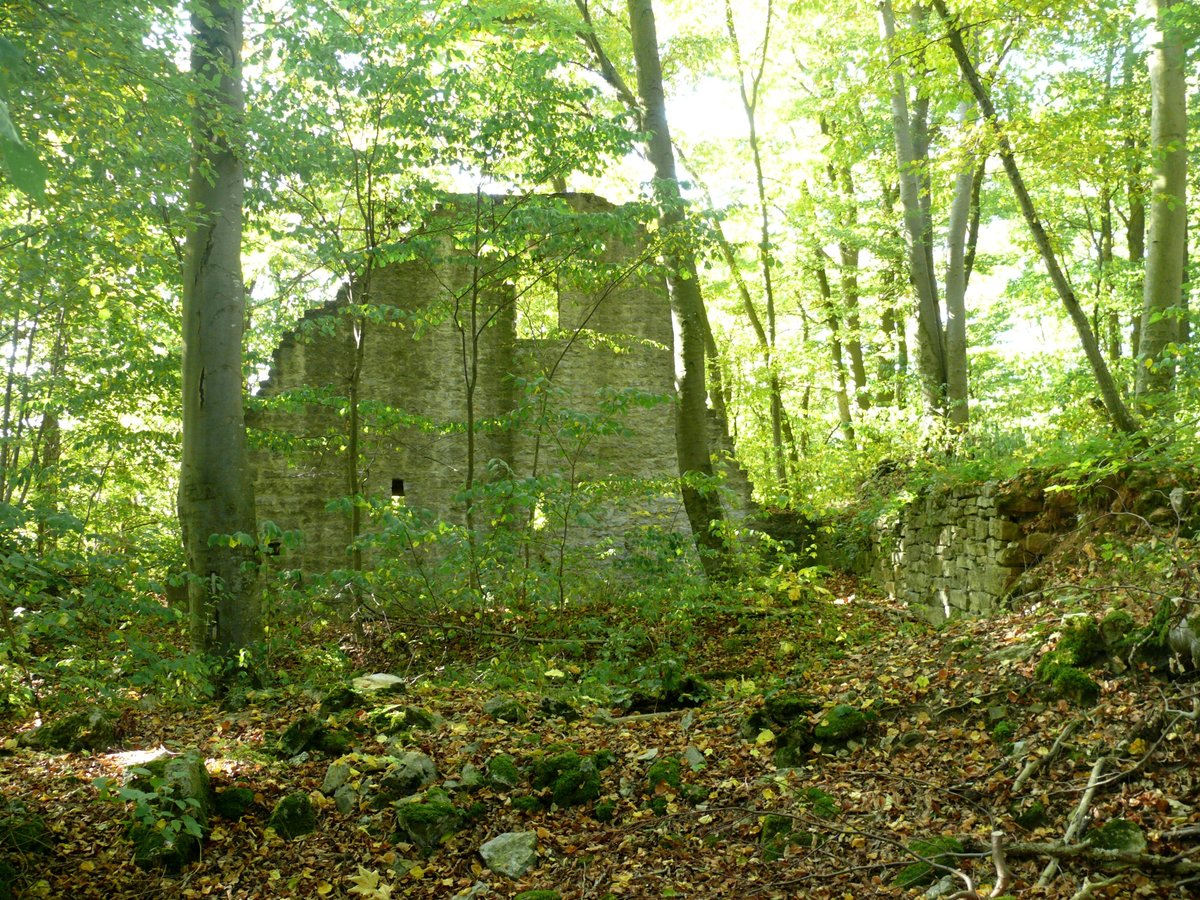
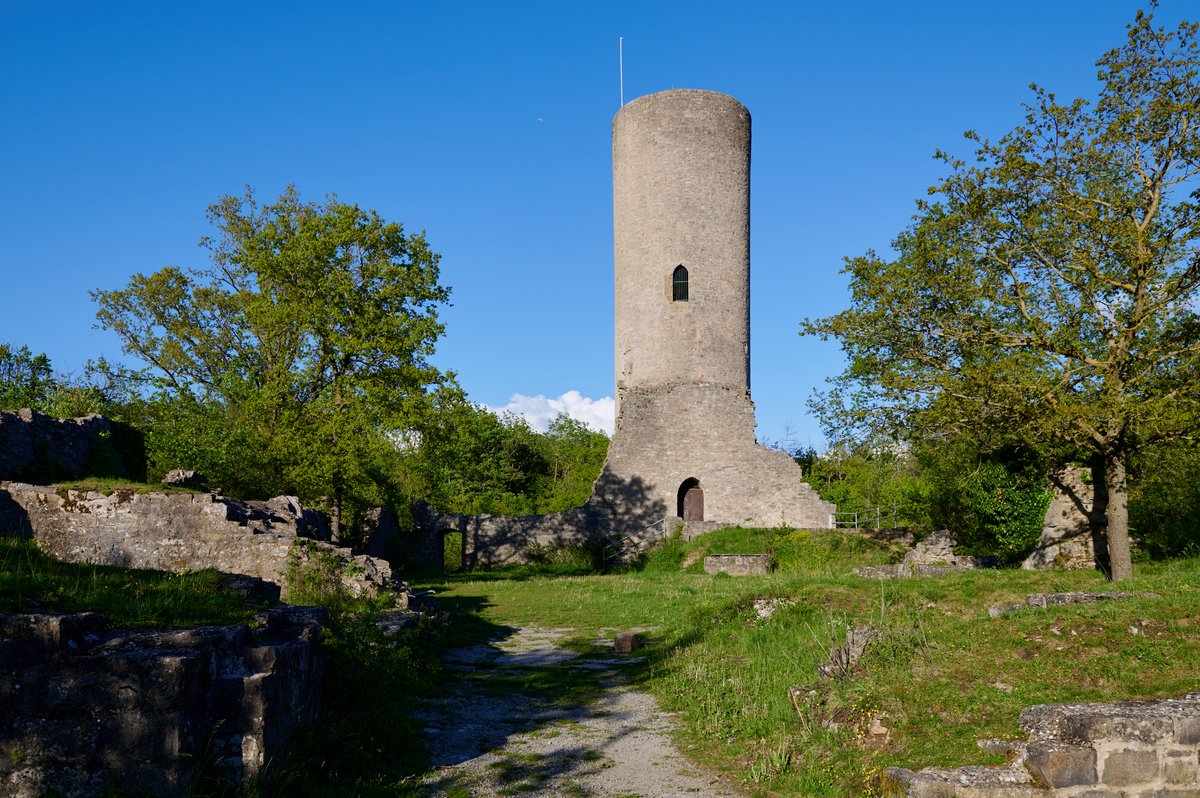
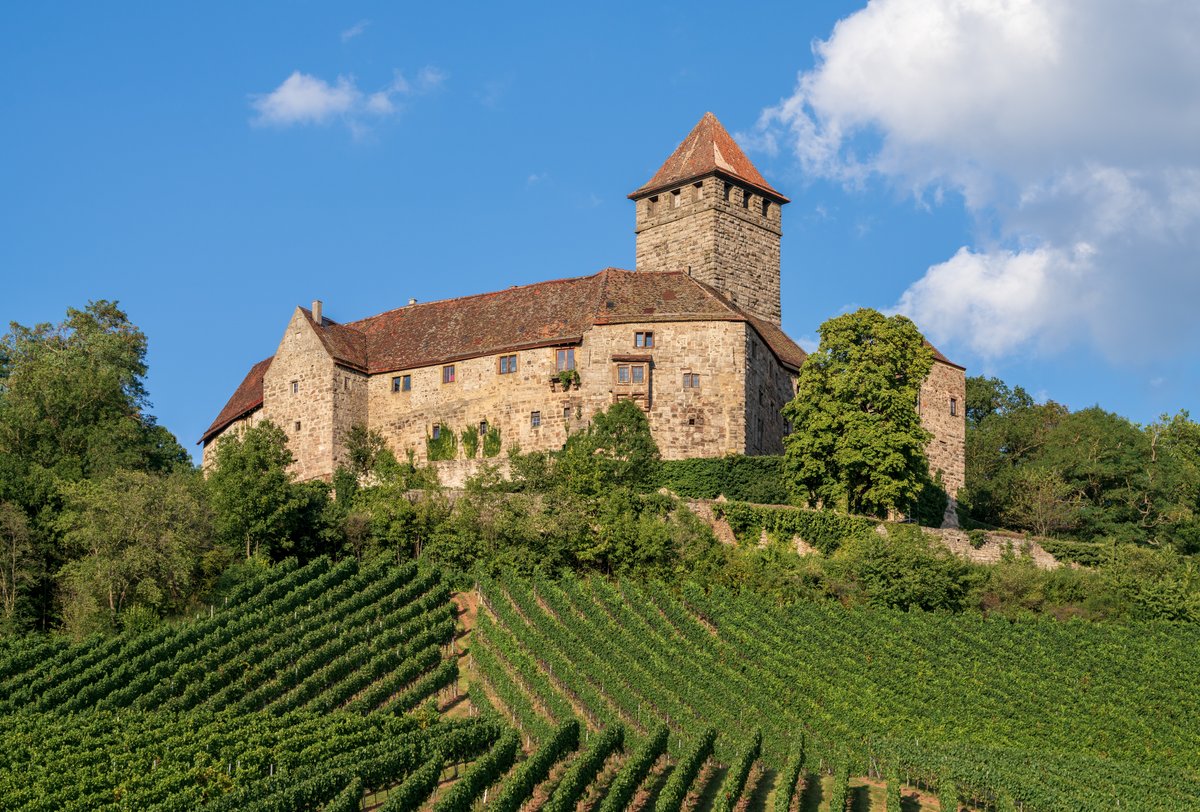
Burg Tierberg sits on a sharp west-southwest spur, a high point carved out by the meeting of two stream valleys. At an elevation of 406.1 m above sea level, the landscape opens between the Kocher river to the west and the Jagst to the east. It is a classic Spornburg - a castle built on a projection of rock - designed to command the surrounding terrain and control two nearby long-distance trade routes.
In 1220, the noble lords of Langenburg commissioned the knight Arnold von Tierbach to build the fortification. The construction was so significant to his identity that by 1226, he had officially changed his name to Arnold von Tierberg. The castle remained a stronghold of the Hohenlohe family until 1387, when financial distress forced Ulrich von Hohenlohe to sell the property to two lords of Stetten for a pittance. A 1402 settlement included a new purchase contract giving the Hohenloher a right of first refusal.
The lords of Stetten expanded the castle into a hunting lodge because of its strategic location near their ancestral castle. In 1474, the lords of Hohenlohe-Langenburg demanded the castle back at the old price based on their right of first refusal. The Stettener refused to vacate without compensation for their construction costs, leading to a forced eviction by the Hohenloher in 1475. A 20-year bloody feud began between the two noble houses following the eviction. This Tierberg Feud became a constitutional dispute between the Emperor and the Imperial Princes and served as a co-trigger of the Imperial Reform - the Reichsreform.
Following the legal settlement of the feud in 1495, the house of Hohenlohe-Langenburg held the castle for five hundred years. During this long tenure, the site was used as a hunting lodge and expanded for large-scale hunts. The castle cellar and tower even served as a book depot for the University of Berlin during and shortly after World War II.
Today, the castle remains a silhouette against the Hohenlohe region's hills. The plateau it occupies stretches approximately 7 km wide, offering a sense of the scale and isolation that once made it such a coveted piece of territory in the medieval world.
Sources: Wikipedia, OpenStreetMap, Wikidata, Wikimedia Commons
Written by Aurora
Discuss this with the author and others
No comments yet. Be the first to start the conversation.